Skip to content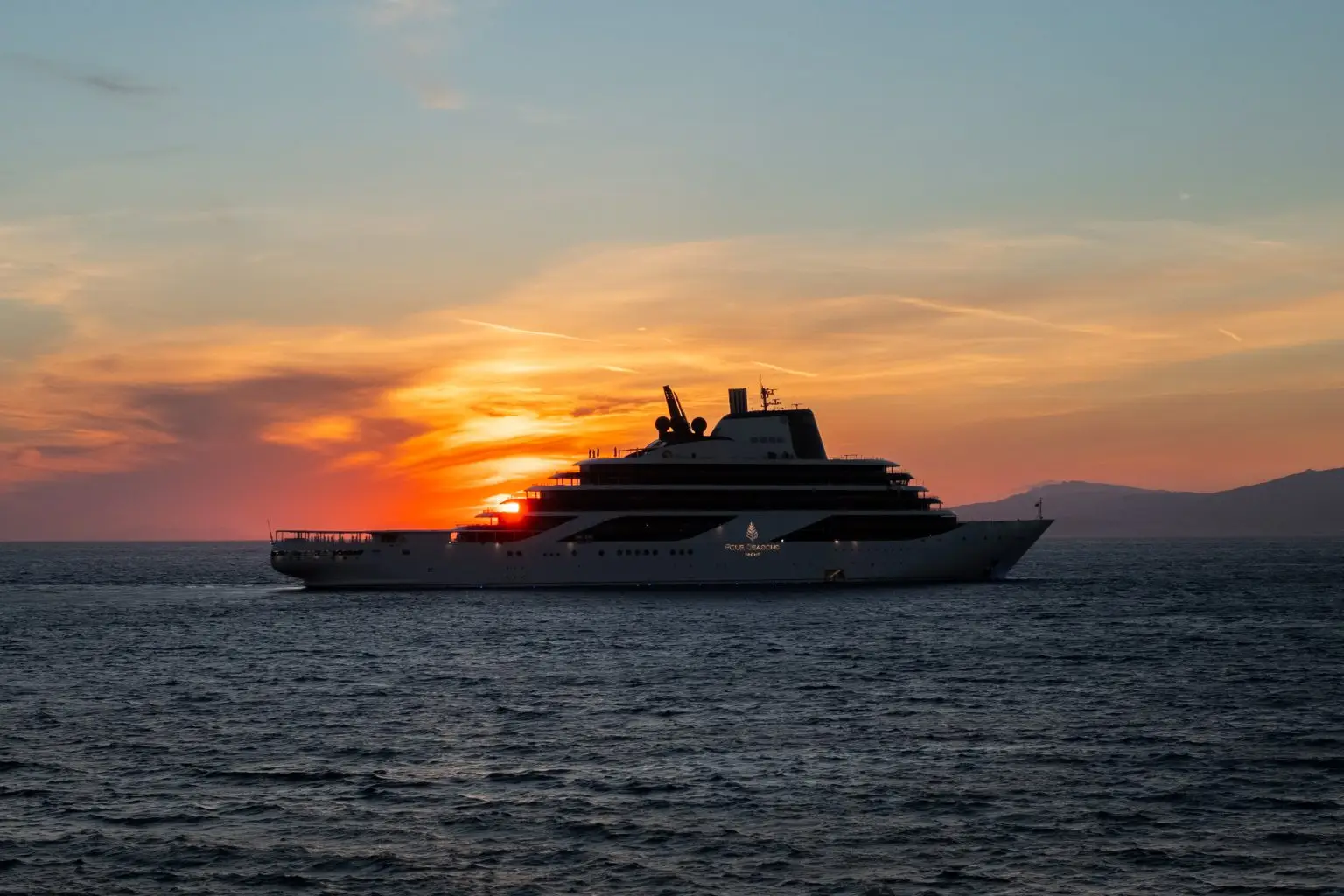
Four-bedroom suites at sea, rented by the week.

Four Seasons just unveiled its second yacht. Four Seasons II sails in 2028 with a new class of accommodation the company calls Yacht Residential Suites. The suites are what the trade press latched onto. The calendar is the more interesting part. Barely three months after the first ship left port, and long before it has finished a single Mediterranean season, Four Seasons has committed to another nine-figure vessel. A company does that only when the numbers already work.
© Photo by Mads Nordsveen
What’s new on Four Seasons II
The second ship is the smaller of the two, and that’s deliberate. Seventy-nine suites against 95 on the first, on a hull of roughly the same length. More room per guest, a quieter ship.
The twelve Yacht Residential Suites are what everyone is talking about. Four Seasons calls them the largest suites at sea. Each has up to four bedrooms, a full kitchen, and a wide terrace; some add a private splash pool and an outdoor shower. They sit high on the ship, built for the trip that never fit a standard cabin: long stays, extended families, parties that would rather book a floor than a room.
Fincantieri is building it, as the yard built the first. Alejandro Reynal, the Four Seasons chief executive, called the launch a natural extension of the brand: “Our first vessel has shown how naturally this extends to sea.” Booking for the first season is already open.

© Four Seasons Yachts / DBOX
Four Seasons II against Four Seasons I
Put the two side by side and the strategy reads itself.
| Four Seasons I | Four Seasons II | |
|---|---|---|
| Launch | 2026 | 2028 |
| Suites | 95 | 79 |
| Max guests | 222 | not yet published |
| Length | 207 m | same platform |
| Builder | Fincantieri | Fincantieri |
| Headline feature | the debut ship | Yacht Residential Suites |
Four Seasons I sets the benchmark: 207 meters, 34,000 gross tons, fifteen decks, 95 suites, a maximum of 222 guests. The brand sells a one-to-one staff-to-guest ratio, though that’s marketing more than arithmetic. On the first ship, a crew of around 180 serves up to 222 guests. Cut the suite count to 79 and the real ratio should move closer to the claim, but Four Seasons hasn’t released a crew figure for the second ship.
None of this is accidental. The first ship already sold itself as the most home-like thing afloat, and the second pushes further the same way. It trades capacity for space and quiet.
What the first ship looks like now
A problem runs through almost all the coverage of Four Seasons II: the ship doesn’t exist. It won’t until 2028, so every article leans on renderings. The vessel you can photograph is the first one, and right now it’s working its way around the Mediterranean.

© Photo by Mads Nordsveen
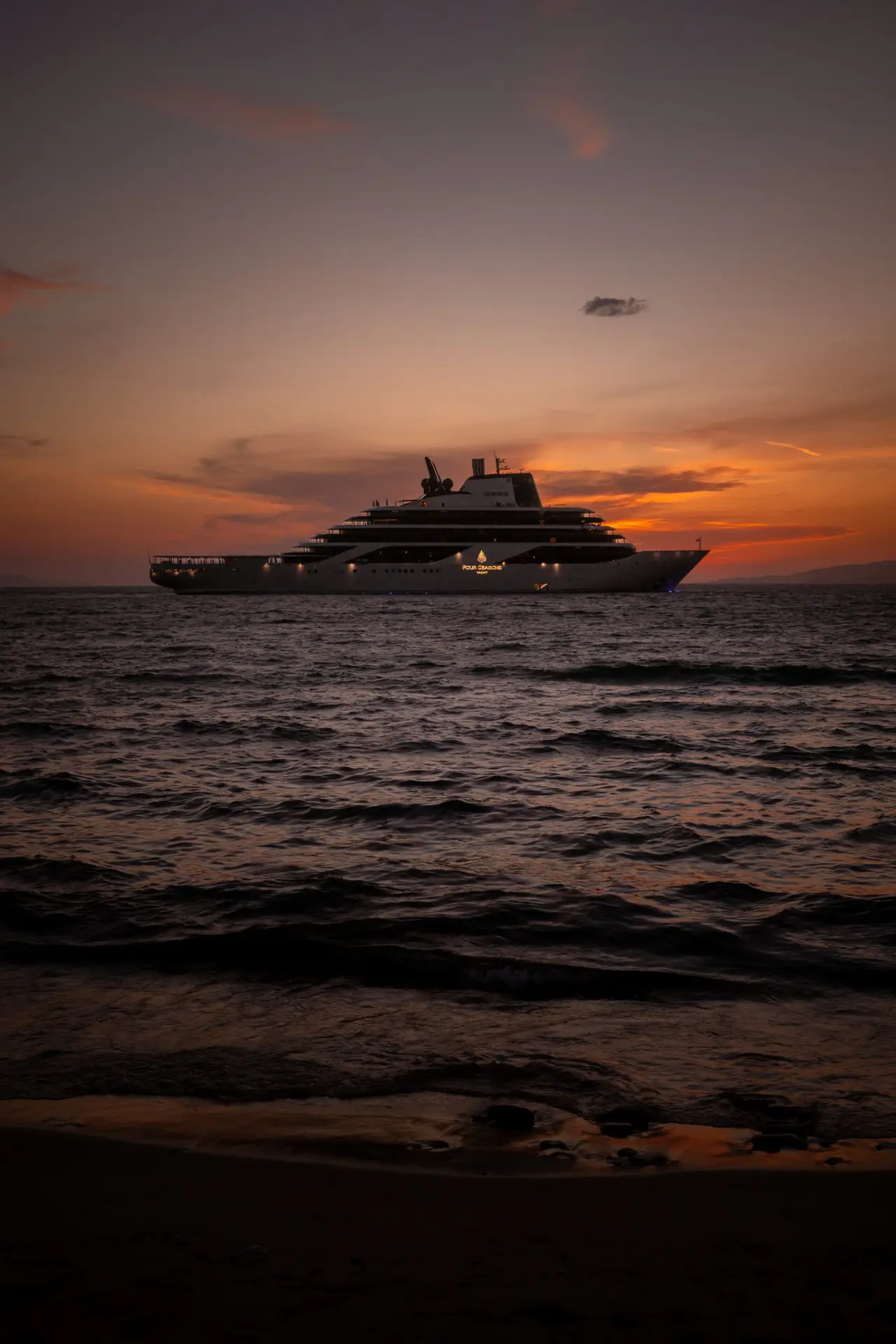
Four Seasons I left Málaga on March 20, 2026, four years after construction began at Fincantieri’s yard in Ancona. Its first summer takes in the Greek islands, the Croatian coast, Saint-Tropez, Bodrum, Hydra, and Montenegro: 27 overnight ports. These photographs were taken off Mykonos in late May, a few weeks into the maiden season. From far off it still looked huge. The hull looked solid, classy, almost timeless.

© Photo by Mads Nordsveen
The Scandinavian hand on the wheel

One credit goes almost unnoticed. The exterior and the suites are by Tillberg Design of Sweden, including the modular system that lets the accommodation be configured in more than a hundred variations. The public rooms come from the London studio Martin Brudnizki. And the four-level Funnel Suite, the most expensive room aboard, sits inside a glass structure shaped after the funnel of the Christina O, the yacht Aristotle Onassis once owned.
The Swedish thread doesn’t stop at one ship. Tillberg also designed the cabins for the Ritz-Carlton Yacht Collection, the rival Four Seasons measures itself against, which means the interiors of the two biggest names in the hotel-to-yacht business come from the same Scandinavian drawing board. On a product sold almost entirely on space, and on how that space is arranged, the design work is the product.
What it costs
Four Seasons charges by the suite, not by the head, the way a hotel charges by the room. An entry-level Seaview suite starts around $19,900 for a week in the Caribbean and runs $21,000 to $25,000 in the Mediterranean. Above that the numbers climb fast.
| Suite | Approximate price per week |
|---|---|
| Seaview (entry) | $19,900 to $25,000 |
| Ocean (mid-range) | $43,000 to $60,000+ |
| Signature (multi-bedroom) | from $100,000 |
| Funnel Suite (four decks, ~10,000 sq ft) | up to $350,000 |
The figure that stings most isn’t in the table. Four Seasons runs à la carte. The price buys the suite, breakfast, and a few snacks, and there it stops. Lunch, dinner, wine, the spa, the shore excursions, all of it sits on top, which the company itself estimates at around $250 per guest per day.
How it stacks up against the competition
That à la carte line is the clearest split between Four Seasons and the rest of this tier. Ritz-Carlton, first onto the water, prices close to all-inclusive: most meals, drinks down to the alcohol, gratuities, and Wi-Fi are built into the fare, with only a specialty restaurant, the spa, and shore trips charged extra. Four Seasons keeps the room and the spending apart, a hotel’s economics rather than a cruise line’s. Over seven nights, that adds up to money.
Lay the ships out on a line and Four Seasons lands in the middle of it. Ritz-Carlton’s Evrima carries 298 guests and Ilma 448, both edging toward small cruise ship. Aman’s first yacht, due in 2027, gets around 50 suites, closer to an expedition boat. Four Seasons II pushes the brand toward the private end without going as far as Aman.
The name rewards a closer look. “Yacht Residential Suites” borrows its vocabulary straight from branded residences, the fastest-growing slice of luxury property on land. At sea, though, no one owns anything. No deed, no resale, no stake. It’s the look of a home, rented by the week.
The value question
The early conversation among the people who buy this kind of trip has been less about the ship than about the bill. They hold it up against a private charter, and against Ritz-Carlton’s more inclusive model, precisely because food and drink sit outside the base price. A couple who book an entry suite and then eat, drink, and go ashore across a week can watch the total drift well past the headline number. Four Seasons is betting the other way: 95 suites, something like 50 percent more space per guest than rival lines, and a level of service the company expects people will pay for, line by line.
What the press release doesn’t mention
Two things go unsaid in the announcement. The first is structural. This is as much a licensing deal as a Four Seasons operation: the ships are owned and run by Marc-Henry Cruise Holdings, now under chief executive Ben Trodd, while Four Seasons supplies the name and the service. The launch lost several of the people who built it, among them Larry Pimentel, the cruise veteran behind the original concept. What happens on board may well be real Four Seasons. The company behind it isn’t.
The second is the environment, which is the first thing many Nordic readers will ask about. Four Seasons points to “the latest environmental technologies” and leaves it there. No propulsion type, nothing on shore power, not a single emissions figure. For a 34,000-ton ship that sells its closeness to the sea, the silence stands out.
The timing tells you everything
Back to the calendar. Four Seasons ordered ship number two before the first had finished its opening season, barely three months after it took on its first guests. That is a company that has already seen the numbers and liked them.
Frequently asked questions
What is Four Seasons II?
Four Seasons II is the second yacht from Four Seasons Yachts, unveiled on June 9, 2026, and due in 2028. It will have 79 suites and a new category called Yacht Residential Suites.
What are the Yacht Residential Suites?
A new accommodation category on Four Seasons II: twelve large suites with up to four bedrooms, a full kitchen, terraces, and in some cases a private splash pool. Four Seasons calls them the largest suites at sea. They can be booked for voyages but aren’t for sale.
How does Four Seasons II differ from Four Seasons I?
It’s smaller and more home-like, with 79 suites against 95 on the first ship, on a hull of roughly the same size, plus the new Yacht Residential Suites built for longer stays and groups.
When does Four Seasons II launch?
2028. Booking for the first season is open.
What does a Four Seasons yacht cost?
Pricing is per suite, not per person. Seaview suites start around $19,900 to $25,000 per week, Ocean suites $43,000 to $60,000, and the four-level Funnel Suite up to $350,000. Most meals, alcohol, spa, and excursions are billed separately, around $250 per guest per day by the company’s own estimate.
How does Four Seasons Yachts compare with Ritz-Carlton?
Ritz-Carlton’s yacht fares are largely all-inclusive, covering meals, drinks, gratuities, and Wi-Fi. Four Seasons charges à la carte for most food and drink. Ritz-Carlton’s ships are also larger: Evrima carries 298 guests and Ilma 448, against 222 on Four Seasons I.
Who builds and operates Four Seasons Yachts?
The ships are built by Fincantieri and owned and operated by Marc-Henry Cruise Holdings, with Four Seasons supplying the brand and the service.
Does Four Seasons Yacht have its own Instagram?
Yes, it is: @fourseasonsyachts https://www.instagram.com/fourseasonsyachts/
Would you go now on the first ship, or wait for the larger rooms in 2028?
Also on Traveler: Casa Del Mar Mykonos: A Week on the Quiet Side of the Island Inside Four Seasons Resort Red Sea
Traveler Magazine may earn a commission on bookings made through links in this article. It does not affect what we write.