Inside hospitality’s quietest revolution, where five-star luxury begins with soil.
Updated: August 2026. Includes new Michelin Green Star data and 2026 hotel openings.
In February 2026, a Georgian country house in Hampshire became the first hotel in the United Kingdom to earn 100% biodynamic certification. The milestone passed quietly. No press conference. For Heckfield Place, the three-year conversion of its 438-acre estate was the end of a long process, not the start of a marketing campaign.
But the milestone matters. It signals something bigger that’s now reshaping luxury hospitality globally: a structural shift in how the most considered hotels think about food, land, and the meaning of luxury itself.
The trend has a name in industry parlance (“farm-to-table luxury hotels”), but the better description came from Wallpaperin July 2025: “From Ibiza to Indonesia, hospitality brands are sowing the seeds of a new travel experience, where wellness begins in the soil and ends at the table.” A year on, that sentence reads less like a forecast and more like a description of where the category has arrived.
This is a guide to the hotels leading the movement: the ones that grow their own food, employ farmers as creative directors, and treat soil health as a luxury proposition. It also covers the harder questions. Where the category is being diluted. Where greenwashing has crept in. What happens when the harvest fails. And whether the premium prices these hotels command are justified.
TL;DR
The best farm-to-table luxury hotels of 2026 grow at least 50% of their produce on-site or through dedicated partner farms. The leading examples are Heckfield Place (England), SingleThread Farms (California), Babylonstoren (South Africa), and Blackberry Farm (Tennessee). Expect to pay £600 to £1,500-plus per night. The category is no longer a trend. It’s a structural shift in how luxury hospitality defines itself in the regenerative era.
Quick facts: the farm-to-table luxury hotel movement in 2026
- Michelin Green Star restaurants globally: 400+, up from zero in 2020 (Michelin Guide)
- New Green Stars awarded in 2026: 14 globally, including 7 in the UK
- Agritourism market projection by 2033: $205 billion (Agritecture)
- Food systems’ share of global greenhouse gas emissions: ~34% (UN FAO)
- Demeter-certified biodynamic farms worldwide: ~5,000
- Average premium for “real” farm-to-table luxury vs. conventional luxury: 20-30%
- Notable new openings with farm-led concepts in 2026: 15+
In this guide
- What is a farm-to-table luxury hotel?
- Why farm-to-table luxury hotels are exploding in 2026
- A brief evolution of farm-to-table luxury
- Beyond organic: biodynamic and regenerative agriculture
- The farmer-in-residence: a new creative director
- The three tiers of farm-to-table luxury
- Europe: the UK and Mediterranean leaders
- North America: pioneers and innovators
- Africa: the Cape Dutch revolution
- Asia-Pacific: the new frontier
- New farm-to-table luxury openings in 2026
- Comparison table: 10 best farm-to-table luxury hotels
- The other side: greenwashing, fatigue, and the paradox of exclusivity
- What does farm-to-table luxury actually cost?
- How to book a farm-to-table luxury hotel
- Is it worth it?
- Frequently asked questions
- The wider point: hospitality and the food system
What is a farm-to-table luxury hotel? A 2026 definition
A farm-to-table luxury hotel is a five-star property where a meaningful percentage of the food served is grown, raised, or produced on the property itself, or sourced through dedicated long-term partnerships with adjacent farms. The model treats agriculture as creative direction, not procurement.
The category isn’t new. Blackberry Farm in Tennessee has been doing this since 1976. What’s changed is the rigour. In 2010, “farm-to-table” at a luxury hotel typically meant a herb garden, a few signature ingredients, and a press release. In 2026, the operators leading the category meet five working criteria:
- On-site farming or a dedicated partner farm, not a “we work with local producers” supply chain
- At least 50% of produce from the property’s own land or contracted partners
- Certified organic, biodynamic, or regenerative practice, ideally with third-party verification (Demeter, Soil Association, Regenerative Organic Certified)
- A visible farming role on the staff structure: head grower, head farmer, or farmer-in-residence with public-facing duties
- Seasonal menus that genuinely shift with the harvest, including the willingness to take dishes off when ingredients aren’t available
What doesn’t count: a hotel with a kitchen herb garden that supplies garnishes. A property that uses “locally sourced” as marketing copy without specifics. A resort with one signature farm-to-table tasting menu and a Caesar salad on the all-day menu.
The distinction matters because the category is being diluted faster than it’s expanding. Hotels brand themselves as farm-to-table because the term sells rooms. The real ones, as Bon Appétit put it in their assessment of Blackberry Farm, build everything else around the farm rather than the other way round.
Why farm-to-table luxury hotels are exploding in 2026
Three things are driving the acceleration, and they’re all measurable.
The first is supply-side: the Michelin Green Star, introduced in 2020 to recognise restaurants leading sustainable gastronomy, has gone from a side award to a major creative force. There are now 287 Green Star restaurants worldwide, with 37 in the UK and Ireland alone after seven new additions in 2026. For luxury hotels, having a Green Star restaurant on the property is no longer a nice-to-have. It’s becoming an entry-level credential.
The second is demand-side. Travel Weekly’s 2026 industry forecast described what economists call a K-shaped luxury market: the gap between aspirational luxury and ultra-luxury widening sharply, with the top 10% of households driving most premium hotel demand. Those guests, surveys consistently show, care about provenance, sustainability, and authenticity in ways that previous luxury cohorts did not. Wallpaper‘s 2025 piece on the trend identified the type precisely: “Screen-weary professionals seek reconnection with nature, while a generation of eco-conscious guests is increasingly curious about the origins of their food.”
The third is structural. According to the UN Food and Agriculture Organization, global food systems account for around 34% of all anthropogenic greenhouse gas emissions. The luxury hospitality industry, whose carbon-heavy guest profile is increasingly visible, has been searching for a credible response. Owning the food production chain offers one. It’s measurable, it’s visible, and unlike carbon offsets, it photographs well.
A brief evolution of farm-to-table luxury
The category developed in four distinct phases, and understanding the arc helps separate the operators with real depth from the ones who arrived during the marketing phase.
2010-2015: The Blackberry Farm era. Farm-to-table luxury existed mostly as a Tennessee outlier. Blackberry Farm in Walland, opened in 1976 and developed steadily by the Beall family, had become the reference point. Most other “luxury farm hotels” of the period were country house hotels with kitchen gardens. The terminology hadn’t yet hardened.
2016-2022: Sustainability becomes branding. Heckfield Place opened in 2018 with a fully working biodynamic Home Farm. SingleThread opened in Healdsburg the same year and was already on the Michelin radar. The category started attracting investment. Hotel groups added “farm-to-table” restaurants to properties that didn’t have farms. The dilution began.
2023-2025: The Michelin Green Star acceleration. Michelin awarded its first Green Stars in 2020. By 2023, the number had passed 350 globally. Luxury hotel groups realised the Green Star was becoming a competitive necessity. SingleThread, Marle at Heckfield, Trisara’s JAMPA in Phuket, and Babel at Babylonstoren all moved into the category. The standards rose.
2026: The regenerative era. Heckfield earned 100% biodynamic certification in February. SingleThread’s farm achieved deeper regenerative practice. New openings (Vestige Binidufà in Menorca, Kaia in Koh Phangan, A Mandria di Murtoli in Corsica) launched with farm-led concepts as standard rather than as differentiators. The category has matured into a recognisable type.
Beyond organic: understanding biodynamic and regenerative agriculture
The terminology around how these hotels actually farm has become unhelpfully blurred. Three terms get used interchangeably in marketing materials when they mean different things.
What is biodynamic farming?
Biodynamic farming is a holistic, closed-loop approach to agriculture developed by Rudolf Steiner through a series of eight lectures in 1924. It treats a farm as a single living organism, with crops, animals, soil, and even cosmic cycles considered together. Practitioners follow a planting calendar tied to moon phases and zodiac positions. They use specific preparations (composted manure stuffed into cow horns and buried, for example) to enrich soil microbiology. The framework predates organic farming by 50 years and is more demanding.
There are around 5,000 Demeter-certified biodynamic farms globally, according to the international certifying body. The Demeter International logo is the recognised standard worldwide.
The practical difference, as Heckfield Place’s head market gardener David Rowley explained in AFAR: “If you’re growing conventionally, it kills everything but saves the crop. In biodynamics, it’s the other end of the spectrum, giving energy back to the ground and encouraging all the life around the crops.”
What is regenerative agriculture?
Regenerative agriculture overlaps with biodynamics but is broader and more outcome-focused. Where organic farming sets out to do no harm, regenerative farming aims to actively repair ecosystems. The core practices include no-till or no-dig methods, cover cropping, rotational grazing, and the integration of livestock with crop systems. The measurable goals are soil carbon sequestration, biodiversity restoration, and water cycle improvement.
SingleThread Farms in Healdsburg is one of the better-known luxury examples. Head Farmer Katina Connaughton has been explicit about why the model matters now. The shift, as she put it to Michelin Guide: “It seems our biggest role as farmers these days is to adapt”, in reference to the climate volatility that’s been hitting California agriculture.
Why luxury hotels are embracing these methods
Three reasons, in descending order of stated importance and ascending order of actual importance.
The stated reason is environmental: regenerative methods sequester carbon, improve soil, and produce food with smaller footprints. The Michelin Green Star criteria favour them explicitly, citing “using regenerative methods such as no-dig vegetable gardens and successional cover crop growing” as core standards.
The operational reason is climate resilience. Biodynamic and regenerative systems are more resilient to drought, flooding, and temperature shocks because they build soil structure that holds water better. For luxury hotels whose entire dining proposition depends on consistent harvests, that resilience is worth real money.
The commercial reason, which operators rarely state but everyone in the industry understands: certified regenerative practice is the most defensible marketing claim in luxury hospitality. It can’t be easily faked. It requires years to achieve. It separates the operators with depth from the operators with marketing budgets.
The farmer-in-residence: a new creative director
Look at the org charts of the leading farm-to-table luxury hotels and a new role appears, often near the top.
At Heckfield Place, Peter Quinion serves as group operations director with explicit responsibility for the Home Farm. Head Market Gardener David Rowley is a public-facing figure, leading garden tours, doing interviews, and shaping how guests understand the property. At SingleThread, Katina Connaughton is co-owner alongside her chef husband Kyle, and her name appears in every restaurant review and Michelin citation. At Babylonstoren, gardener-in-chief and design vision-holder Karen Roos has been the public face of the property since taking it on a decade ago.
This is what Wallpaper identified as the structural shift: “Leading this movement is a new type of creative director: a ‘farmer-in-residence,’ who often manages both the farm’s operations and designs the guest-facing experiences, helping visitors find their zen knee-deep in soil before heading to the spa.”
The role matters because it changes the hierarchy of the property. At a conventional luxury hotel, the head chef holds creative authority over the food. At a farm-to-table luxury hotel done properly, the farmer often outranks the chef. The chef cooks what the farmer grows.
Quinion described the function of the role to Wallpaper: “To me, the value of having farmers-in-residence lies in making farming visible and tangible for our guests.” Visibility is the operational point. Guests of these hotels can meet the people who grew their dinner. That access is, in 2026, a luxury proposition.
The three tiers of farm-to-table luxury
Treating the category as one thing obscures what’s actually happening within it. There are three distinct types of farm-to-table luxury hotel in 2026, and they appeal to different travellers.
Ultra-luxury farm estates. Heckfield Place, Blackberry Farm. The estate is the dominant element. The hotel is built around the working farm but offers the full apparatus of ultra-luxury (Michelin-level dining, world-class spa, all the service trappings). Prices run from £900 to £2,500+ per night. The experience is contained: guests rarely leave the estate.
Experiential luxury. SingleThread Farms, Trisara’s JAMPA pavilion. The restaurant and farming experience are the dominant element. Accommodation is excellent but smaller in scale. The model treats food as the central reason to visit. SingleThread has five rooms above the restaurant. Lodging serves the table.
Eco-immersive luxury. Babylonstoren, La Donaira, São Lourenço do Barrocal. The land itself is the experience. These properties feel less like hotels with farms and more like working agricultural estates that happen to accommodate guests. Activities skew agricultural: bread-baking, wine-pressing, harvest participation. Guests tend to stay longer (four to seven nights, versus two to three at the other tiers).
The tiers aren’t ranked. They’re different products. The decision rests on what the traveller wants: total immersion in an estate, a transformative meal, or a working farm to live alongside.
Europe: the UK and Mediterranean leaders
Heckfield Place, Hampshire, England
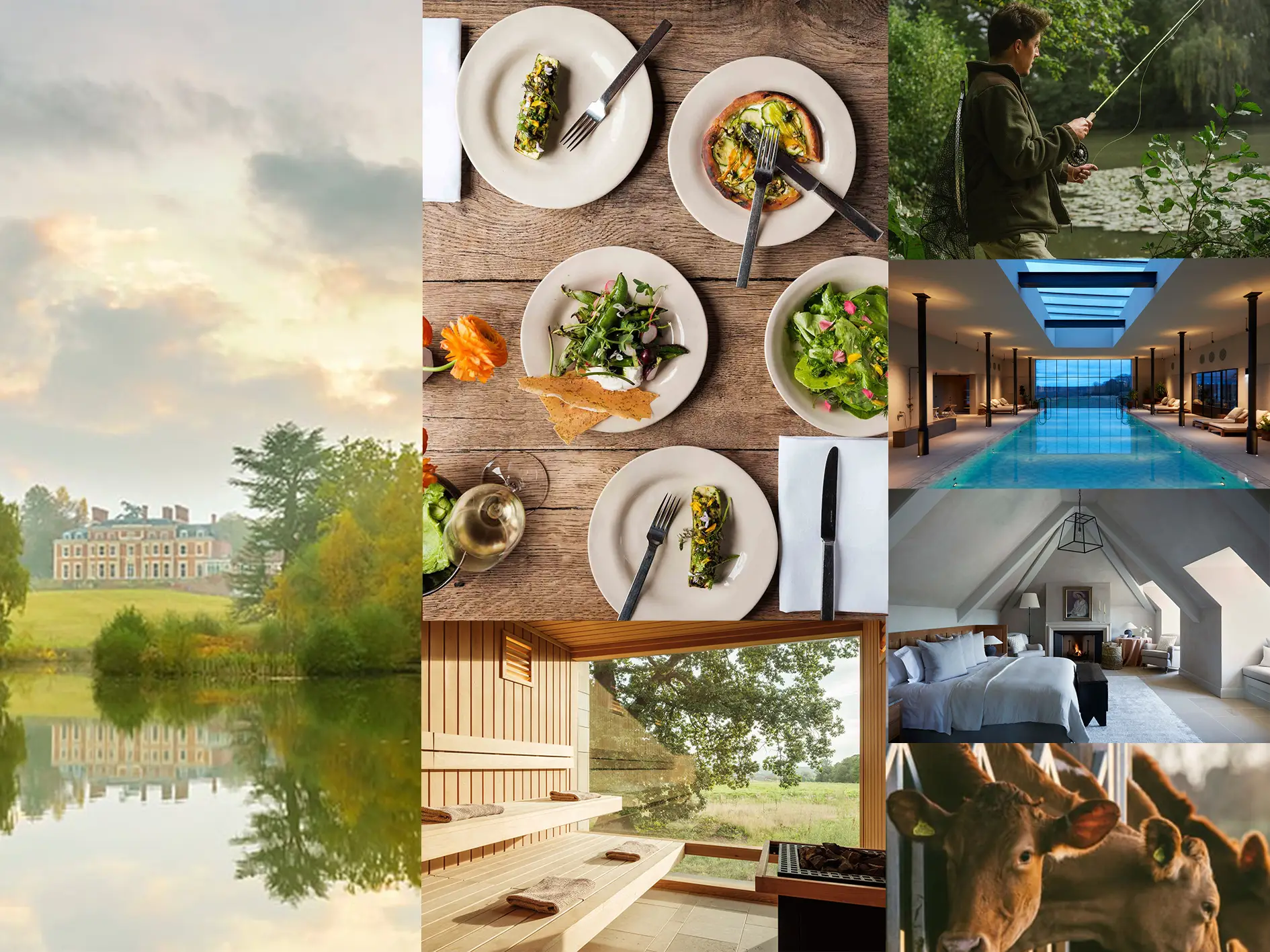
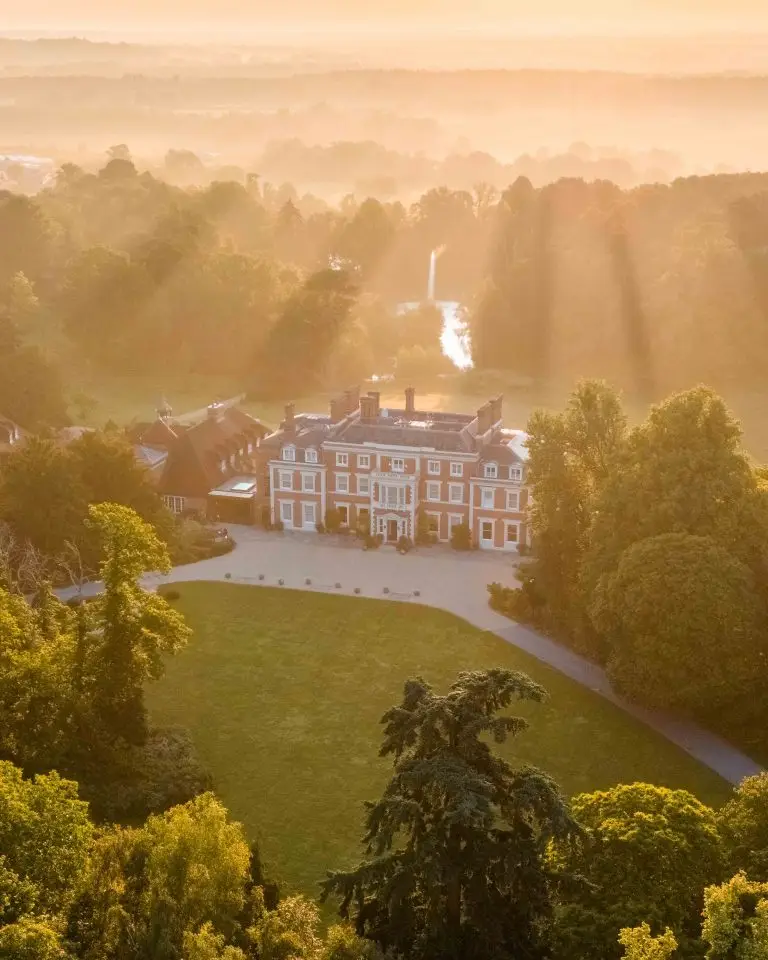
If there’s a single property that defines what farm-to-table luxury looks like in 2026, it’s Heckfield Place. The Georgian manor sits on 438 acres of Hampshire countryside, 75 minutes from London, and it operates with a coherence the rest of the category is still working towards.
The numbers tell part of the story. The Home Farm runs a Guernsey dairy herd producing milk, butter, and cream for the property. There are 90 sheep, 20 pigs, and an average of 400 chickens. Twenty beehives produce honey for the kitchens and the spa. The market garden grows 60 to 70 different vegetable crops and 40 to 50 different cut-flower crops, with David Rowley overseeing a team of around a dozen growers. In peak summer, the kitchens receive 5,000 stems per week from the gardens.
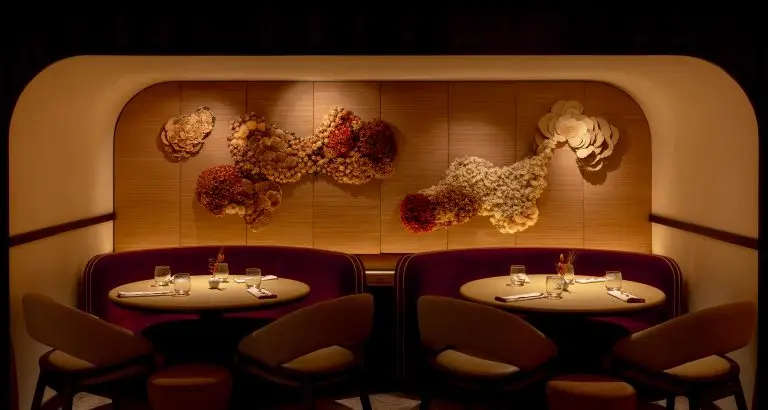
Culinary direction comes from Skye Gyngell, previously of Petersham Nurseries and Spring at Somerset House. She holds the title of Culinary Director and presides over two restaurants. Marle, the main dining room, carries a Michelin Green Star and serves what she’s described as “root-to-plate” cooking shaped by what’s been picked that morning. Hearth, in the former stables, is residents-only and cooks largely over open fire. The menu changes biweekly, dictated by garden output.
The biodynamic certification, achieved in February 2026 after a three-year conversion, makes Heckfield the first hotel in the UK to operate at this standard. The certification covers the full market garden and orchards under the Demeter International framework. Rowley’s team uses moon-cycle planting (working when the moon is in earth constellations for root crops like carrots, for example), composted manure preparations, and a closed-loop system that has eliminated almost all external inputs.
The wellness piece matters too. The Bothy, the 17,000-square-foot subterranean spa, uses Wildsmith skincare, which the property created in-house using herbs from the Home Farm. Treatments follow circadian rhythm protocols. The 20-metre pool runs chlorine-free.
Where Heckfield extends beyond the property is The Assembly, its public programming arm. The Assembly runs walks, talks, workshops, and seminars open to the wider community, with a focus on agricultural and craft skills. It’s the property’s most visible answer to the obvious question about exclusivity: a 45-room luxury hotel asking £900-plus per night isn’t fixing the food system on its own, but the educational layer extends the practical knowledge outward.
Inside Heckfield Place: SheerLuxe‘s reviewer described an evening at Hearth: “We tucked into excellent charred tomato flatbread, grilled Calcot onions, and a bowl of hand-shaped cavatelli and beef cheek ragu that would rival the best Italian restaurants.” The same review noted Heckfield’s “no charge” minibar of homemade cocktails, beers, and ginger biscuits “fresh from the kitchen” as a small detail that captured the property’s approach.
Rates: From £695 per night for the smallest garden-view rooms; suites from £1,500+. Most guests stay two to three nights.
São Lourenço do Barrocal, Alentejo, Portugal
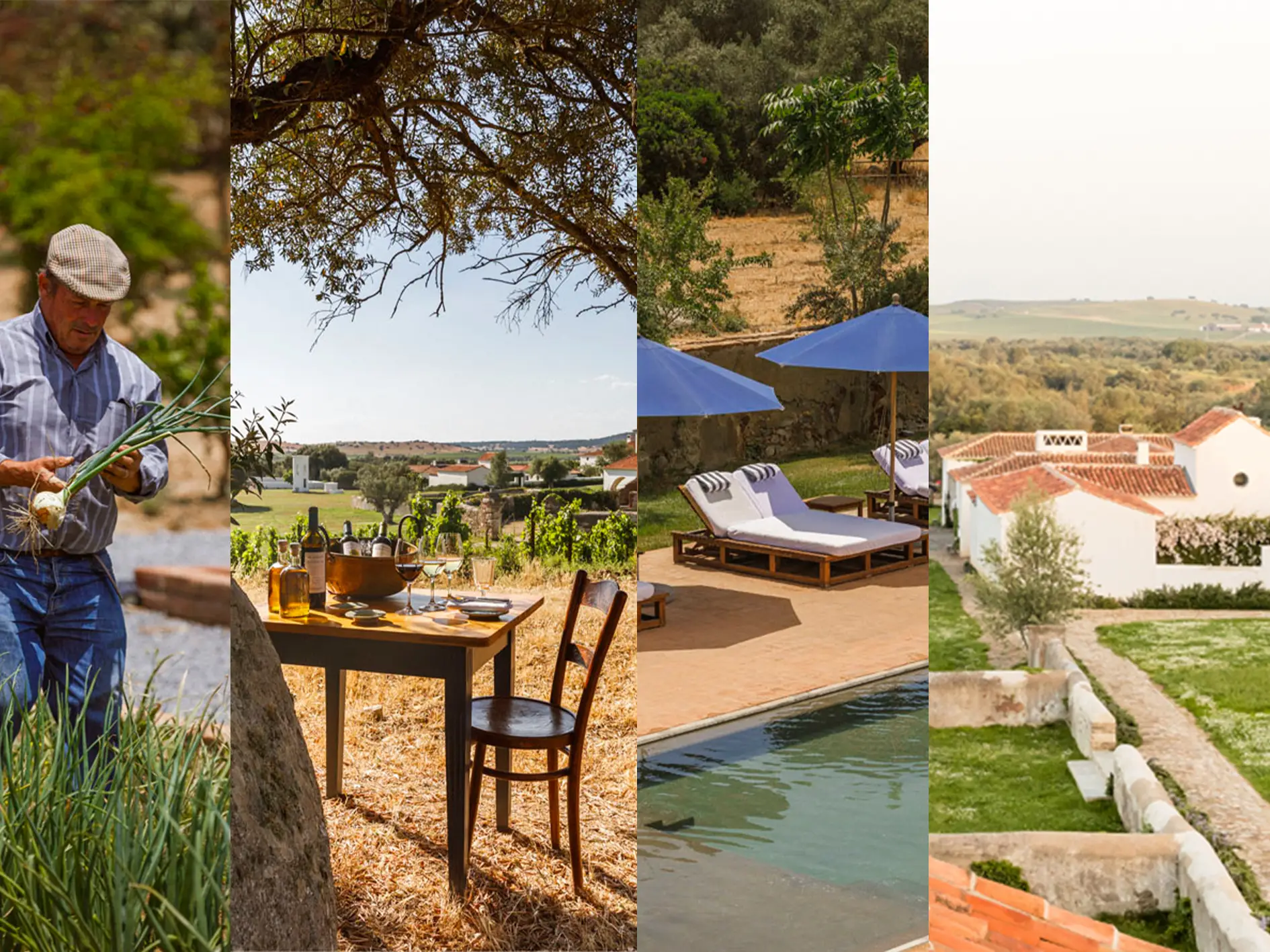
200 years old, 2,000 acres, eight generations of the same family. São Lourenço do Barrocal is the European equivalent of what Babylonstoren has done in South Africa: an agricultural estate that quietly converted into one of the country’s most considered luxury hotels.
The estate sits in the Alentejo countryside, about two hours from Lisbon, surrounded by ancient holm oak forests, vineyards, and olive groves. The José António Uva family still lives on the property, and the conversion (designed by Pritzker laureate Eduardo Souto de Moura, no less) preserved the original whitewashed buildings of the traditional Alentejo monte layout. There are 22 rooms, suites, and cottages spread across former barns, the original olive press, and stables.
The agriculture is genuine and ongoing. The estate produces its own wine under the Barrocal label, with a winemaker who’s been making wine on the property for years. The olive oil comes from the estate’s own groves. Vegetables and fruit for the restaurant come from the kitchen garden. The horses in the stables are working animals, not decoration.
What makes São Lourenço unusual within the category is its restraint. There’s no Michelin-style fine dining. The restaurant, Tasca do Celeiro, serves Alentejo home cooking interpreted with a light touch. The spa is small but uses Susanne Kaufmann products with herbs and oils grown on the estate. The model treats luxury as quiet competence rather than spectacle.
Rates: From €395 per night, suites from €700+.
Borgo Egnazia, Puglia, Italy
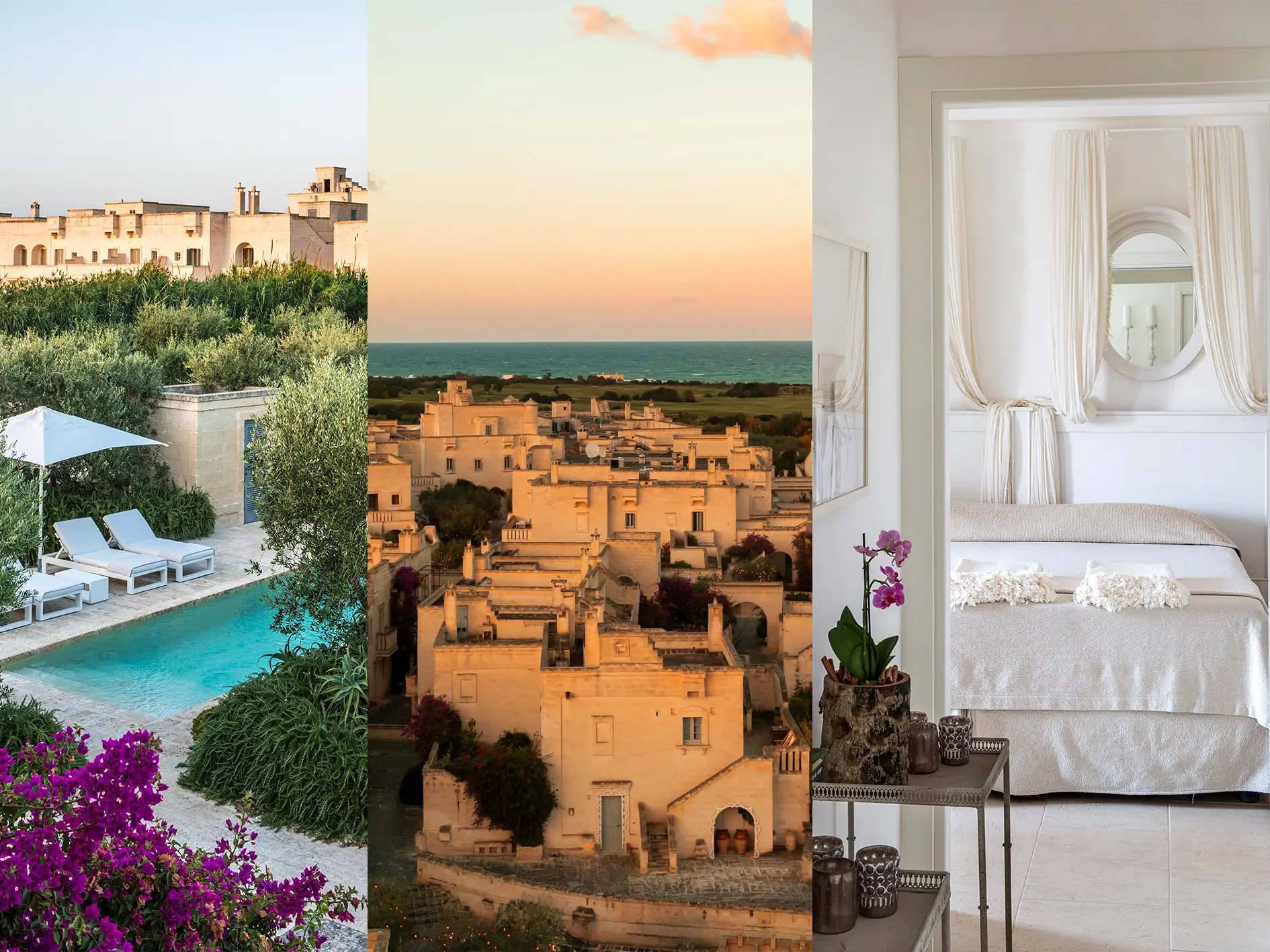
Borgo Egnazia sits on the Adriatic coast in southern Italy, near the fishing village of Savelletri. Designed in the style of a traditional Puglian village, the property covers 20 hectares with 184 rooms across three areas (the castle-like La Corte, the village-style Il Borgo, and 28 private Casette villas).
The farm-to-table proposition operates differently here. Borgo Egnazia draws produce from the family’s adjacent agricultural estate (Masseria San Domenico Group properties), which has been farming the land for generations. The two-Michelin-starred Due Camini, under executive chef Domingo Schingaro, is the property’s flagship restaurant. Schingaro’s cooking is rooted in what the kitchen calls “Puglian rural cooking with technique,” and the menu shifts with what the family farms are producing.
The wider property has multiple dining venues, but the farm-to-table identity is concentrated in Due Camini and the casual Trattoria Mia Cucina. The remaining restaurants serve more conventional resort food. This is one of the largest properties in the category and the trade-off shows: the food agenda is excellent, but Borgo Egnazia is more accurately described as a luxury resort with farm-to-table dining than as a farm-to-table luxury hotel in the Heckfield sense.
Rates: From €750 per night; villas from €3,000+.
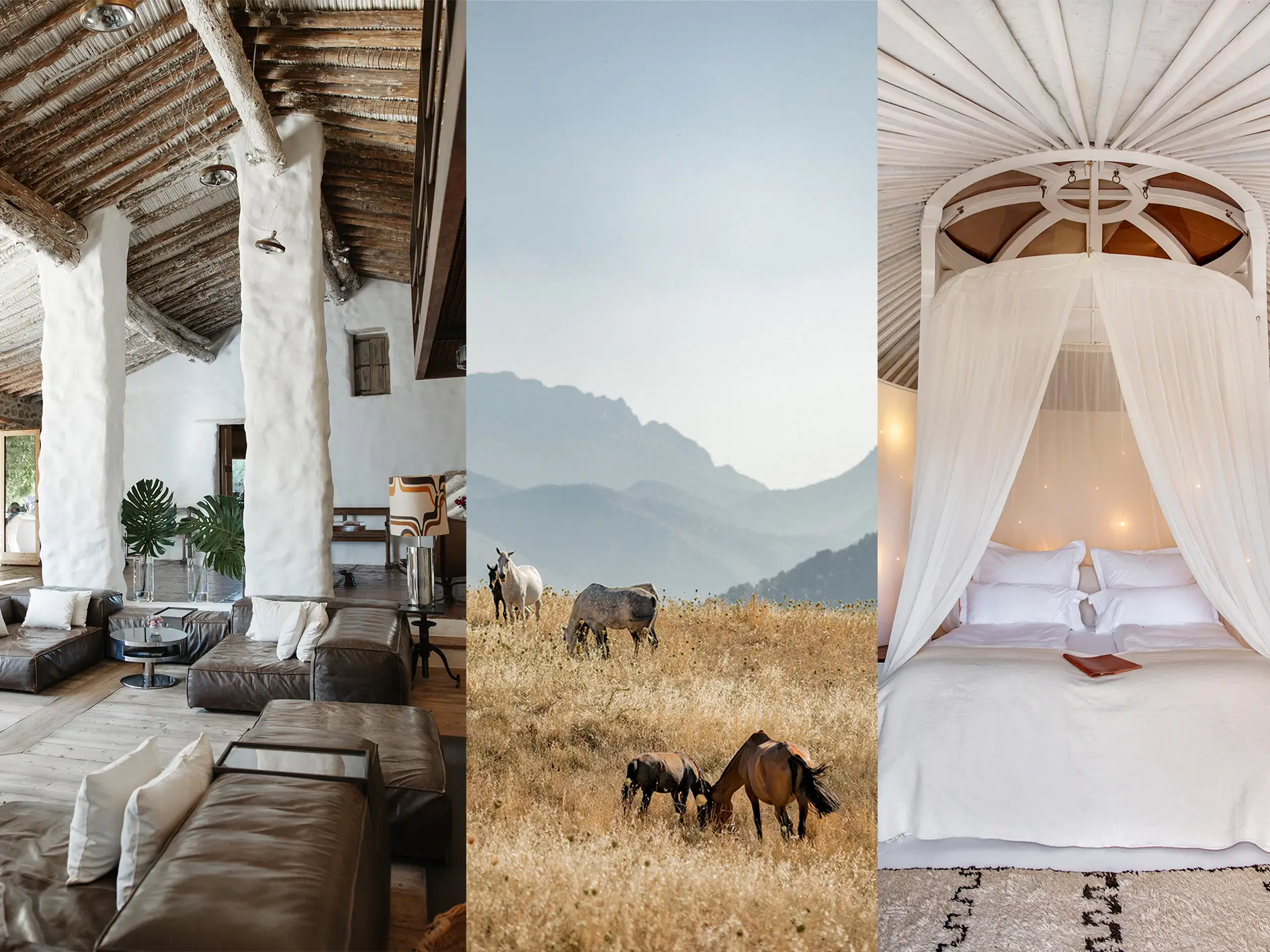
La Donaira, Andalusia, Spain
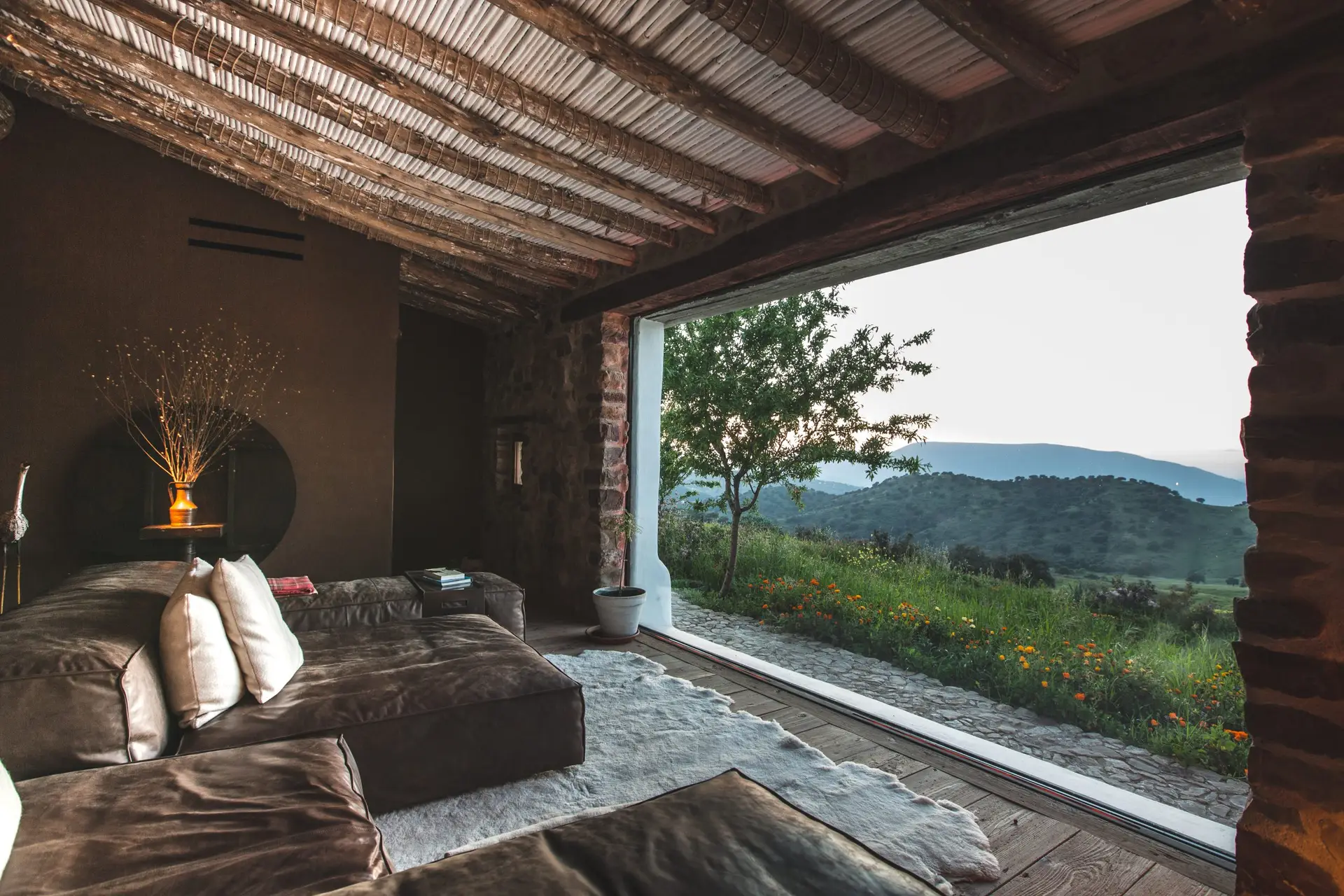
The most uncompromising property in the European group. La Donaira sits on 1,700 acres in the Sierra de Grazalema mountains between Seville and Ronda, with just nine rooms. Galavante captured the proposition: “If the world were to end, La Donaira is one of those luxury farm stays that would not notice.”
The estate runs entirely off-grid, powered by solar and biomass. Everything served in the kitchen is foraged, raised, or grown on the property. The olive oil is pressed on-site. The cheese is made from the estate’s herd of goats. There’s a biodynamic vineyard producing the house wines. The medicinal garden holds more than 350 plant species, many used in the spa.
What makes La Donaira distinctive within the category is its commitment to Lusitano horses (the estate keeps 70) and its biodynamic certification, which predates Heckfield’s. The spa includes what might be the only “bee meditation bed” in serious wellness circulation: guests lie on a wooden platform above functioning hives, breathing in the hum and aromatics of the bees. Whatever else can be said about it, no other luxury hotel offers this.
Rates: From €750 per night, two-night minimum.
North America: pioneers and innovators
Blackberry Farm, Walland, Tennessee
Blackberry Farm celebrates its 50th anniversary in 2026, and the property has earned the right to define the category. The Beall family opened the original inn in 1976, and decades of patient expansion have produced a 4,200-acre Relais & Châteaux property in the foothills of the Great Smoky Mountains that operates closer to a small country than a hotel.
The agriculture runs deep. The Farmstead, the property’s working farm operation, includes a 5-acre vegetable garden growing heirloom varieties, an on-site creamery making cheese from the farm’s sheep flock, a bakery, and a charcuterie operation. The dairy program produces small-batch butter and milk. The bee colonies supply the property with honey and the spa with treatment ingredients. Bon Appétit has named Blackberry Farm the #1 Resort for Food Lovers, and the culinary team has included multiple James Beard Award winners across the decades.
What other properties have tried to replicate, Blackberry built without a template. The 160,000-bottle wine cellar is one of the largest hotel collections in North America. The kennel breeds Lagotto Romagnolo, the Italian truffle-hunting dog, with 15-year waitlists for the $8,500 puppies. The property runs its own truffle program with hunts during the appropriate seasons.
The wellness program centres on the Wellhouse spa, which uses herbs, flowers, and honey from the property in its treatments. The fitness and outdoor programming is unusually robust: archery, fly-fishing, clay shooting, mountain biking, hiking, paddleball, even paintball. Most guests stay three to five nights and never need to leave.
Inside Blackberry Farm: One guest writing on Inviato Travel described the property as “consistently rated in the top of all annual travel award lists.” A reviewer on a separate site noted that the staff “knew our names within minutes” and that “the curtains will be drawn, your bed turned down, and a fire already lit in your fireplace” upon return to the cottage each evening.
The social piece at Blackberry runs through its culinary education programs. The property hosts James Beard-recognised chef residencies, runs wine education events, and produces an in-house magazine that covers Smoky Mountain agricultural traditions. The cultural anchor extends past the property’s gates.
Rates: From $1,295 per night for the smallest cottages; main lodge rooms from $1,650; suites and Hill Cottages from $2,500+. Rates are largely all-inclusive of meals.
SingleThread Farms, Healdsburg, California
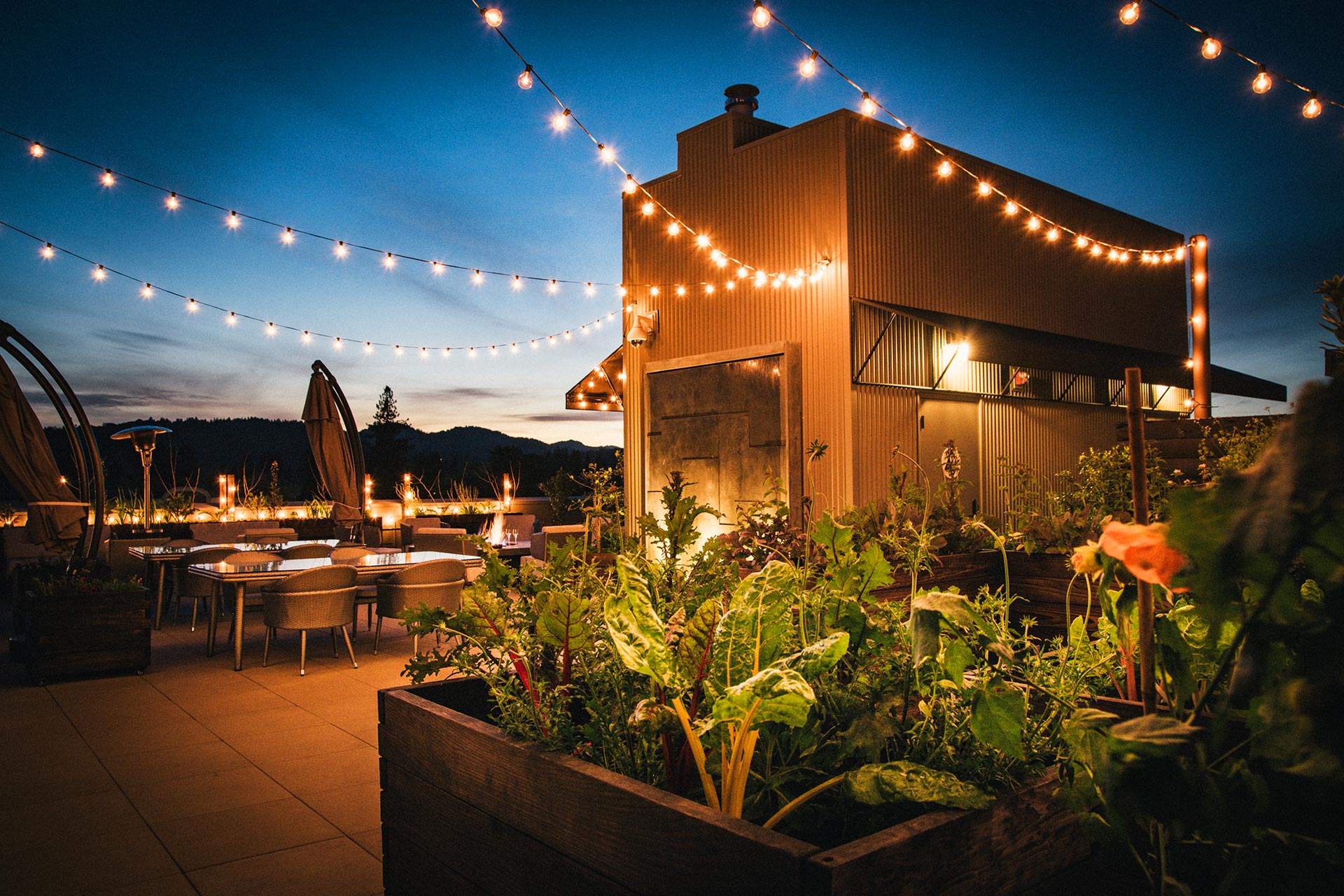
Three Michelin Stars. A Michelin Green Star. Five guest rooms. SingleThread is the smallest property in the category at the very top end of the global category. It also functions as the most concentrated demonstration of what the model can do.
The farm sits on 24 acres in the Dry Creek Valley, a few minutes from the restaurant and inn in downtown Healdsburg. Katina Connaughton runs the agricultural operation as Head Farmer. Kyle Connaughton runs the kitchen. The two were high-school classmates in Los Angeles, married, spent years in Japan (where Kyle worked under Yoshihiro Murata at Kikunoi, the kaiseki institution), and returned to California to build what is now considered one of the world’s best food destinations.
The farm produces around 70% of the restaurant’s produce. SingleThread combines Japanese influences with farm-to-table ingredients, and the 10-course tasting menu shifts daily based on what’s been picked, with vegetarian, pescatarian, and omnivore options. The botanical opening course, a “landscape” of small bites referencing the season, has become one of the most photographed culinary signatures in the world.
The five guest rooms above the restaurant are run as an inn rather than a hotel. Breakfast is generous (Japanese or California style, both substantial). Staying overnight guarantees a dinner reservation, which is the practical case for the inn given how difficult dinner-only reservations are to secure.
For Travelermag readers who’ve been following our Capella Kyoto review, this is relevant: SoNoMa by SingleThread, the 12-seat counter restaurant the Connaughtons opened at Capella Kyoto in March 2026, is the Healdsburg restaurant’s first international project. The lineage runs both ways. The Japanese influence shaped SingleThread from the start. The California model is now reshaping Kyoto.
Inside SingleThread: A reviewer for the Michelin Guide described the experience: “The menu begins memorably with a botanical landscape interspersed with impeccable first bites that introduce the central themes of the meal: impeccable ingredients, precise knife technique, artistic presentation and pure, harmonious flavors.”
Rates: Inn rooms from $1,100 per night (breakfast included). Dinner runs $475 per person before wine pairings ($300, $500, or $1,500 depending on tier). Reservations open on the 1st of each month for the following month and go fast.
Africa: the Cape Dutch revolution
Babylonstoren, Cape Winelands, South Africa
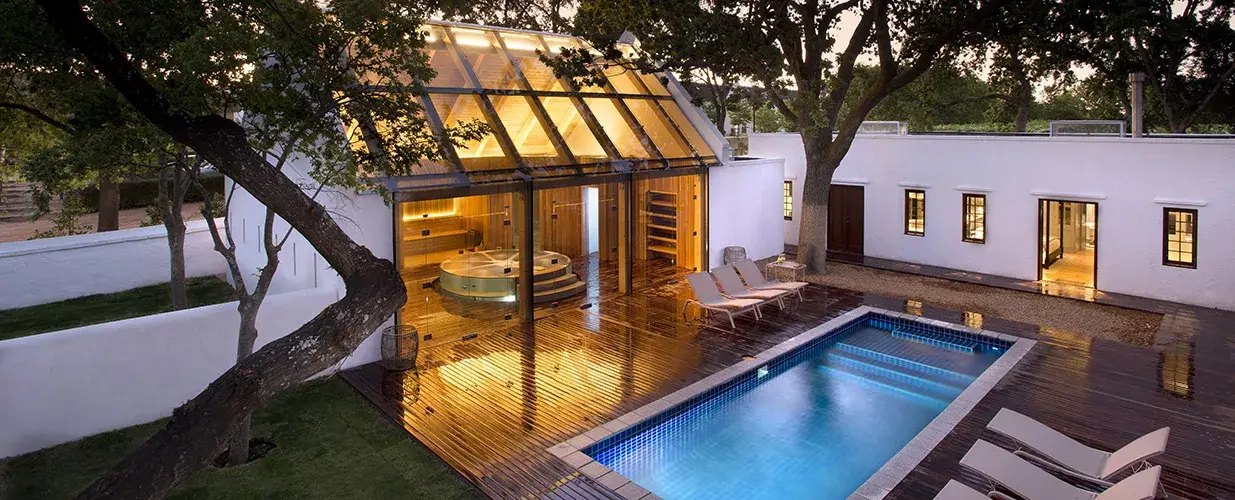
Babylonstoren is, by some measures, the most successful farm-to-table luxury hotel in the world. The 750-hectare estate near Paarl in the Cape Winelands holds its place as “#1 resort in Africa” in the Travel + Leisure World’s Best Awards 2023, has appeared on Condé Nast Traveler’s Gold List, and has been written about more than almost any other property in the category. The reasons are several, and they’re instructive.
The estate dates to 1692, making it one of the oldest Cape Dutch farms in South Africa. Karen Roos, a former magazine editor (she ran Elle Decoration South Africa), bought the property a decade ago and led a careful restoration that maintained the historic architecture while introducing contemporary design and a serious agricultural agenda. The estate produces wine under multiple labels, grows fruit and vegetables on a scale that supplies the on-site restaurants several times over, and has built one of the most photographed gardens in the world.
The 8-acre formal garden, designed by French architect Patrice Taravella, contains more than 300 plants, all either edible or with medicinal value. The design references the hanging gardens of Babylon (hence the name), the historic Cape vegetable gardens of the Dutch East India Company, and Persian paradise garden traditions. The result is a working agricultural space that doubles as a destination in its own right, with day-visitor access running alongside hotel operations.
The hotel itself has 13 cottages clustered near the garden, plus the Farmhouse with nine suites, and the standalone Manor House sleeping ten. The interiors avoid the heavy-handed Cape Dutch style sometimes associated with the region; instead they read closer to Patrice Taravella’s other work, with restrained palettes, contemporary fittings, and an emphasis on local materials.
The dining centres on Babel, located in a former cowshed and serving what Roos has described as colour-themed seasonal cooking (“the red plate,” “the green plate”), all of it built from what the gardens are producing that week. The Greenhouse cafe handles lighter daytime meals. The bakery is a separate operation serving the property and the wider farm shop.
Wellness on the property is handled by the Garden Spa, located in a bamboo grove. Treatments use herbs picked each morning from the medicinal garden. The hammam, sauna, and outdoor pool overlook the vineyards.
The social piece at Babylonstoren is genuine. The estate is a major employer in the Drakenstein valley, and Karen Roos has been explicit about her commitment to preserving Cape Dutch agricultural heritage as a working tradition rather than a museum. The farm shop sells produce to the local population, the gardens are open to the public for a modest entrance fee, and the family-run operation has become a model for how heritage estates can be commercially viable without losing their character.
Inside Babylonstoren: A reviewer writing in Voyemo called it “a stunning vineyard estate… with its beautiful gardens, rich history, and exceptional farm-to-table dining experience.”
Rates: From ZAR 10,296 per night (~£440 / $560), suites and the Farmhouse from ZAR 18,000+ (~£770 / $980). Dinner at Babel is exceptionally difficult to book without staying.
Asia-Pacific: the new frontier
The category developed late in Asia but has accelerated quickly. Three properties define the current state of the conversation, and one of them you’ll already know if you read our recent coverage.
Capella Kyoto and SoNoMa by SingleThread
When Capella Kyoto opened in March 2026, it brought the SingleThread model to Japan in a more concentrated form than even Healdsburg offers. SoNoMa by SingleThread is a 12-seat counter restaurant operated by Kyle and Katina Connaughton, with chef Keita Tominaga (Sonoma County-born, Kikunoi-trained in Kyoto) running the kitchen day-to-day. The menu draws from Connaughton’s Sonoma farm philosophy applied to Kansai-region ingredients, with significant produce sourced from regional Japanese growers operating to similar standards. We covered the full property in our Capella Kyoto review.
What makes Capella relevant to this article isn’t just the SingleThread link. The hotel is built around a philosophy that closely parallels Heckfield’s: estate-led, place-rooted, with food and craft treated as creative direction rather than amenity. The fact that the SoNoMa team works closely with regional farmers and producers (with several visiting Healdsburg before the property opened) extends the regenerative model into a new geography.
Azuma Farm Koiwai, Iwate, Japan
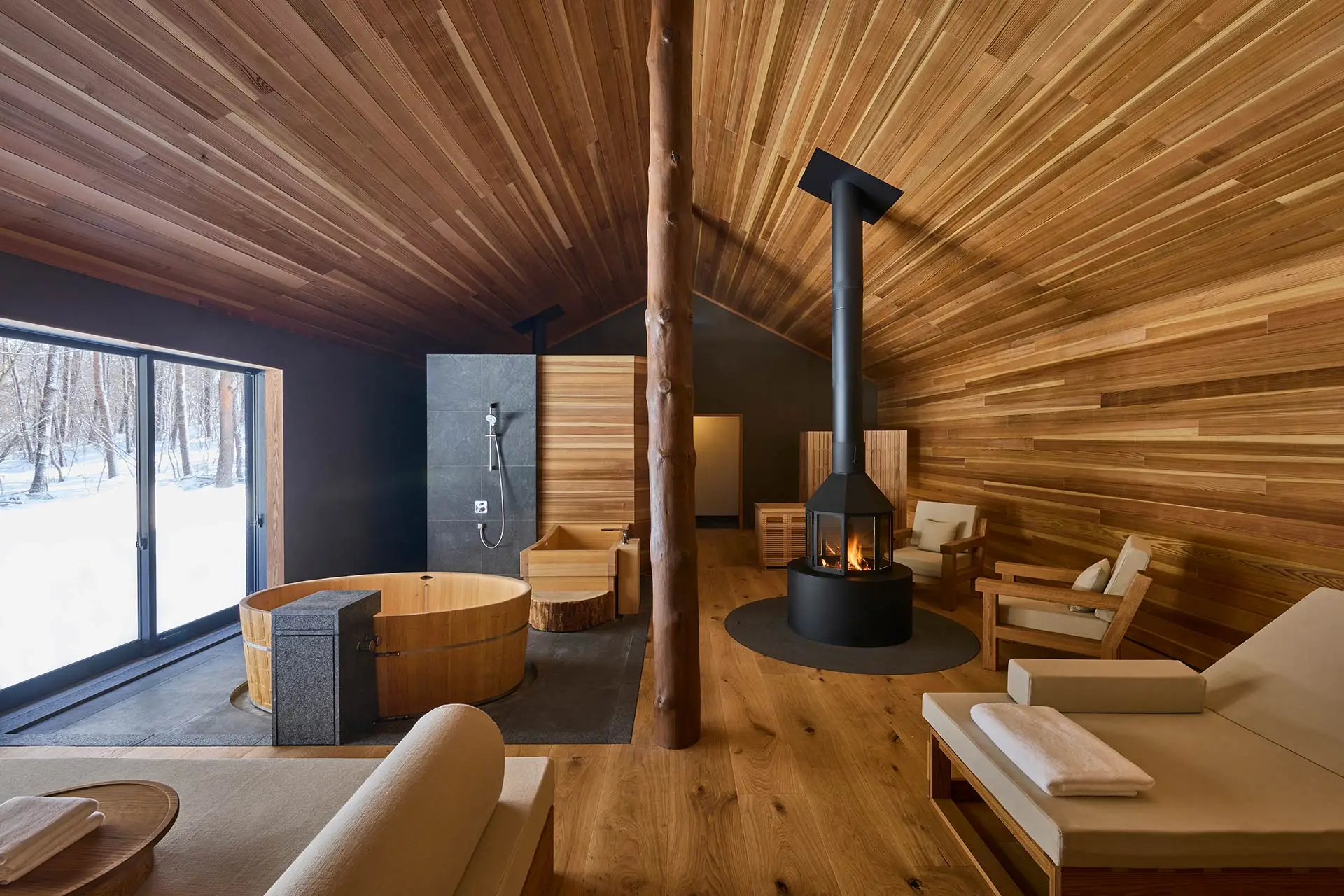
Adrian Zecha, the founder of Aman, has spent decades shaping what luxury hospitality looks like. His most recent project, Azuma Farm Koiwai, is a deliberate departure from the Aman model. Located on a working dairy farm in Iwate prefecture, the property treats agriculture not as a hotel amenity but as the entire point of the visit. We covered it in detail in our piece on the Aman founder’s quiet reinvention of luxury.
Azuma Farm Koiwai signals where the Asian iteration of the category is heading. Less about Michelin-style dining; more about extended-stay immersion on working land. The food matters, but the cows, the harvest, and the rhythm of farm life matter more.
Trisara, Phuket, Thailand
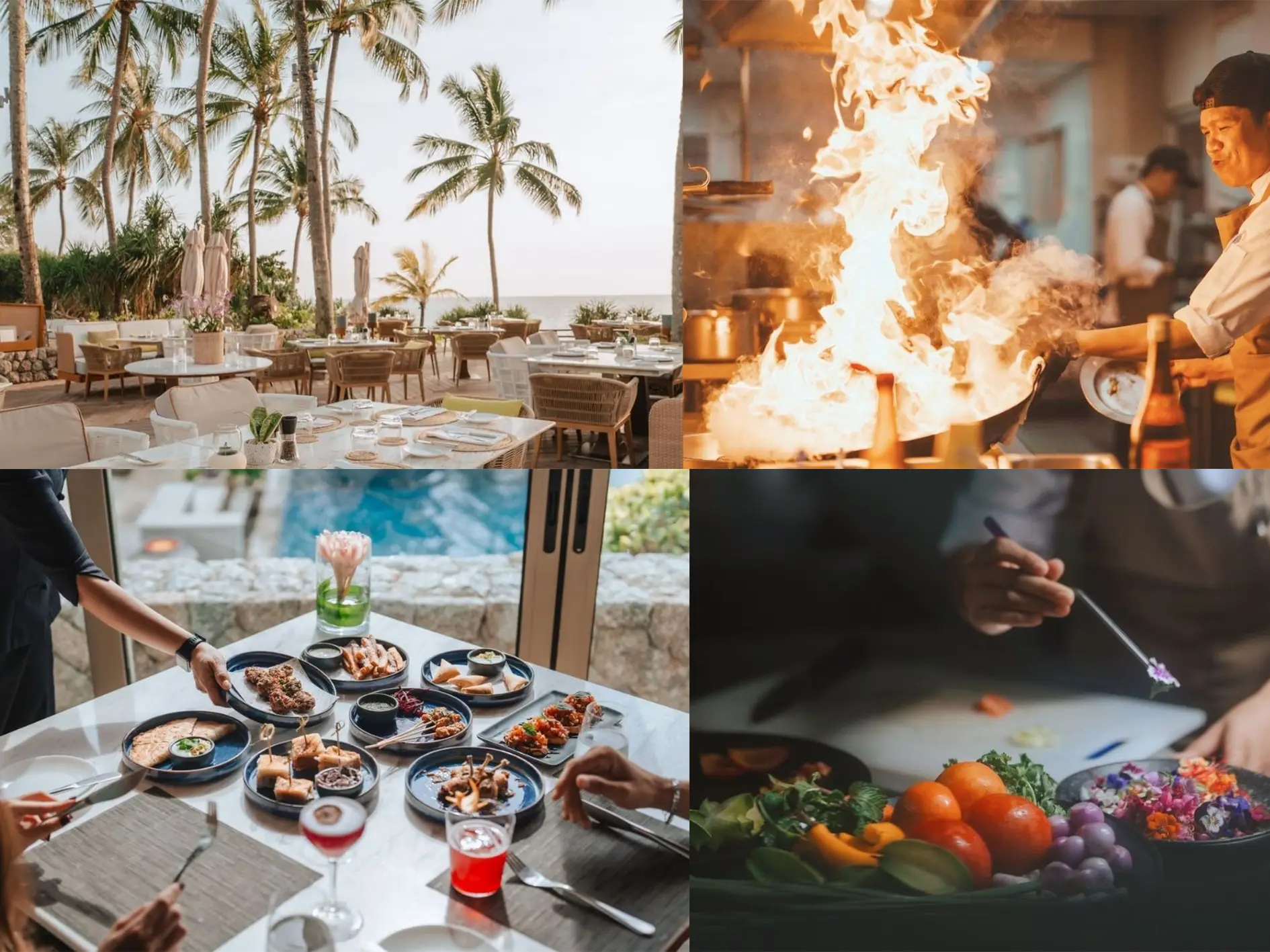
Trisara has been operating on the quieter northwest coast of Phuket for nearly two decades. The property combines 39 ocean-facing pool villas with PRU, the on-site restaurant carrying one Michelin Star and a Green Star, plus JAMPA, the property’s open-fire dining pavilion focused on regenerative agriculture and zero-waste cooking. Both restaurants source from the property’s own farm in Khao Sok and from a network of Thai smallholders. Trisara is more conventional resort architecture than Heckfield or Babylonstoren, but the agricultural agenda holds.
Rates: Trisara from $1,500 per night for entry-level pool villas; oceanfront villas from $3,500+.
New farm-to-table luxury openings in 2026
Five new properties to watch. Some have opened; some are still on schedule.
Vestige Binidufà, Menorca (April 2026). Completes the 800-hectare Vestige estate alongside Son Ermità. 22 rooms and suites with earthy interiors, local antiques, two shared restaurants serving farm-to-table and fire-cooked menus. The estate has been farming the land for years; the hotel arrives last in the development sequence.
Kaia, Koh Phangan, Thailand (Summer 2026). A 31-suite property on the quieter northeast coast of the island, with ocean-facing tented suites and four two-bedroom villas. The dining program centres on the resort’s own organic farm and uses fire-based cooking. Founded by Bound and Beyond with Cloud Collective, the project uses passive cooling, solar power, and on-site water filtration. A no-single-use-plastics policy is operational from opening.
Costa Irminia Retreat & Spa, Sicily (2026). A 43-room property in Sicily’s Irminio Nature Reserve. The dining program builds on Mediterranean heritage and farm-to-table sourcing from the surrounding agricultural estate. Spa rituals merge ancient and contemporary practices, with a focus on UNESCO sites in the surrounding area.
Park Hyatt Phu Quoc, Vietnam (Q2 2026). A village-inspired resort with bamboo-lined paths, terraced rice fields, and a working organic farm supplying the kitchens. Two dining venues, lakeside spa, and a strong emphasis on regional craftsmanship (rattan, lacquerware). The Park Hyatt represents one of the larger hotel groups making a serious move into the category.
Borgo Pignano (extension), Florence (June 2026). Stefano Cavallini, the Michelin-starred chef, takes over a Florence outpost of the historic Borgo Pignano estate in Tuscany. The model creates a farm-to-city supply line, with both restaurants drawing ingredients from the original Borgo Pignano agricultural property. It’s an unusual urban iteration of the category.
A few others worth tracking: A Mandria di Murtoli in Corsica continues to expand its farm-to-table programme. Asilia Africa’s Erebero Hills, opening mid-2026 in Bwindi Forest, Uganda, will combine gorilla trekking with locally-sourced cuisine. The Malkai in Oman runs a Bedouin-influenced farm-to-fork dining concept across three desert sites.
Comparison table: 10 best farm-to-table luxury hotels
| Hotel | Location | Rooms | Farm size | Starting rate | Michelin recognition | Best for |
|---|---|---|---|---|---|---|
| Heckfield Place | Hampshire, England | 45 | 438 acres (100% biodynamic) | £695 | 1 Green Star (Marle) | Estate immersion, biodynamic depth |
| Blackberry Farm | Walland, Tennessee | 68 | 4,200 acres | $1,295 | None (R&C member) | American farmstead luxury, longest legacy |
| SingleThread Farms | Healdsburg, California | 5 | 24 acres regenerative | $1,100 | 3 Stars + Green Star | World-class dining, food obsessives |
| Babylonstoren | Cape Winelands, South Africa | 28 | 750 hectares | £440 | None (Gold List) | Garden immersion, design-led |
| São Lourenço do Barrocal | Alentejo, Portugal | 22 | 2,000 acres | €395 | None (R&C member) | Quiet luxury, heritage farm |
| Borgo Egnazia | Puglia, Italy | 184 | Family estates | €750 | 2 Stars (Due Camini) | Family-friendly resort scale |
| La Donaira | Andalusia, Spain | 9 | 1,700 acres biodynamic | €750 | None | Off-grid wilderness luxury |
| Capella Kyoto | Kyoto, Japan | 89 | Partner farms | ¥394,200 (~£2,020) | SoNoMa expected | Urban farm-to-table, Japanese sensibility |
| Trisara | Phuket, Thailand | 39 | Own farm + smallholders | $1,500 | 1 Star + Green Star (JAMPA) | Tropical luxury with regenerative ethos |
| Azuma Farm Koiwai | Iwate, Japan | 12 | Working dairy farm | ¥180,000+ | None | Working-farm immersion |
The other side: greenwashing, fatigue, and the paradox of exclusivity
The category has its critics, and the criticisms are worth taking seriously. This is where most farm-to-table luxury coverage stops short. We won’t.
Greenwashing in luxury hospitality
The faster the category grows, the harder it becomes to distinguish the genuine operators from the marketing-led ones. By 2026, the term “farm-to-table” had been applied to enough resort restaurants to lose much of its meaning. A hotel with a herb garden and a Caesar salad on the menu can market itself as farm-to-table without committing legal fraud.
What separates the genuine from the performative isn’t difficult to identify if you know where to look. The five criteria listed earlier in this guide are the starting point: an actual farm, a meaningful percentage of on-site produce, third-party certification, a public-facing farmer role, and seasonal menus that genuinely shift. Hotels meeting all five are uncommon. Hotels meeting one or two are everywhere.
Michelin’s Green Star has become the most useful filter. The award requires verified sustainable practice, not stated intent. A property holding a Green Star isn’t necessarily a true farm-to-table luxury hotel, but a true farm-to-table luxury hotel is increasingly likely to hold a Green Star.
Farm-to-table fatigue
There’s a separate concern, articulated in the trade press and increasingly in guest reviews: the category has become a cliché. Every luxury hotel now markets some version of farm-to-table dining. The differentiation has eroded. For travellers who’ve stayed at five of these properties in five years, the model has become familiar, even predictable.
The honest answer is that this is true for the marketing veneer of the category, not for the operators with real depth. Heckfield Place in 2026 feels meaningfully different from a luxury hotel with a kitchen herb garden in 2016. The difference is in the integration: when the farm structures the menu rather than supplementing it, when the head grower is a creative force rather than a sourcing partner, when the spa products come from the same land as the dinner ingredients, the experience is genuinely different. The fatigue is real for the diluted version. The deep version still rewards attention.
The exclusivity paradox
The harder critique is structural. A 45-room luxury hotel asking £900 per night, however biodynamic, isn’t fixing the food system. The carbon footprint of guests flying to remote rural estates is substantial. The land-use intensity of producing organic luxury food for a small number of wealthy diners is, on a per-meal basis, considerably higher than industrial agriculture. The model is, by design, available to a fraction of a percentage of the population.
Operators in the category respond to this argument with two arguments of their own. The first is influence: by demonstrating that high-end agriculture can be commercially viable, properties like Heckfield and SingleThread shift industry expectations and educate the next generation of chefs and farmers. The second is community: programs like Heckfield’s Assembly, Babylonstoren’s farm shop, and Blackberry’s culinary residencies extend the practical knowledge beyond the paying guests.
Neither argument is fully satisfying. The category does serve a small population. The premium prices do underwrite practices that wouldn’t be commercially viable at industrial scale. The honest framing is that farm-to-table luxury hotels demonstrate possibilities and influence elite culinary culture, not that they solve agricultural problems.
Climate vulnerability: what happens when the farm fails
The least discussed challenge in the category, and the most consequential. Farm-to-table luxury hotels depend on consistent agricultural output. Climate volatility is making that consistency harder to deliver.
The 2023 European heatwave damaged crops at Heckfield Place. California wildfires and drought have affected SingleThread’s Dry Creek Valley operations repeatedly through the 2020s. Heavy rainfall in the Cape Winelands has affected Babylonstoren harvests. The pattern is industry-wide.
How operators respond to harvest failure has become a meaningful test of credibility. Heckfield Place has been explicit about this: “We are a living place that contends with all the vagaries of nature. This means we have beautiful gluts in seasons of surplus, but also have times of shortage when the climate doesn’t cooperate.” The property maintains relationships with biodynamic neighbours like Fern Verrow in Herefordshire as a backup network during dry spells. Most serious operators run similar contingencies.
The most credible farm-to-table operators in 2026 are the ones who can describe in detail what they do when the harvest fails. The least credible are the ones whose marketing implies that nothing ever goes wrong. The category is increasingly making peace with the fact that genuine seasonality includes scarcity.
What does farm-to-table luxury actually cost?
The price range across the category is wider than most travellers realise. At the lower end of luxury, properties like São Lourenço do Barrocal and Babylonstoren start around €395-€440 per night for their entry-level rooms. At the upper end, Capella Kyoto and SingleThread Farms start over $1,000 per night before factoring in dining costs. The Heckfield Place rate sits between, with entry rooms at £695 and signature suites at £1,500-plus.
What drives the premium? Three factors, in order of significance.
Operational cost of genuine agriculture. Running a biodynamic farm at the scale needed to supply a luxury hotel is significantly more expensive than running a kitchen garden or sourcing from local suppliers. Heckfield’s Home Farm employs around a dozen growers; Blackberry Farm’s agricultural operations involve dozens of staff across the dairy, bakery, and farmstead. These costs are real and get reflected in rates.
Built-in inefficiency. Genuine farm-to-table operations don’t optimise for cost per meal. They optimise for quality and seasonality. A menu dictated by what’s been picked that morning is more expensive to operate than a menu standardised across an industrial supply chain. This inefficiency is the point. It also costs money.
Scarcity. Most farm-to-table luxury hotels are deliberately small. Heckfield has 45 rooms. SingleThread has 5. La Donaira has 9. The economics of luxury demand high rates when room counts are limited. The bookings tend to be sticky: average stays at these properties run longer than at conventional luxury hotels, and repeat rates are higher.
Compared to comparable conventional luxury hotels (Aman, Four Seasons, Belmond), the farm-to-table premium runs 15-30%. For travellers who care about the model, that premium is generally judged to be worth it. For travellers who don’t, it isn’t.
How to book a farm-to-table luxury hotel
A few practical notes on getting reservations at the properties covered above.
Use a travel advisor for the top properties. Heckfield Place, Blackberry Farm, Babylonstoren, and Capella Kyoto all participate in Virtuoso and Amex Fine Hotels + Resorts. The benefits are meaningful: room upgrades on arrival (subject to availability), $100-150 hotel credit, complimentary breakfast for two, late checkout. None of these benefits cost more than booking direct. The pricing is the same. Use the advisor.
SingleThread is the difficulty case. Restaurant reservations open at 9am PST on the 1st of each month for the following month. They go in minutes. Booking the inn (up to three months in advance) guarantees a dinner reservation and is the practical route in. Inn rooms also sell out quickly but more predictably than restaurant tables alone.
Babylonstoren has wait times for Babel. The restaurant runs four nights a week and books two months out for non-residents. Staying at the hotel guarantees access. Day visitors can usually get into the Greenhouse or the Bakery without difficulty.
Heckfield seasonality matters. Hampshire’s English country house season runs May to September. Winter stays are quieter and cheaper, but the gardens are less photographically rewarding. The shoulder seasons (April, October) tend to offer the best balance.
Blackberry Farm books early. The property runs at high occupancy year-round, with summer and major US holidays particularly tight. Two to three months’ advance booking is standard. Holidays require six months or more.
Is it worth it?
Best for: Travellers who care about the origins of their food, who appreciate the integration of agriculture with hospitality, and who are willing to stay two or more nights to absorb the rhythm of an estate. Couples and small groups generally do best. The model rewards slow travel.
Not ideal for: Travellers who want city access, urban dining options, or short stays (one-night visits don’t justify the rates or the travel time). Travellers with strict dietary requirements who require menu flexibility rather than seasonal substitution. Travellers for whom the agricultural agenda is incidental rather than central.
Verdict: The leading properties in this category (Heckfield, SingleThread, Babylonstoren, Blackberry) genuinely deliver something different from conventional luxury hospitality. The food is better. The connection to place is stronger. The experience holds together as a coherent proposition rather than a list of amenities. The premium prices are justified by what’s actually different about the operation. For travellers attracted to the model, these hotels are worth booking. For travellers who aren’t, conventional luxury hotels offer better value.
Frequently asked questions
What is a farm-to-table luxury hotel?
A farm-to-table luxury hotel is a five-star property that grows or produces at least 50% of the food served on-site or through dedicated long-term partner farms. The model treats agriculture as core to the guest experience, not as a supplement to it. The leading examples in 2026 include Heckfield Place, SingleThread Farms, Babylonstoren, and Blackberry Farm.
What is biodynamic farming, and is it actually different from organic?
Yes, meaningfully. Biodynamic farming is a closed-loop system developed by Rudolf Steiner in 1924. It uses moon-cycle planting calendars, specific composting preparations, and treats the farm as a single living organism. Organic farming sets standards for what you can’t use (synthetic chemicals, GMOs). Biodynamic farming sets standards for what you should do (regenerative practices, holistic management). Demeter International is the recognised certification body, with around 5,000 certified farms globally.
What is a Michelin Green Star?
The Michelin Green Star, introduced in 2020, recognises restaurants leading sustainable gastronomy. The criteria include working directly with growers and farmers, foraging where appropriate, growing produce and raising animals on-site, using regenerative methods, and reducing waste. As of 2026, around 400 restaurants worldwide hold a Green Star, including 37 in the UK and Ireland.
Which is the best farm-to-table luxury hotel in the world?
By accolades and depth of operation, three properties stand out: Heckfield Place (the only UK hotel with 100% biodynamic certification, Michelin Green Star at Marle), SingleThread Farms (3 Michelin Stars plus Green Star), and Blackberry Farm (50 years of continuous operation, Bon Appétit’s #1 Resort for Food Lovers). The “best” depends on what the traveller wants: estate immersion (Heckfield), transformative dining (SingleThread), or American farmstead heritage (Blackberry).
How does Heckfield Place compare to Babylonstoren?
Both are estate-led farm-to-table luxury hotels, but they’re different propositions. Heckfield is a Georgian country house in England with 45 rooms, 100% biodynamic certification, and a Michelin Green Star at Marle. It runs as a quiet, contained luxury experience. Babylonstoren is a 750-hectare working farm in the Cape Winelands of South Africa with a more open, day-visitor-inclusive model. Babylonstoren is cheaper (from £440 vs £695), has a more public garden experience, and works as a longer stay. Heckfield is more polished, more private, more expensive.
Is Blackberry Farm or SingleThread better?
They serve different purposes. Blackberry Farm is a 4,200-acre Tennessee estate with 68 rooms and a full resort programme (riding, fishing, hiking, spa, kennel). It’s a multi-day immersion in American farmstead luxury. SingleThread is 5 rooms above a 3-Michelin-starred restaurant in downtown Healdsburg. It’s an intensive food experience compressed into one or two nights. Blackberry suits families and longer stays. SingleThread suits food obsessives and couples.
How much does Heckfield Place cost per night?
Heckfield Place rates start at around £695 per night for the smallest garden-view rooms in low season. Standard rooms run £900-£1,200. Suites start at £1,500 and rise to £3,500+ for the signature Long Room Suite. Rates include breakfast at Marle (the residents-only Hearth is dinner-only). Spa treatments and Wildsmith products are extra.
When is the best time to book a farm-to-table luxury hotel?
Three months in advance is the practical floor for most properties; six months for the very busy seasons. Heckfield Place is best in May-September for the gardens. Babylonstoren is good year-round but most pleasant in their summer (November-March). SingleThread requires booking on the 1st of the month for the following month. Blackberry Farm books 2-3 months out for general dates, 6+ months for holidays. Capella Kyoto cherry blossom season (late March-early April) and autumn colour season (November) sell out furthest in advance.
How do I book SingleThread Farms?
Restaurant-only reservations open at 9am PST on the 1st of each month for the following month, released via Tock. They go in minutes. The practical alternative is booking the inn (up to three months in advance), which guarantees a dinner reservation alongside the room. Inn bookings are also limited (five rooms) but easier to time.
Why are farm-to-table luxury hotels growing in popularity?
Three forces. Demand: ultra-luxury travellers increasingly want provenance, sustainability, and authenticity, not just amenities. Supply: the Michelin Green Star (introduced 2020) has created a credentialed pathway for sustainable luxury restaurants. Structure: with food systems accounting for around 34% of global emissions, the luxury hospitality industry needs credible answers, and farm-led operations provide them.
Are farm-to-table hotels really sustainable?
The genuine operators (Heckfield Place, SingleThread, Babylonstoren) are running measurably more sustainable food systems than conventional luxury hotels, with smaller supply chains, biodynamic or regenerative practice, and lower food waste. But the broader question (whether luxury hospitality serving wealthy travellers can be considered “sustainable” at all, given the carbon footprint of long-haul flights and high resource use) remains harder to answer. The operators are making real improvements within their domain. They aren’t solving the larger structural problem.
What are the new farm-to-table luxury hotel openings in 2026?
The most anticipated 2026 openings with serious farm-to-table programmes include Vestige Binidufà in Menorca (April 2026), Kaia in Koh Phangan (summer 2026), Costa Irminia in Sicily (2026), Park Hyatt Phu Quoc in Vietnam (Q2 2026), and Borgo Pignano’s Florence outpost (June 2026).
Can farm-to-table luxury hotels accommodate vegan or gluten-free diets?
Yes, generally well, though with some caveats. The best properties (SingleThread, Heckfield, Babylonstoren) have years of practice with dietary requirements and adapt menus thoughtfully. The harder constraint is variety: a menu dictated by seasonal harvest has less flexibility than a conventional luxury kitchen. Guests with restrictive diets should communicate requirements clearly at booking. Pure vegan stays work better at some properties than others (Babylonstoren’s gardens make this straightforward; Blackberry’s dairy and meat focus makes it harder).
How do farm-to-table hotels handle climate disruption to their harvests?
The credible operators maintain partner-farm networks as climate insurance. Heckfield Place sources from biodynamic neighbours like Fern Verrow during dry spells. SingleThread works with regional regenerative farms across Sonoma County. Babylonstoren can substitute from its broader estate when specific gardens fail. The honest reality is that all of these properties have had crop failures from climate events in recent years. The category is making peace with the fact that genuine seasonality includes occasional scarcity.
Do farm-to-table luxury hotels have farm-to-spa wellness experiences?
Most of them do. Heckfield’s Bothy spa uses Wildsmith products created in-house from Home Farm herbs. Babylonstoren’s Garden Spa picks fresh herbs each morning for treatments. La Donaira’s spa draws from 350+ medicinal plants on the estate. Blackberry Farm’s Wellhouse uses honey and herbs from the property. The integration of agricultural production into wellness programming is one of the category’s most consistent features.
What is the most exclusive farm-to-table luxury hotel?
By a combination of low room count, high prices, and difficulty of booking, La Donaira in Andalusia (9 rooms, off-grid, two-night minimum) and SingleThread Farms (5 rooms, three-Michelin-star dining attached) are the most exclusive. Heckfield Place is more exclusive in feel due to its limited season and resident-only Hearth restaurant. Blackberry Farm is exclusive but at greater scale (68 rooms across 4,200 acres).
The wider point: hospitality and the food system
The thing that makes farm-to-table luxury hotels worth taking seriously, beyond the rates and the Michelin recognition and the photogenic gardens, is what they suggest about the future of hospitality.
Food systems account for about a third of global emissions. Industrial agriculture has degraded soil at a rate that, by some accounts, leaves humanity with 60 harvests remaining at current practices. The hospitality industry, which historically operated within these systems without much examination, is now being forced to look at where its food comes from.
The properties leading the category aren’t fixing this problem. They’re too small, too expensive, and too narrowly available to solve agricultural problems at any meaningful scale. What they’re doing is more limited and arguably more useful: they’re demonstrating, with significant resources and visibility, that intensive land restoration, biodynamic practice, and regenerative agriculture can be commercially viable. That they can produce food at a quality level that justifies premium pricing. That genuine seasonality, including its inconveniences, can be marketed as an asset rather than a problem.
The category will keep growing through 2026 and beyond. New openings are queued up in every major luxury market. The Michelin Green Star count keeps rising. The conventional luxury operators will increasingly copy elements of the model, with varying degrees of authenticity. Some of that copying will be genuine adoption of better practice. Most of it will be marketing.
The hotels worth seeking out are the ones with depth: visible farmers, real certification, kitchens that change with the harvest, owners who’ll talk credibly about what they do when the crops fail. There are perhaps 20 of them globally that operate at the top level. We’ve covered most of them in this guide. The rest are still emerging.
The wider point isn’t that farm-to-table luxury hotels are saving the world. They aren’t. The wider point is that luxury, at its best, is no longer about excess. It’s about provenance, attention, and integration. The hotel that grows the food you’ll eat that evening is making a different kind of promise than the one that flies in seasonal ingredients from three continents. Both can be luxurious. Only one is in step with where the world is heading.
Related reading: For our coverage of the Japanese arm of this movement, see our reviews of Capella Kyoto and news about Azuma Farm Koiwai.
All hotel rates quoted in this article are from May 2026 and are subject to change.