Inside Kyoto’s most anticipated luxury opening of 2026.
Capella’s first hotel in Japan opened in March 2026 on the site of a 100-year-old elementary school in Miyagawa-cho. With architecture by Kengo Kuma, the first international project from three-Michelin-starred SingleThread, and onsen water drawn from 3,000 feet underground, it may be the most considered luxury opening Kyoto has seen in years. I dug through the first wave of guest reviews and the hotel’s own materials to figure out what it’s actually like.
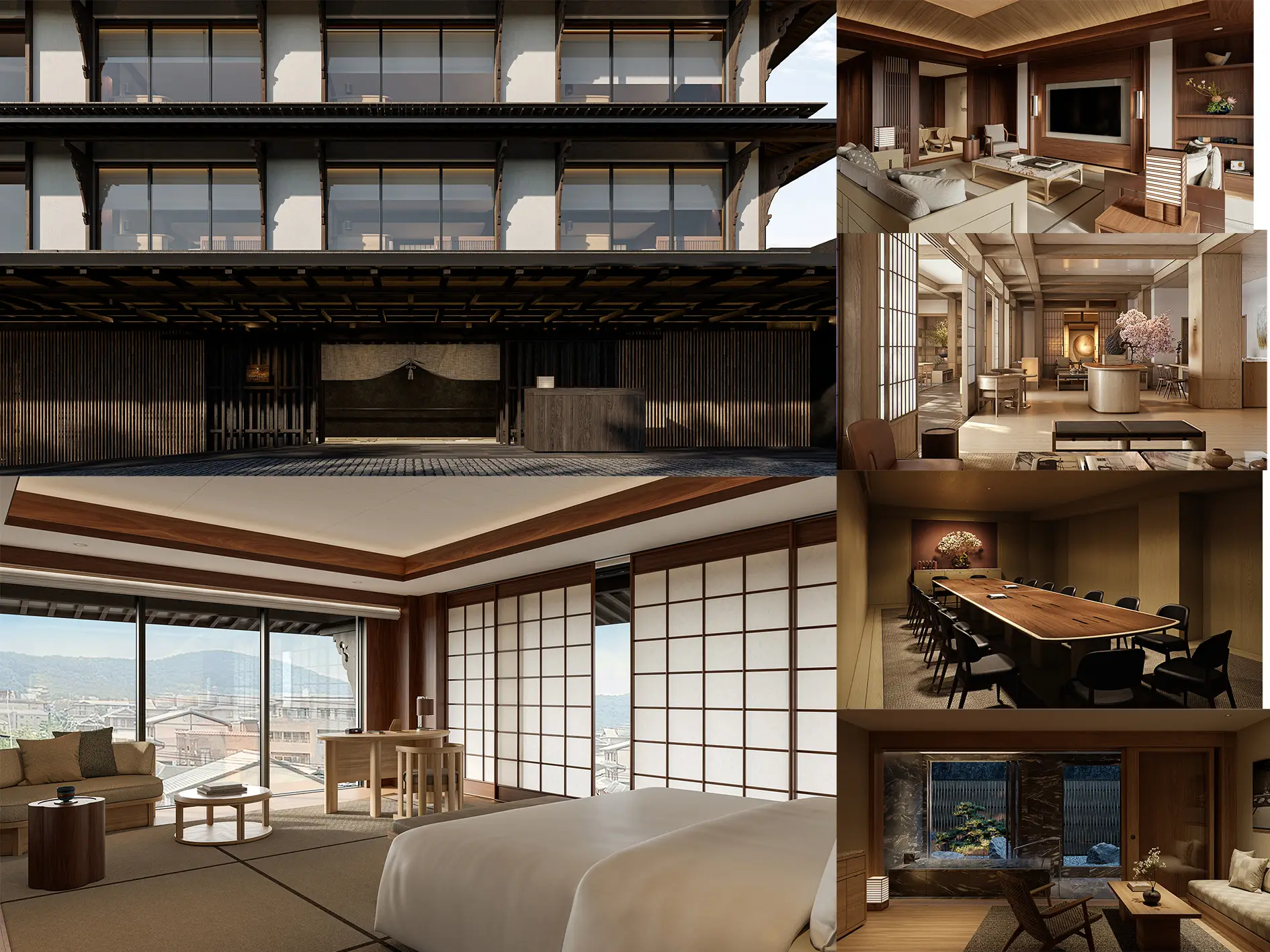
Capella Kyoto at a glance
Opening date: 22 March 2026 Location: 165 Shimoyanagi-cho, Higashiyama, Kyoto Rooms: 89 (60 standard, 29 suites)Minimum room size: 50 square metres Starting rate: JPY 394,200 per night for two (approx. £1,861 / $2,650)Architect: Kengo Kuma & Associates Interiors: Brewin Design Office (Singapore) Spa: Auriga Spa with natural onsen from 3,000 feet underground Signature restaurant: SoNoMa by SingleThread General Manager: John Blanco Owner:NTT Urban Development Corporation Brand: Capella Hotels and Resorts (Singapore) Family-friendly: Yes, free kids’ club and 24-hour fitness centre Booking: capellahotels.com
In this guide
- The neighbourhood and how to get there
- How the project came together
- Architecture by Kengo Kuma
- Interiors by Brewin Design Office
- The arrival experience
- Rooms and suites guide
- SoNoMa by SingleThread restaurant
- Capella’s Personal Assistant service
- Auriga Spa and onsen
- Dining and breakfast
- How to book Capella Kyoto
- Miyagawa-cho neighbourhood guide
- Capella Kyoto vs Aman, Park Hyatt and others
- Is it worth the price?
- Frequently asked questions
Here is the part most of the coverage has missed. For most of the twentieth century, the children of Miyagawa-cho went to school at Shinmichi. The building sat on a narrow lot in eastern Higashiyama, a few hundred metres from Kennin-ji, Kyoto’s oldest Zen temple. It was on the same lane as the Kaburenjo theatre where the neighbourhood’s geiko and maiko have trained for generations. Founded in 1869. Served the community for over a hundred years. Then it closed.
On 22 March 2026, the same address opened as Capella Kyoto.
Singapore-based Capella has been working on this property for years. The result is the kind of hotel that quietly resets your expectations. Eighty-nine rooms across four floors, designed by Kengo Kuma. Interiors by Singapore’s Brewin Design Office. Rates from JPY 394,200 (around £1,861 or $2,650) per night for two. A spa fed by water from nearly 3,000 feet underground. A 12-seat restaurant from the three-Michelin-starred SingleThread team. And, crucially, an unusual structural commitment to the neighbourhood that surrounds it.
I’ve pulled together what you actually need to know before booking. Including what the first wave of guests have said about the experience.
How the project came together: a brief timeline
The schoolhouse-to-hotel transition did not happen overnight. Here is roughly how it played out.
1869. Shinmichi Elementary School opens on the site.
Late 2010s. The school closes after more than a century in operation.
2020. NTT Urban Development Corporation begins planning the redevelopment.
2021. Kengo Kuma & Associates are appointed as architect for what becomes a trio of buildings: hotel, Kaburenjo theatre, community centre.
2022. Brewin Design Office out of Singapore is brought on for the hotel interiors. Their first project in Japan.
2024. Construction completes on the Kaburenjo restoration.
March 2025. Originally planned opening date. Delayed.
22 March 2026. Capella Kyoto officially opens, timed to peak cherry blossom season.
April 2026. SoNoMa by SingleThread begins service.
Where is Capella Kyoto? A neighbourhood that earned its quiet
Most international visitors to Kyoto know Gion. Miyagawa-cho is its quieter neighbour, two streets over. One of the city’s five kagai (geisha districts), it is often called the most authentic. Geiko and maiko still walk these streets in the evenings on their way to ochaya teahouses. The atmosphere is less performative than Gion. Less interrupted by tour groups. Less Instagram-bait.
When Kuma describes Miyagawa-cho, he uses two words. “Quiet and deep.” That phrase, frankly, does more work than any of the design documents.
Capella Kyoto is one of three new buildings on Shinmichi Street, all by Kuma. Together with the restored Miyagawa-cho Kaburenjo theatre and a new community centre, the three structures form a kind of connective hub between the neighbourhood’s past and its future. The hotel is the commercial anchor. The Kaburenjo keeps the cultural tradition alive. The community centre serves the residents who still live and work and raise children here.
How well has the integration actually worked? Writing for Travel + Leisure after an early stay, journalist Sarah Khan noted that “in the cozy Yoi bar and the restaurants, locals outnumbered hotel guests, always a good sign in a food-obsessed city like Kyoto.” She also spotted “more than a few maiko geishas-in-training browsing for pastries and chocolates in the hotel’s streetside Patisserie.” Most luxury hotel projects in tourist-saturated Kyoto operate as enclaves, walled off from the streets around them. Capella has been built into the neighbourhood instead.
The location, in practical terms, is one of the best in Kyoto for first-time visitors. The hotel sits 400 metres from Gion-Shijo Station on the Keihan Main Line, which gets you to Osaka in about an hour. Kennin-ji is a five-minute walk. Yasaka Shrine, the Gion shopping streets, Ninenzaka, Sannenzaka, and the major Higashiyama temples are all walkable. The Kamo River is two minutes east. You can leave the hotel at 6am, walk through the geisha district at dawn, and be standing at Kennin-ji before the first tour bus arrives.
A few other walkable sights worth knowing about: Ebisu Shrine, dedicated to one of the seven gods of fortune, and the towering Yasaka Pagoda at Hokan-ji temple.
The architecture: Kengo Kuma’s machiya translation
Kuma’s brief was specific. “We applied the wisdom of the machiya to the hotel design,” he told Wallpaper before opening. “I wanted to evoke the image of smallness, local materials, tiered roofs, hidden inner gardens, layered internal spaces. Just like a Japanese home.”
A machiya, for context: one of those traditional wooden townhouses still lining many of Kyoto’s older streets. Narrow at the front. Deep into the lot. Sliding screens, internal gardens, a clear progression from public spaces near the entrance to private ones at the back. Kuma’s design borrows this layout almost literally.
The building rises four storeys above ground and two below. That low-rise restraint is deliberate. Kyoto’s planning rules limit building height in many districts to preserve sightlines toward temple roofs and the mountains beyond. Capella does not just comply with those rules. It treats them as design logic.
Guests enter through a long walkway flanked by shoji screens. From there the building unfolds inward through layered thresholds. Corridors narrow and widen gradually. The rooms are arranged around a central courtyard with a water feature. There is a hidden moss garden, a bamboo grove, and a timber-skeleton stage for Noh theatre performances. The ballroom sits underground, beneath the central garden.
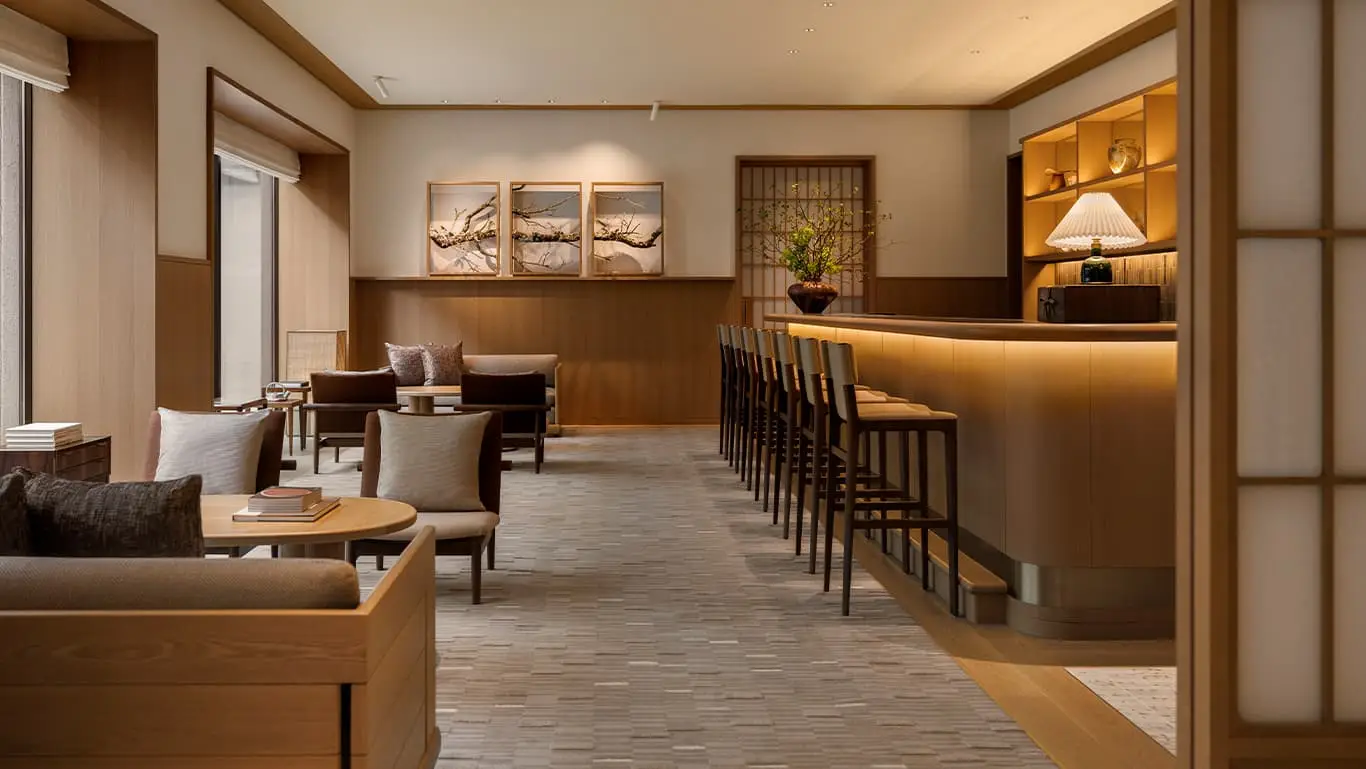
The guest lounge is wrapped in latticed wooden screens. When the lights are on inside, the whole room glows softly from the street, mimicking a Japanese andon lantern. Kyoto-based writer Danielle Demetriou, who has lived in a Kyoto machiya since 2007, reviewed the hotel for Wallpaper. She described it as “a smooth mesh of Kyoto culture and contemporary warmth, intimacy and connection, nature and city.” High praise from someone who actually lives in the kind of building Kuma was trying to reference.
Kuma has form here, anyway. He designed the Japan National Stadium for the Tokyo Olympics. Also Banyan Tree Kyoto (2024) and Hotel The Hotel Higashiyama Kyoto (2022). Capella Kyoto is his third Kyoto hotel project in four years. The pattern is not accidental. Kuma is the architect most consistently entrusted with translating traditional Japanese spatial logic into contemporary hospitality, and Capella is arguably his most refined effort to date.
The interiors: Brewin Design Office’s quiet debut
While Kuma handled the architecture, Singapore-based Brewin Design Office shaped the interiors. Their first hotel project in Japan, weirdly enough. Founder Robert Cheng describes the approach as restraint over decoration.
“Kyoto’s mastery lies in its restraint,” Cheng said before opening. “Our ambition was to express its invisible qualities, stillness, rhythm, material intelligence, through the language of design rather than decoration.”
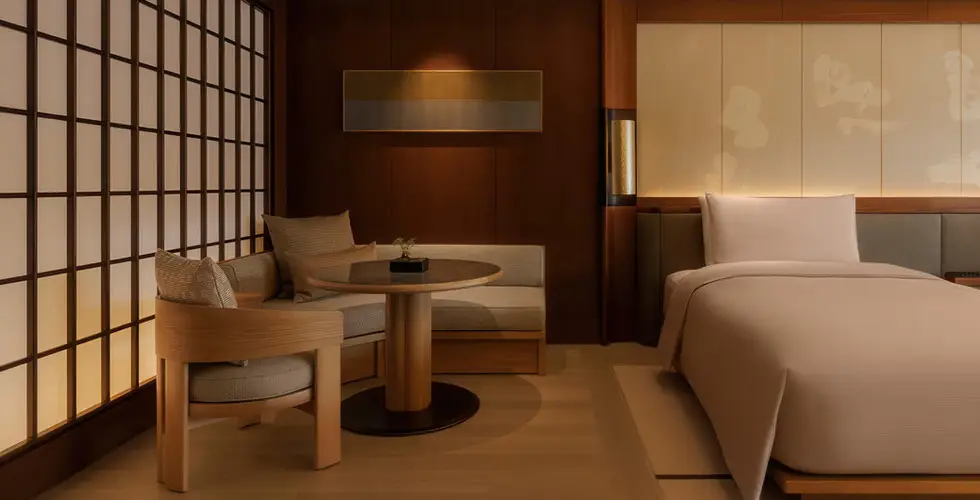
The execution lands. Travel + Leisure‘s reviewer described the rooms as hitting “the sweet spot between sleekly modern and traditional Japanese,” with “soft-curved walls and low-slung, honey-hued walnut furniture” paired with “sliding washi-paper screens, bathrooms in glossy granite, and rugs that mimic tatami floor panels.”
Materially, the walls are hand-applied earthen plaster. Timber joinery references chōba tansu merchant chests. Shoji panels composed with precision rather than ornament. Lacquer, bronze, ceramic, and handmade washi paper throughout.
One highlight sits above the beds in several rooms. Avant-garde Okinawan calligraphy artist Daichiro Shinjo worked with Hosoo, the 17th-century Kyoto kimono textile innovator, to produce woven panels with sweeping calligraphic strokes. The Points Guy mentioned the effect during their stay: “those Hosoo-crafted wall panels, emblazoned with expressive kanji script by Kyoto-based calligraphist Daichiro Shinjo.” Modern art on a traditional substrate, made by two of Japan’s most respected craft houses. The kind of detail that would headline a less restrained hotel, and is here treated almost as a footnote.
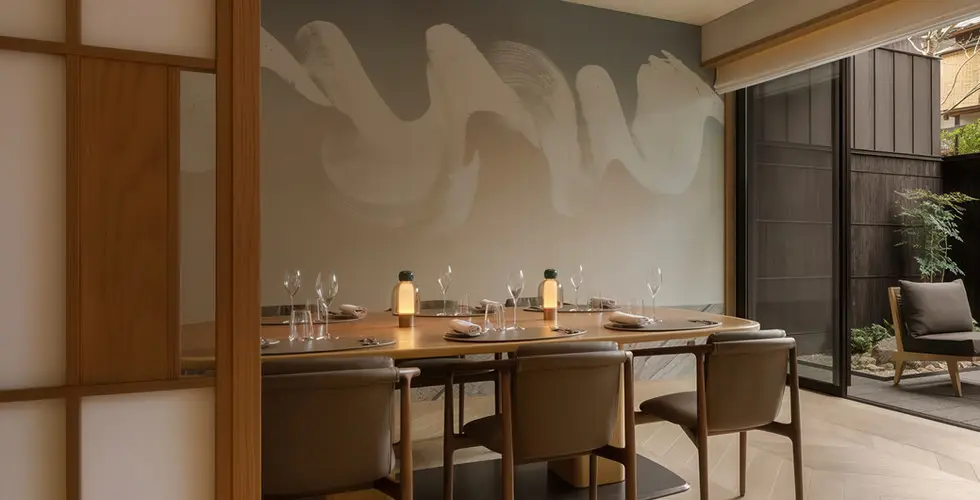
Other touches reviewers have called out. Cloud-soft beds dressed in warm grey Frette linens. Headboards clad in buttery leather. TVs hidden behind sliding wall panels. Hammered brass pendants that nod to the metal crafts used in Kyoto’s tea accessories. The Points Guy also flagged toiletries arranged inside the drawers “to create a colorized vintage portrait of a geisha.” A small thing. But it captures how granular the design thinking gets.
There is also a permanent contemporary art collection, curated by a full-time on-site Art Curator. The hotel runs an Artist-in-Residence programme through which traditional artisans and modern creatives work in the public and private spaces during a guest’s stay. And in what might be the most poetic detail: reclaimed wood from the Shinmichi Elementary School has been used to decorate Yoi, the casual late-night restaurant. The community lost a school. The wood remains.
The arrival experience
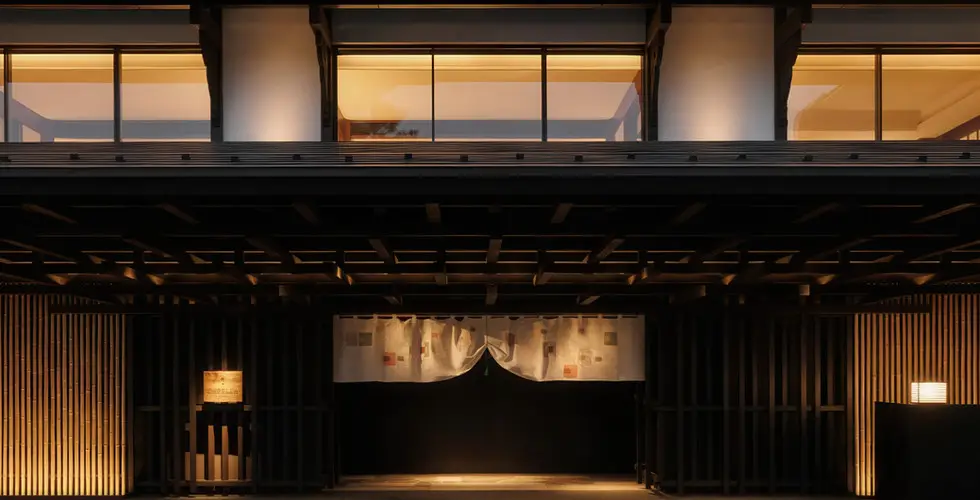
Reviewers have flagged the entrance sequence as one of the property’s defining moments. Guests arrive at an understated street-facing facade that looks more or less identical to the surrounding machiya, marked only by a tasseled noren textile screen at the doorway. According to The Points Guy, the colour of those tassels changes with the season: green for spring with patches of blush during cherry blossom, deeper tones in autumn.
Once inside, the entrance unfolds slowly. The long walkway flanked by shoji screens leads through layered thresholds toward a wood-lined reception. There is no conventional check-in desk. Guests are received in the Living Room, the andon-style lantern lounge wrapped in latticed wooden screens, where the formal check-in happens over a welcome drink.
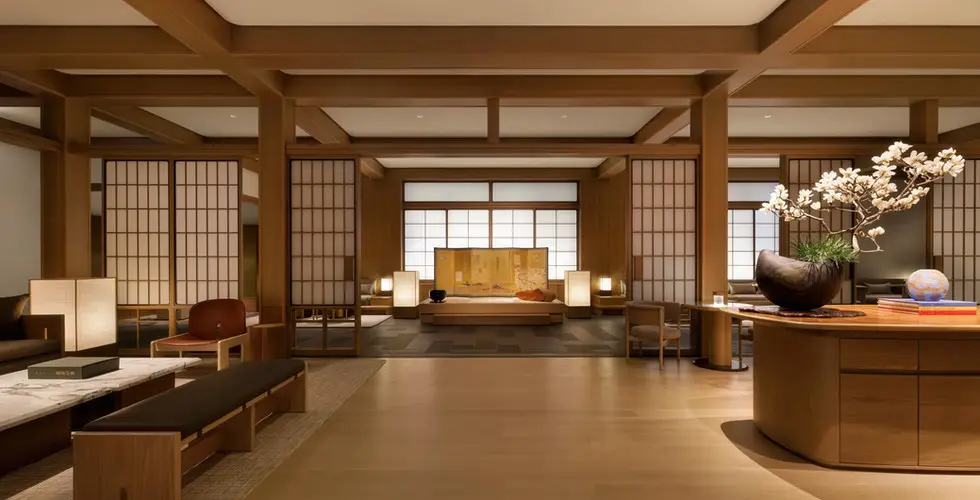
The slowness of the arrival is the point. After the Shinkansen, the taxi ride through Kyoto traffic, and the short walk along Shinmichi Street, the transition from city to sanctuary takes maybe ninety seconds. By the time you sit down in the Living Room, the noise has dropped away.
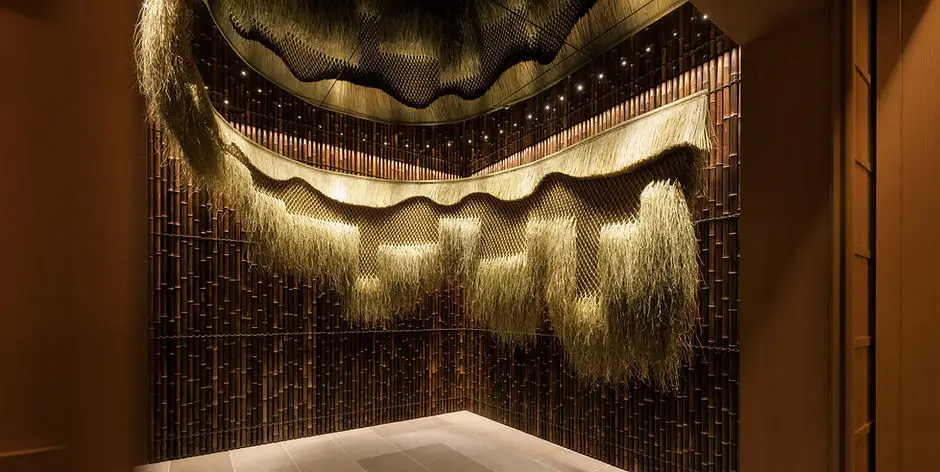
Capella Kyoto rooms and suites: a detailed guide to the 89 keys
The 89 rooms are unusually large for Kyoto. Standard luxury hotel rooms in the city often start at 30 to 35 square metres. Every Capella Kyoto room is at least 50 sqm. Twenty-nine of those are suites.
Here is how the hierarchy works, and what early reviewers have flagged about each category.
Standard rooms (60 total, all 50 sqm)
Deluxe City Room. King or twin configuration. Looks out over the surrounding Miyagawa-cho streets. One honest note worth flagging: a small number of these rooms have partial views obscured by power poles or neighbouring buildings, which is unavoidable in a dense Kyoto neighbourhood. The Points Guy noted that their Premier Theatre Room view was “mostly taken up by a power pole,” though gauzy linen sheers solved the problem at the touch of a button.
Premium City Room. A slightly elevated category with the same configuration and view orientation. Worth booking over Deluxe only if you specifically want the small upgrade or are using points.
Premier Temple Room. Faces Kennin-ji directly. One of the best value categories in the property. You wake up looking at Kyoto’s oldest Zen temple.
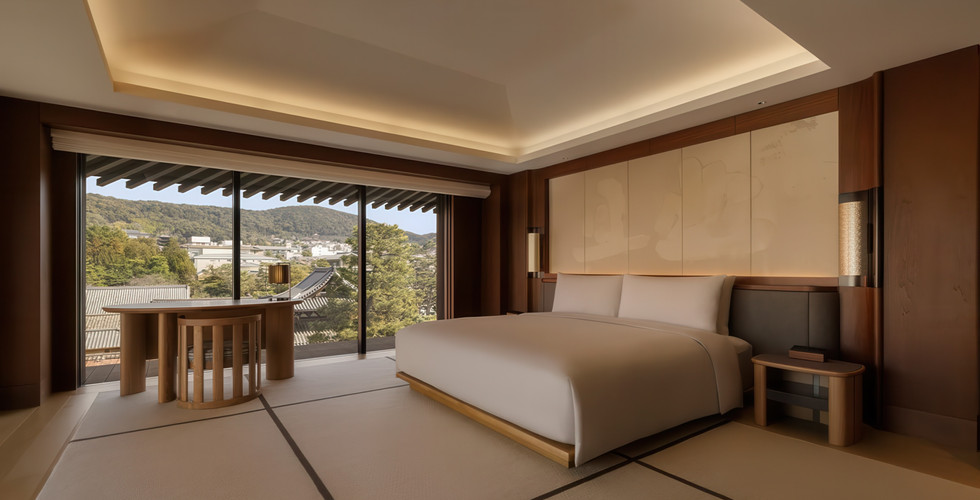
Premier Theatre Room. Looks onto the Kaburenjo. The signature view is geiko and maiko arriving and leaving for training. The Points Guy’s reviewer noted that even with the partial power pole, the room itself felt as though it could “practically glow” with its “dark walnut paneling, buttery gray leather surfaces and hammered brass sconces.”
For a first stay: Premier Theatre Rooms offer the most distinctive view in the standard category.
Suites (29 total)
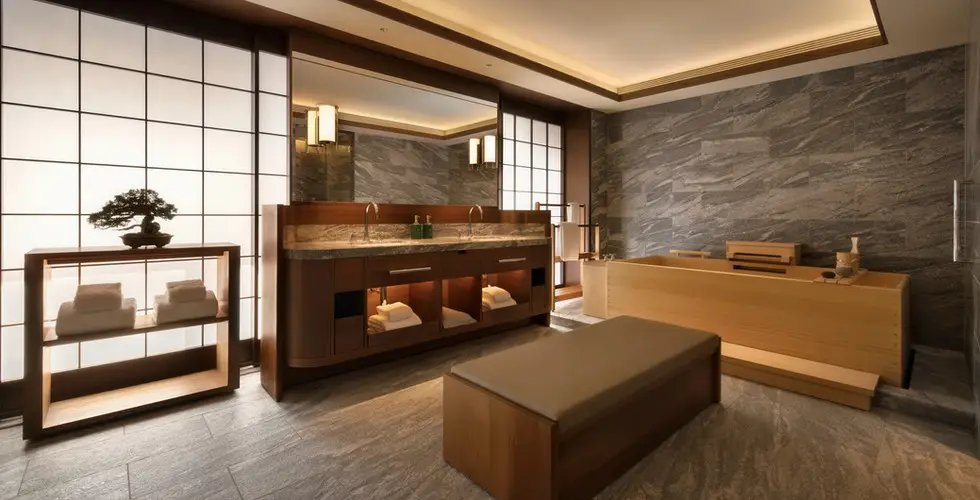
Onsen Suites (71 sqm, six available). Private bathing pavilions with stone tubs filled from the Hatoya Zuihokaku hot spring, drawn from nearly 3,000 feet underground. According to The Points Guy, the baths include “a traditional hinoki onsen stool and bucket, as well as hand-held and overhead showerheads and a black ceramic tub with dipping borders so you could leave the water running and watch it stream over the edge as you soaked, letting the sakura-scented bath salts reminiscent of perfumes worn by local geiko seep into your skin.” Wallpaper specifically called out the Zen-style garden views from the Ofuro Suite balconies. These are the most requested suites at the property. They book out the fastest.
Junior Suite. Larger living area, similar finishes to standard rooms.
Gion Suites (148 sqm, two available). Direct view of Kennin-ji temple. Open-plan living room.
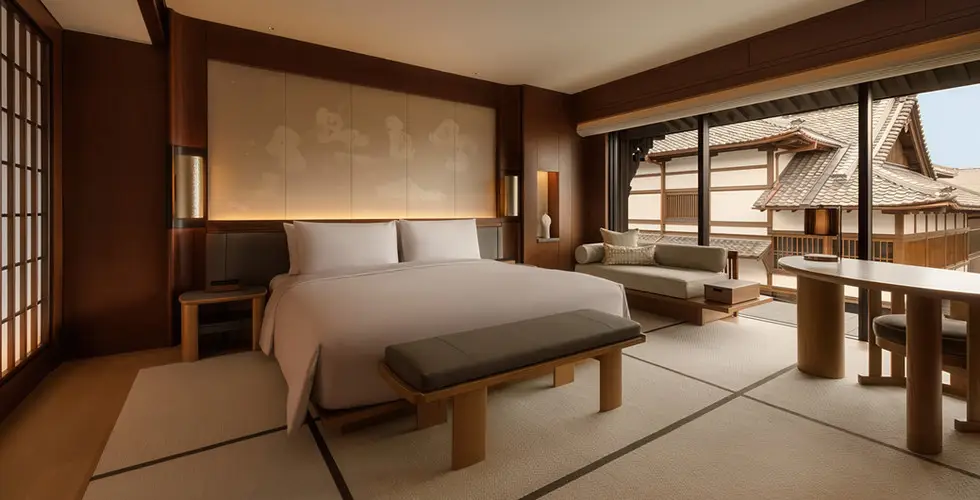
Capella Suite (206 sqm, one available). Top floor. Two bedrooms, separate living and tatami dining area. View across the entire Higashiyama skyline, Yasaka Pagoda included. The elevation also puts guests at one of Kyoto’s best vantage points for spotting geiko and maiko on their way to evening engagements.
For couples and honeymooners: one of the six Onsen Suites. For families or groups: the Capella Suite. For a milestone with temple views: a Gion Suite.
What reviewers keep coming back to
A few things have come up consistently across the early reviews.
The positives. The intimate scale (89 rooms feels properly boutique). The genuine onsen water in the Onsen Suites. The level of design detail. Walkability to major sights. The relative lack of crowds even during sakura season. The personal service from a small team. Travel + Leisure‘s reviewer described how “carefully considered every detail felt, down to the way the morning sun filtered through washi-paper screens and wooden lattices.”
The honest caveats. There is no large outdoor pool (the focus is the spa instead). Some city-facing rooms have partial obstructed views due to the dense urban location. The hotel is intentionally small, so the most desirable categories sell out months in advance, especially for sakura and koyo seasons. And some guests may find the deliberately restrained design too understated if they were hoping for Aman-style drama.
Bathrooms in all categories include granite countertops with two sinks, hinoki and ceramic bathtubs, hand-held and overhead showerheads, and natural materials throughout.
SoNoMa by SingleThread: the unexpected California connection
The most surprising thing about Capella Kyoto is not Japanese at all. It is American.
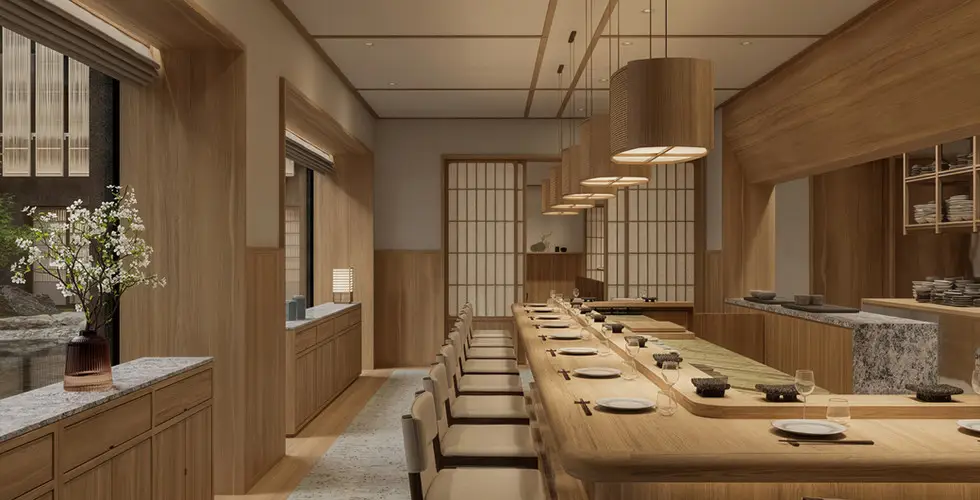
SoNoMa by SingleThread is a 12-seat counter restaurant operated by Kyle and Katina Connaughton, the couple behind SingleThread, the three-Michelin-starred farm-and-restaurant in Healdsburg, Sonoma County. SoNoMa is SingleThread’s first international project in its ten-year history. It occupies the dining anchor position at Capella Kyoto.
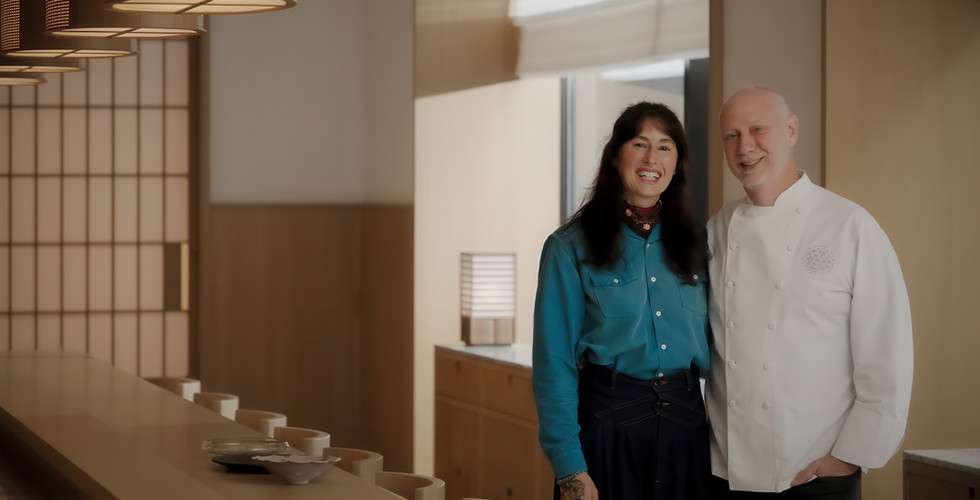
The name uses three kanji: imagination (so), possessive (no), and space (ma). “SoNoMa means a space for creative and imaginative thought,” Connaughton has explained. The premise is a mirror image of the original. As he put it: “If SingleThread is a Kyoto-influenced restaurant in California, SoNoMa is a California-influenced restaurant in Kyoto.”
A bit of background, because this matters. Connaughton lived and worked in Japan as a young chef before returning to California, where he and Katina built SingleThread around her 24-acre farm in Dry Creek Valley. Roughly 70 percent of the original restaurant’s produce comes from that farm. The Kyoto project replicates that model in reverse. Katina is working with Kansai-region farmers to grow Northern Californian varieties (heirloom tomatoes, peppers, summer squash, pumpkins, hibiscus) for use in SoNoMa, alongside native Kyoto vegetables. California olive oil, almonds, and cheese make the journey east.
In an interview with The Japan Times a week after SoNoMa opened, Connaughton described how the cultural bridge actually plays out. “At the counter, we might have a first-time visitor sitting next to a Kyoto local. They’re eating the same menu through entirely different lenses. Right now, it’s sansai (wild mountain vegetable) season. A visitor might have been eating these all week without context. We get to explain the why.”
The kitchen is led by chef Keita Tominaga. Born in Sonoma County (his late father founded Hana Japanese Restaurant in Rohnert Park). Trained at Tenoshima in Tokyo, the kaiseki restaurant connected by lineage to Yoshihiro Murata’s Kikunoi, where Connaughton himself once cooked. The full circle is intentional.
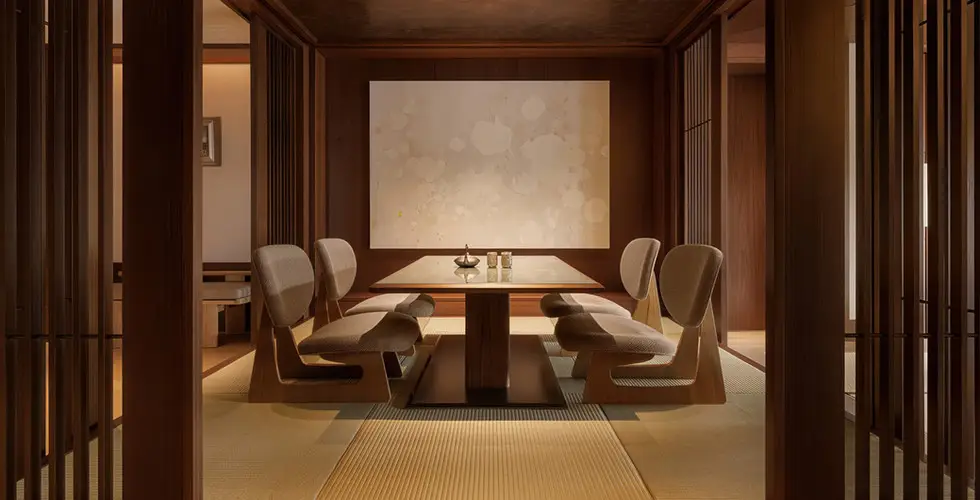
Booking SoNoMa. The 12 seats are tightly held. Hotel guests get priority access through the concierge, which is one of the strongest practical arguments for staying at Capella over other Kyoto hotels if you take food seriously. Non-hotel reservations are difficult but not impossible. They are released on a rolling basis through the SingleThread reservation system.
Two other dining venues sit alongside SoNoMa. SingleThread Entremets is a dedicated patisserie and lounge for high tea and cocktails, run by SingleThread’s executive pastry chef Emma Horowitz and chef Miu Morita, previously of three-Michelin-starred L’Effervescence in Tokyo.
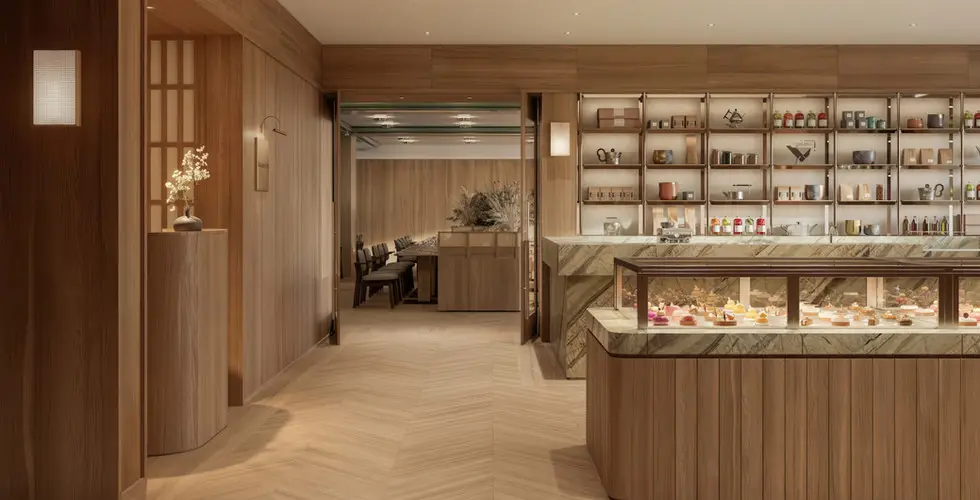
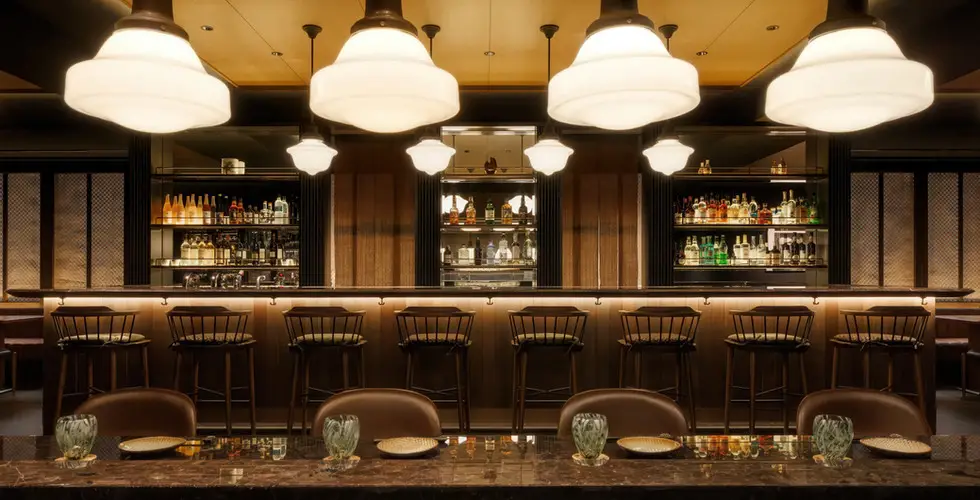
Wallpaper described the menu as “a relaxed mix of treats, from sashimi platters served in a cloud of mist to chrysanthemum, spinach and young bamboo shoots in sesame dressing, alongside crafted cocktails such as Japanese Loafer (midori, bergamot, Kyoto craft gin and yuzu citrus).” Lanterne is a French brasserie with marble columns and herringbone floors. Somewhat surprisingly, it serves what Travel + Leisure called “lazy Japanese breakfasts.” Yoi, decorated with reclaimed wood from the old school, stays open late. The hotel also serves a custom spiced gin made specifically for the property by SiCX Kyoto Distillery.
Personal Assistants: how Capella’s service model works
Capella differentiates itself from competitors like Park Hyatt, Ritz-Carlton, and Four Seasons through its Personal Assistant programme. Most luxury hotels run a traditional concierge desk in the lobby. Capella assigns each guest a dedicated Personal Assistant for the duration of their stay.
What that means in practice: one point of contact for everything. Restaurant bookings, transport, last-minute requests, cultural experience curation, access to the property’s harder-to-book partners. The Points Guy noted during their stay that “the friendly concierges can advise on everything from insightful tours to last-minute dinner reservations and the city’s best shopping.”
This matters in Kyoto specifically because so much of what makes the city special operates on relationships, not bookings. Many of the most interesting tea ceremonies, artisan workshops, ochaya visits, temple experiences are not available through standard channels. They require a phone call from someone the artisan knows personally. Capella’s Personal Assistants have spent years building those relationships in Miyagawa-cho specifically.
This is the actual reason the rate at Capella Kyoto sits above Park Hyatt and Ritz-Carlton. You are not just paying for the room. You are paying for an open line into a city that does not normally open itself easily.
Capella Kyoto spa, onsen and wellness facilities
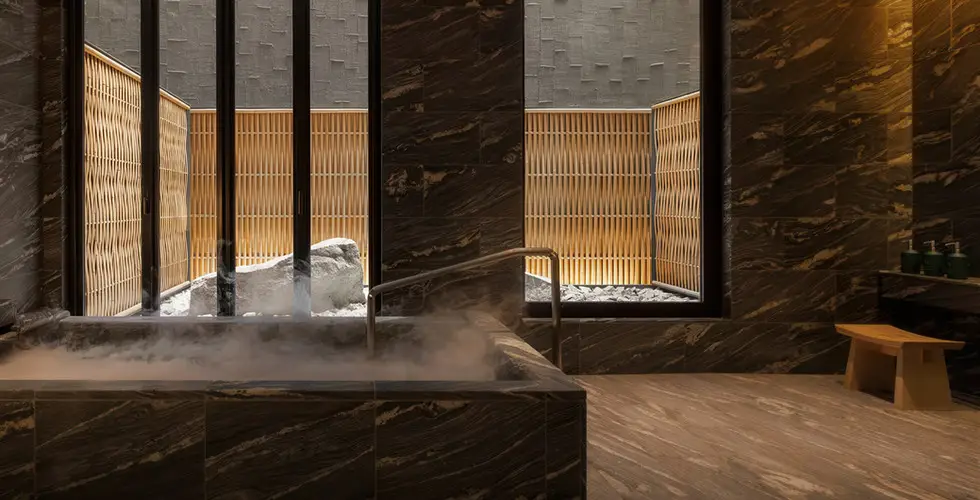
The Auriga Spa occupies its own floor below ground. Wallpaper called the basement “a temple to wellness.”
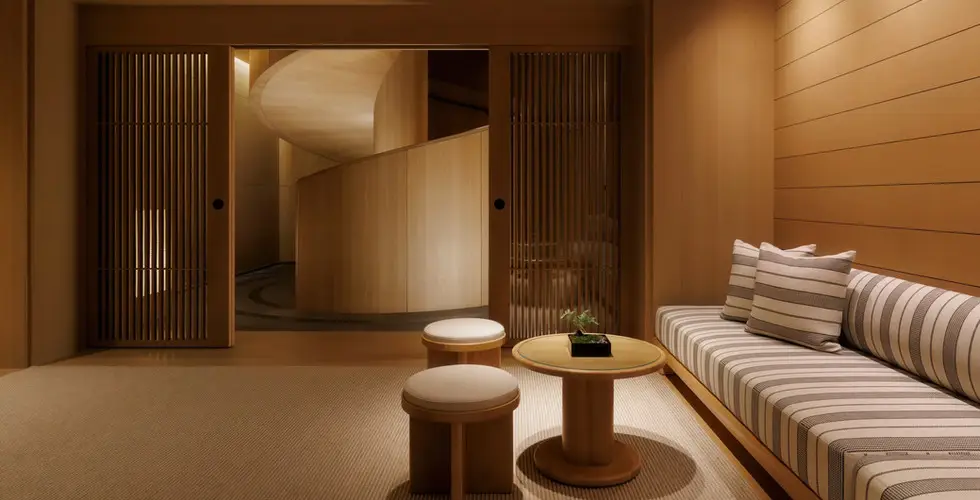
Four treatment rooms scented with hinoki. Three private onsen rooms. Wet and dry saunas in the changing areas. A 24-hour fitness centre. Treatments are designed around lunar and seasonal cycles, with Wallpaper noting that massages “are perfectly executed in an aromatic cloud of curated oils and herbs.” Morning sessions begin with “gentle stretches and singing bowls by the fountain.”
Two details set the spa apart from competitors in the city.
First, the water. The onsen rooms and the in-suite onsen baths in the six Onsen Suites are all fed from the Hatoya Zuihokaku hot spring, drawn from a reservoir nearly 3,000 feet beneath the property. The water is mineral-rich, naturally hot, and genuine. In a city where the word “onsen” gets used pretty loosely, this matters. The Ofuro Suites in the spa overlook a Zen-style garden, which adds to the bathing ritual.
Second, the Shiseido partnership. Capella Kyoto is the first spa in Japan to incorporate Shiseido’s prestige skincare line, The Ginza. An hour-long facial runs around $240. The 60-minute new moon full body massage costs the same. The 90-minute Ginza full body experience, which includes hot stone work, runs to about $295. Private onsen room rentals start at $130 for an hour.
The Capella Curates programme
The hotel runs a culture-led activity programme that has emerged as a quiet highlight in early reviews. Wallpaper’s Demetriou specifically called out her experience with Seiji Naito, who runs the century-old family wooden sandal company Gion Naito a few minutes from the hotel. She described “talking about the meaning of life, nature and the universe, while playing board games (yes, really) and trying on shoes.” Other experiences include visits to a “surf-loving lacquerware artisan” and kintsugi workshops. The Points Guy mentioned that there is a geiko or maiko performance “each evening in the Living Room, typically a dance, after which guests can enjoy a brief question-and-answer session with the visiting performer.”
Breakfast at Capella Kyoto
Breakfast is served primarily at Lanterne, the French brasserie. Which is one of the property’s small surprises, honestly. Travel + Leisure‘s reviewer specifically called out “lazy Japanese breakfasts at Lanterne” during her stay, which suggests the menu skews more toward traditional Japanese morning service (asagohan) than the Parisian setting might lead you to expect. Asagohan typically means grilled fish, miso soup, rice, pickles, tofu, seasonal vegetables, prepared with the same regional emphasis that runs through SoNoMa.
Western-style options are available too, including pastries from SingleThread Entremets next door. The hotel uses dairy and produce from Kansai-region farms. In-room dining runs 24 hours.
The breakfast experience is included in stays booked through Virtuoso, American Express Fine Hotels & Resorts, and similar luxury programmes. That is one practical reason to book through an advisor rather than direct.
How to book Capella Kyoto: practical tips
Bookings are made through capellahotels.com or via Capella’s reservation team directly. The hotel is also bookable through luxury travel platforms that may offer added perks.
Best booking strategy. Capella Kyoto is bookable through Virtuoso and American Express Fine Hotels & Resorts. Both can add benefits including a one-room-category upgrade (subject to availability), daily breakfast for two, an additional hotel credit of around $100, and early check-in or late check-out. If you have access to either programme, use it. The added value typically more than covers the difference compared to a direct booking. Travel advisors with strong Capella relationships can sometimes secure additional perks or guaranteed Onsen Suite availability during peak seasons.
Best room categories. For a first stay, the Premier Theatre Rooms (50 sqm) offer the most distinctive view in the standard category. For a special occasion, one of the six Onsen Suites (71 sqm) is the strongest value among the suites, particularly for couples wanting privacy and genuine onsen access.
Best time to visit. Late March to early April for cherry blossom season is the most photographed window. Also the busiest and most expensive. Rates typically 30 to 40 percent higher than base. November for the autumn maple leaves offers comparable beauty with smaller crowds and slightly lower rates. Mid-January to late February sees the lowest rates and quietest streets, with the added benefit of occasional snow on the temple roofs. May and early June, just after Golden Week, can be excellent value with mild weather and lower crowds.
Minimum stay requirements. The hotel typically requires a two-night minimum during peak periods (cherry blossom season in late March/early April, koyo season in November). Single nights are usually available outside these windows but subject to occupancy.
Cancellation policy. Standard cancellation terms allow free cancellation up to 14 days before arrival for flexible rates. Non-refundable advance purchase rates offer lower prices but no flexibility. During peak periods (sakura, koyo, year-end), expect more restrictive terms.
Getting there. From Kansai International Airport (KIX), the most efficient public route is the JR Haruka Express to Kyoto Station (around 75 minutes), then a 12-minute taxi to the hotel costing approximately JPY 2,000 (£10 / $14). A private airport transfer arranged through the hotel runs approximately JPY 35,000 to 45,000 (£165 to £212) one way, depending on the vehicle. From Tokyo, the Shinkansen takes 2 hours 15 minutes to Kyoto Station, with a hotel taxi from Kyoto Station costing around JPY 2,000.
Restaurant bookings. SoNoMa by SingleThread is the single most difficult booking at the hotel. Hotel guests get priority access through the concierge during their stay. If SoNoMa is essential to your visit, book the hotel stay first and request SoNoMa reservations immediately upon confirmation. Lanterne and Yoi typically have availability for hotel guests on short notice.
Families. Capella Kyoto operates a free kids’ club and a 24-hour fitness centre, which makes it more family-friendly than many other Kyoto luxury options. That said, the intimate scale, focus on quiet design, and lack of large pool or beach facilities mean it suits older children (8 and up) better than very young kids. Families with toddlers may find Four Seasons Kyoto or Ritz-Carlton Kyoto more practically suited.
Accessibility. The hotel is fully accessible with lift access to all floors. Specific accessibility-equipped rooms are available, but request directly through the reservation team.
Miyagawa-cho neighbourhood guide: what is around the hotel
One of Capella Kyoto’s strongest arguments is its setting. Miyagawa-cho is a small neighbourhood you can walk in fifteen minutes, but it contains a remarkable density of what makes Kyoto worth visiting. Here is what is worth knowing about the streets immediately around the hotel.
Kennin-ji Temple is a five-minute walk west. Founded in 1202, it is Kyoto’s oldest Zen Buddhist temple and one of the most peaceful in the city, particularly in the early morning before the tour groups arrive. The ceiling painting of twin dragons in the dharma hall is one of Kyoto’s most photographed interior spaces.
Ebisu Shrine, dedicated to one of the seven gods of fortune, sits roughly between the hotel and Kennin-ji. Smaller and quieter than the major shrines. Worth the two-minute detour.
Gion Naito, the century-old wooden sandal company highlighted by Wallpaper, is a five-minute walk. Owner Seiji Naito speaks English and is happy to show visitors the workshop. This is one of the artisan visits the Personal Assistant team can arrange formally, though the shop is also open to walk-in browsing.
Kamo River is two minutes east. The riverside path is one of the best dawn walks in Kyoto, particularly in spring when the cherry trees along the bank are in bloom.
Hanami-koji Street, the most famous lane in adjacent Gion, is a seven-minute walk north. This is the street that gets cordoned off in cherry blossom season due to overcrowding. Visit before 8am or after 9pm to avoid the worst of it.
Yasaka Shrine sits at the eastern end of Shijo Street, about a fifteen-minute walk. The grounds stay open 24 hours and are particularly beautiful in the early evening once the lanterns are lit.
The walk to Yasaka Pagoda (the iconic five-tiered structure at Hokan-ji temple visible from the Capella Suite) takes about fifteen minutes and passes through the most atmospheric stretches of Ninenzaka and Sannenzaka.
For coffee: % Arabica Higashiyama (a short walk toward Yasaka Pagoda) is one of the city’s best specialty coffee spots, though queues can be long. Kissa Master, a traditional kissaten coffee shop several blocks north, offers a more local experience for the price of a small bowl of pour-over. For evening drinks, Bar K6 in central Gion is widely considered Kyoto’s best cocktail bar, particularly if you care about whisky.
One note on respect. Miyagawa-cho remains a working geisha district. Out of respect for the geiko and maiko who live and train here, do not photograph them without permission, do not follow them, and do not block the narrow streets during evening hours when they are moving between engagements. The neighbourhood has been outspoken about preserving its character against tourist pressure, and Capella Kyoto’s residents and staff appreciate guests who arrive aware of the local norms.
Capella Kyoto vs Aman Kyoto, Park Hyatt Kyoto and other luxury options
Kyoto’s luxury hotel scene has expanded dramatically over the last five years. The table below summarises how Capella Kyoto compares to the established competition.
| Hotel | Rooms | Starting rate | Natural onsen | Atmosphere | Best for |
|---|---|---|---|---|---|
| Capella Kyoto | 89 | JPY 394,200 | Yes | Cultured intimacy | First-time visitors, design, cultural access |
| Aman Kyoto | 26 | JPY 350,000+ | Yes | Forest stillness | Seclusion, wellness retreat |
| Park Hyatt Kyoto | 70 | JPY 250,000+ | No | Polished traditional | Walkable Higashiyama, families |
| Four Seasons Kyoto | 123 | JPY 200,000+ | No | Garden resort | Families, polished service |
| Ritz-Carlton Kyoto | 134 | JPY 180,000+ | No | Riverside polish | Dining, central location |
| Six Senses Kyoto | 81 | JPY 220,000+ | Yes | Wellness-focused | Health-led travel |
| Hotel The Mitsui Kyoto | 161 | JPY 220,000+ | Yes | Heritage architecture | History, samurai gate setting |
| Banyan Tree Kyoto | 52 | JPY 280,000+ | Yes | Hillside seclusion | Suite living, Kuma fans |
Who should choose what
If you want seclusion and wellness, Aman Kyoto is still the gold standard. The 32-acre forest setting is unmatched. Choose this for a wellness-focused retreat or a return visit after seeing the major sights.
If you want the best walkable location, it comes down to Capella Kyoto or Park Hyatt Kyoto. Park Hyatt has the Yasaka Pagoda views. Capella has larger rooms, a more substantial spa with genuine onsen, and the SingleThread connection.
If you want a family-friendly luxury option, Four Seasons Kyoto is best suited, with larger grounds and a proper pool. Capella works for families with older children due to its free kids’ club and 24-hour gym, but it is less suited to very young kids.
If you want a wellness-first hotel: Six Senses Kyoto or Aman Kyoto.
If heritage architecture is the priority: Hotel The Mitsui Kyoto, built around a 17th-century samurai gate, offers the most direct heritage experience.
If you want to combine multiple Kyoto neighbourhoods, many regular Kyoto travellers split stays between two hotels (commonly Aman in the north and Park Hyatt or Capella in Higashiyama) to experience different sides of the city.
Is Capella Kyoto worth it?
Honest answer: yes, but only for the right guest.
Best for. First-time visitors who want walkable access to the major Higashiyama sights without staying in the tourist crush of Gion. Design-led travellers who care about who designed what. Couples or solo travellers who want a real onsen experience inside the city. Foodies for whom the SingleThread connection actually means something. Repeat visitors to Kyoto looking for something genuinely different from Aman, Park Hyatt, or the Ritz-Carlton. Families with older children who will appreciate the free kids’ club and central location.
Not ideal for. Families looking for resort-style amenities with large pools or extensive kid-focused activities (Four Seasons is a better fit). Travellers who want true seclusion away from any urban setting (Aman Kyoto remains the better choice). Budget-conscious visitors (rates start well above most luxury alternatives in the city). Guests who prioritise sprawling grounds and gardens. Anyone who finds restrained design too understated.
What you are paying for, beyond the room, is access. The Kaburenjo programme alone is unavailable to almost any non-Japanese visitor without significant private connections. The SingleThread restaurant is one of the most interesting culinary projects in Japan in years and is genuinely hard to book without staying at the hotel. The onsen water is real. None of these are marketing claims. They are confirmed in every early review published since opening.
The verdict. Capella Kyoto is one of the strongest hotel openings of 2026, in Kyoto or globally. Arguably the most considered luxury opening Kyoto has seen since Aman arrived in 2019. It is also a thesis about how luxury hospitality should engage with neighbourhoods it enters. Whether the price is worth it depends on what you value. If cultural access, design integrity, and genuine onsen are on your list, the answer is pretty clear.
Frequently asked questions
When did Capella Kyoto open?
22 March 2026. The timing was chosen to hit peak cherry blossom season. This is the first Capella property in Japan.
How much does Capella Kyoto cost per night?
Rates start at JPY 394,200 (about £1,861 or $2,650) per night for two, taxes and service included. Suite rates run significantly higher. Peak season (cherry blossom and autumn maple) can push 30 to 40 percent above base.
Where exactly is Capella Kyoto located?
The address is 165 Shimoyanagi-cho, Higashiyama Ward, Kyoto, in the Miyagawa-cho district. A 400-metre walk from Gion-Shijo Station. Five minutes on foot from Kennin-ji temple. Within easy walking distance of Yasaka Shrine, Gion, and the major Higashiyama temples.
Does Capella Kyoto have a real onsen?
Yes. The water comes from the Hatoya Zuihokaku hot spring, nearly 3,000 feet underground. Mineral-rich and naturally hot. It feeds three private onsen rooms in the Auriga Spa and the in-suite baths in the six Onsen Suites. Not heated tap water with mineral additives.
How many rooms does Capella Kyoto have?
89 rooms total. 60 standard rooms and 29 suites. Every room is at least 50 sqm, which is unusually large for Kyoto. Standard luxury rooms in the city typically start at 30 to 35 sqm.
Who designed Capella Kyoto?
Architecture by Kengo Kuma & Associates, one of Japan’s most respected contemporary architects (he also designed the Japan National Stadium for the Tokyo Olympics). Interiors by Singapore-based Brewin Design Office. Capella Kyoto is Brewin’s first hotel project in Japan.
What restaurants are at Capella Kyoto?
Three on-site dining venues, plus a patisserie. SoNoMa by SingleThread is a 12-seat counter restaurant from the three-Michelin-starred SingleThread team in Sonoma County, California. SingleThread Entremets is a separate patisserie and lounge. Lanterne is a French brasserie. Yoi is a casual late-night spot decorated with reclaimed wood from the elementary school that previously stood on the site.
Can non-hotel guests book SoNoMa?
SoNoMa does accept non-hotel reservations, but hotel guests get priority access through the concierge. Given the 12-seat capacity, hotel guests have a significant booking advantage. Non-hotel reservations release on a rolling basis through the SingleThread system.
Is Capella Kyoto family-friendly?
Yes, with caveats. The hotel offers a free kids’ club and a 24-hour fitness centre, which makes it more family-friendly than many Kyoto luxury options. But the intimate scale, restrained design, and lack of large pool facilities mean it suits older children (8 and up) better than very young kids. Families with toddlers may prefer Four Seasons Kyoto or Ritz-Carlton Kyoto.
Is the SingleThread restaurant in Kyoto the same as the California one?
Not exactly. SoNoMa by SingleThread is a mirror concept rather than a replica. SingleThread in Healdsburg is a Kyoto-influenced California restaurant. SoNoMa is a California-influenced Kyoto restaurant. Both are run by Kyle and Katina Connaughton, but SoNoMa serves a distinct multi-course menu that emphasises Kyoto’s regional agriculture through a Northern California lens.
Is Capella Kyoto better than Aman Kyoto?
They serve different purposes. Aman Kyoto is better for seclusion, forest setting, and a meditative retreat experience. Capella Kyoto is better for first-time visitors who want walkable access to Kyoto’s major sights, a more embedded cultural experience, and a city centre location with genuine onsen.
What is the cancellation policy?
Standard rates typically allow free cancellation up to 14 days before arrival. Non-refundable advance purchase rates offer lower prices but no flexibility. Cherry blossom and autumn maple seasons typically have more restrictive cancellation terms. Confirm with the hotel directly at the time of booking.
How do I get from Kyoto Station to the hotel?
A taxi is most efficient. About 12 minutes. Costs around JPY 2,000 (£10 / $14). The hotel can arrange private transfers in advance for approximately JPY 15,000 (£70) from Kyoto Station or JPY 35,000 to 45,000 (£165 to £212) from Kansai International Airport.
The wider point
Kyoto has been overrun. Anyone who has been to the city in the last three years has seen the consequences of the tourism boom. Gion’s narrow streets cordoned off because of overcrowding. Geiko being chased by photographers. The city government posting signs that ask visitors to remember basic respect. Kyoto’s challenge is no longer how to attract visitors. It is how to absorb them without losing what made the city worth visiting in the first place.
Capella Kyoto, in this sense, is less a hotel than a thesis about what Kyoto luxury should look like going forward. Build into the neighbourhood, not over it. Restore the Kaburenjo, do not just photograph it. Keep the elementary school’s wood in the building somehow. Choose a quieter district when the obvious one is saturated. Source genuine onsen water rather than dress up tap water with bath salts. Hire the SingleThread team because they actually understand Japan, not because the Michelin stars look good in a press release.
Whether one 89-room property can shift the trajectory of an entire city’s tourism culture is unclear. But Capella Kyoto makes a compelling case for the kind of hospitality that respects what came before instead of replacing it.
The wood that lined the Shinmichi school classrooms now lines the walls of Yoi restaurant. The children who once played in the yard have long since grown up. The neighbourhood continues. That is the story of this hotel, and it is worth the price of the room.
Capella Kyoto opened on 22 March 2026 in Miyagawa-cho, Higashiyama, Kyoto. Rates from JPY 394,200 (approx. £1,861 or $2,650) per night for two. Bookings via capellahotels.com.
Related reading: How an Aman founder is rethinking luxury at Azuma Farm Koiwai in Iwate.