Everything they don’t tell you before you book.
Looking for real Maldives travel cost 2026 estimates? Most guides skip the parts that actually shape your bill.
The first thing the Maldives takes from you is your sense of what things should cost. The second is a chunk of your first and last day, swallowed by a transfer system nobody mentioned when you paid. And the third (if you haven’t read something like this first) is the chance to actually make the right call.
Here’s the thing: the Maldives is one of the easiest places in the world to book badly. You’ve got 1,192 islands scattered across 26 atolls, roughly 170 resorts that look identical on Instagram, and a pricing structure that seems almost designed to confuse you. The typical journey goes like this: you find an overwater villa that looks unreal, you book it, you add the flights, and then, maybe weeks later, you discover the seaplane transfer costs as much as a week in Croatia. Or that your evening arrival means you can’t reach the resort until the next morning. Or that taxes add 27 percent on top of the room rate you saw.
There’s something else worth knowing, too. The Maldives is one of the lowest-lying countries on earth, averaging just 1.5 meters above sea level. Climate change isn’t an abstract concept here. People talk about it daily, and it gives the place a particular weight when you arrive. That’s not a reason to rush or to feel guilty for going. It’s just context that makes the experience feel more real.
This guide exists so you know all of this before you book.
We cover everything: the true total cost, how the transfer system actually works and what it means for your trip, which villa type suits you, what you actually do all day, what lives underwater and when you’ll see it, what happens after dark, medical realities (more important than you’d think), and all the rules you didn’t know existed.
Read the whole thing, or skip to what you need. But read the transfer section. It matters more than the villa type.
The Transfer: The Part That Actually Makes or Breaks Your Holiday
In most countries, getting from the airport to your hotel is a footnote. In the Maldives, it’s the main event.
There are no roads between islands. No bridges. No ferries to the resorts. Every single resort sits on its own private island, and reaching it requires either a seaplane, a speedboat, a domestic flight plus speedboat, or some combination of all of the above. That transfer is almost never included in the room price. And it can cost anywhere from $300 to $2,300 per person return.
This is where most people make their first mistake.
Seaplane
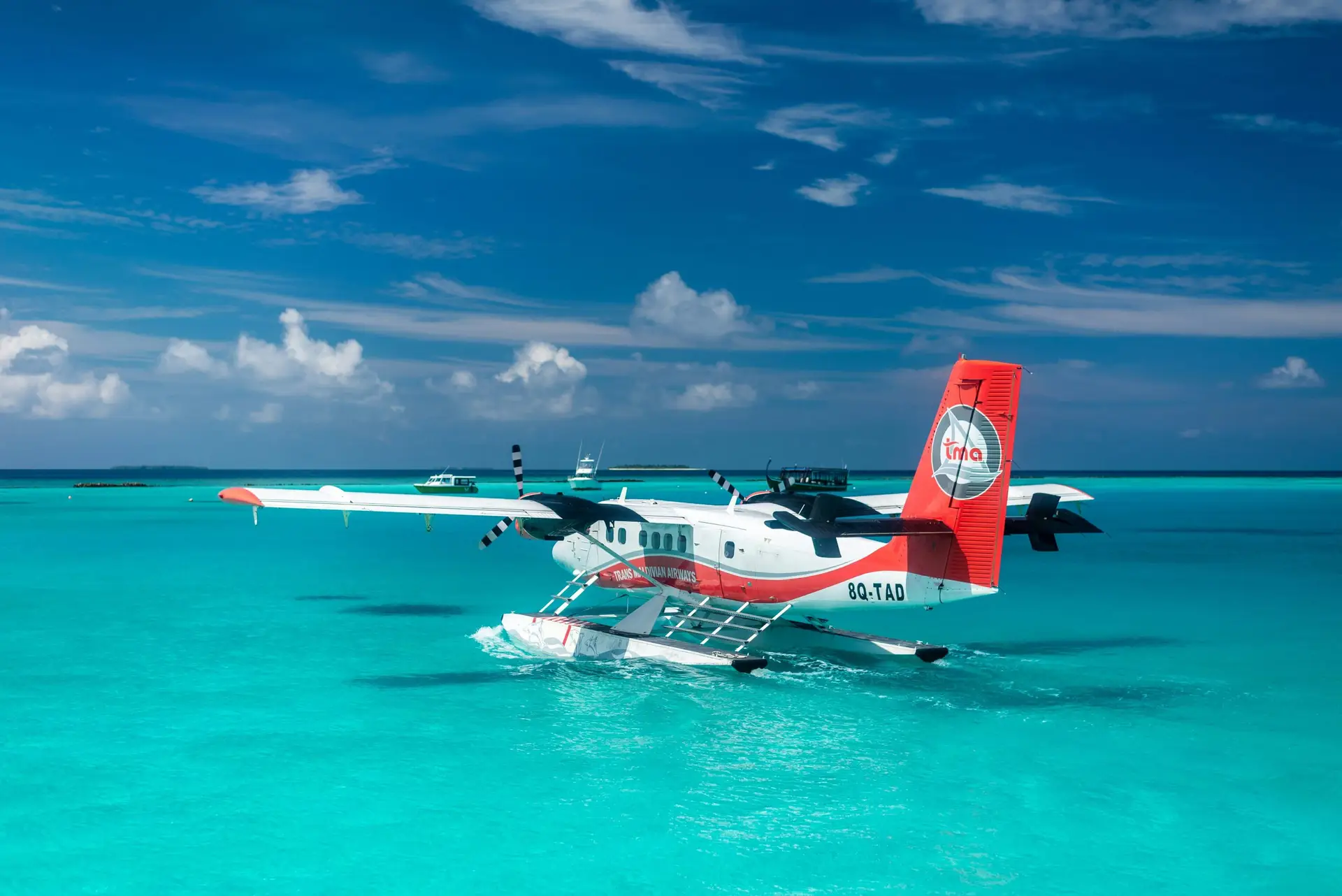 The seaplane is the iconic Maldives image. Those yellow Twin Otters from Trans Maldivian Airways (the world’s largest seaplane operator, with over 50 aircraft serving 80+ resorts) skim low over the atolls and give you that aerial shot you’ve seen a thousand times. Manta Air is the other operator, known for newer aircraft and routes including to Dhaalu Atoll. It’s genuinely beautiful. It’s also expensive, logistically awkward, and completely ruled by daylight.
Seaplanes only fly between sunrise and sunset. In practice, that means roughly 6:00am to 4:30pm. TMA recommends you land at Velana International by 3:30pm to reach your resort the same day. Niyama states outright that arrivals after 3:15pm mean the resort the following morning. If your flight gets in on the evening connection from Dubai or Singapore, there is no seaplane waiting. You’ll pay for a night in Male or Hulhumale (somewhere between $50 and $150 for an airport hotel) and lose the first evening you already paid for at the resort. Most resorts won’t refund that night.
One detail that catches people off guard: your seaplane route isn’t confirmed until the evening before departure. There’s no fixed schedule. The resort coordinates with TMA or Manta Air based on who’s arriving and leaving the next day. You won’t know your exact flight time until the night before.
Seaplane prices run from $290 to $720 per person return for shared transfers. W Maldives charges $720. Conrad Maldives Rangali Island charges $700 per adult, with a 30 percent discount in low season (April to September 2026). Private charter starts at $1,200 one way and can reach $15,000.
Standard baggage allowance is 20kg checked plus 5kg hand luggage. Each extra kilo costs $5. That sounds manageable, but a couple packing 60kg total could easily pay $60 to $100 extra.
And then there’s the wait. You land at Velana, walk to the seaplane terminal (a separate building, five minutes on foot or by shuttle), and wait. Flights get coordinated across multiple guests and multiple resorts. The wait typically runs one to four hours. The resort usually has a lounge with wifi and drinks, but those are still holiday hours gone.
Seaplanes have no air conditioning. Just fans. It’s hot and loud. The flight itself takes 25 to 60 minutes depending on the resort.
Speedboat
Speedboat is the fastest, cheapest, most flexible option. But it only works for resorts close to Male. Most properties in Kaafu Atoll (North and South Male), Vaavu, and parts of South Ari can be reached by speedboat.
The big advantage: speedboats run around the clock. Land at 11pm, you can still get to your resort. For a short stay, this is enormous. Hilton Maldives Amingiri offers 24/7 speedboat service at $300 return per adult. Huvafen Fushi charges $323. Some resorts include the speedboat for free: Dhawa Ihuru, Varu by Atmosphere, and Oblu Select Sangeli.
The downside: rough water. When there’s any chop, speedboats bounce hard and a lot of people get seasick. Sit in the middle of the boat where movement is least. Take a motion sickness tablet 30 minutes before. There’s no air conditioning, just natural breeze while the boat moves.
Waldorf Astoria Maldives charges $960 for yacht transfer. Patina Maldives charges $3,800 for a private vessel. Those are in their own category entirely.
Domestic Flight Plus Speedboat
For resorts in the southernmost atolls (Addu, Gaafu Dhaalu, Laamu), the journey combines a domestic flight from Male to a regional airport, then a speedboat to the resort. Westin Miriandhoo charges $395 for this combination.
The domestic terminal is 200 meters from the international one, a five-minute walk. The flight takes 60 to 90 minutes on a small turboprop. This option is often cheaper than seaplane for similar distances, but the journey is longer and the logistics more involved.
Your Last Day Disappears Too
It’s not just the arrival day that shrinks. The resort arranges your return transfer two to three hours before your outbound flight. Morning flight? You’re leaving the resort before sunrise. Midday flight? Your last morning on the island is basically a pack-and-wait situation.
For a couple doing four nights at a seaplane resort: half a first day (arrival), three full days, and half a last day (departure). Four nights paid for, three days of actual holiday. A speedboat resort with a late arrival and afternoon departure gives you noticeably more time.
What to Choose
Short trip (four to five nights): go with a speedboat resort near Male. You lose the least time in transit and you can arrive late without burning a night. Longer trip (seven nights or more): a seaplane to a more remote atoll makes sense. The transfer cost spreads across more days, and those farther atolls usually have better reefs and a quieter atmosphere. Families with young kids: speedboat, every time. Seaplanes with baggage limits, heat, and long waits are stressful with children.
The rule nobody says loudly enough: the seaplane transfer can represent 10 to 15 percent of your entire holiday budget. Always check the transfer price before you book the room.
What You Actually Pay: The Real Cost Breakdown
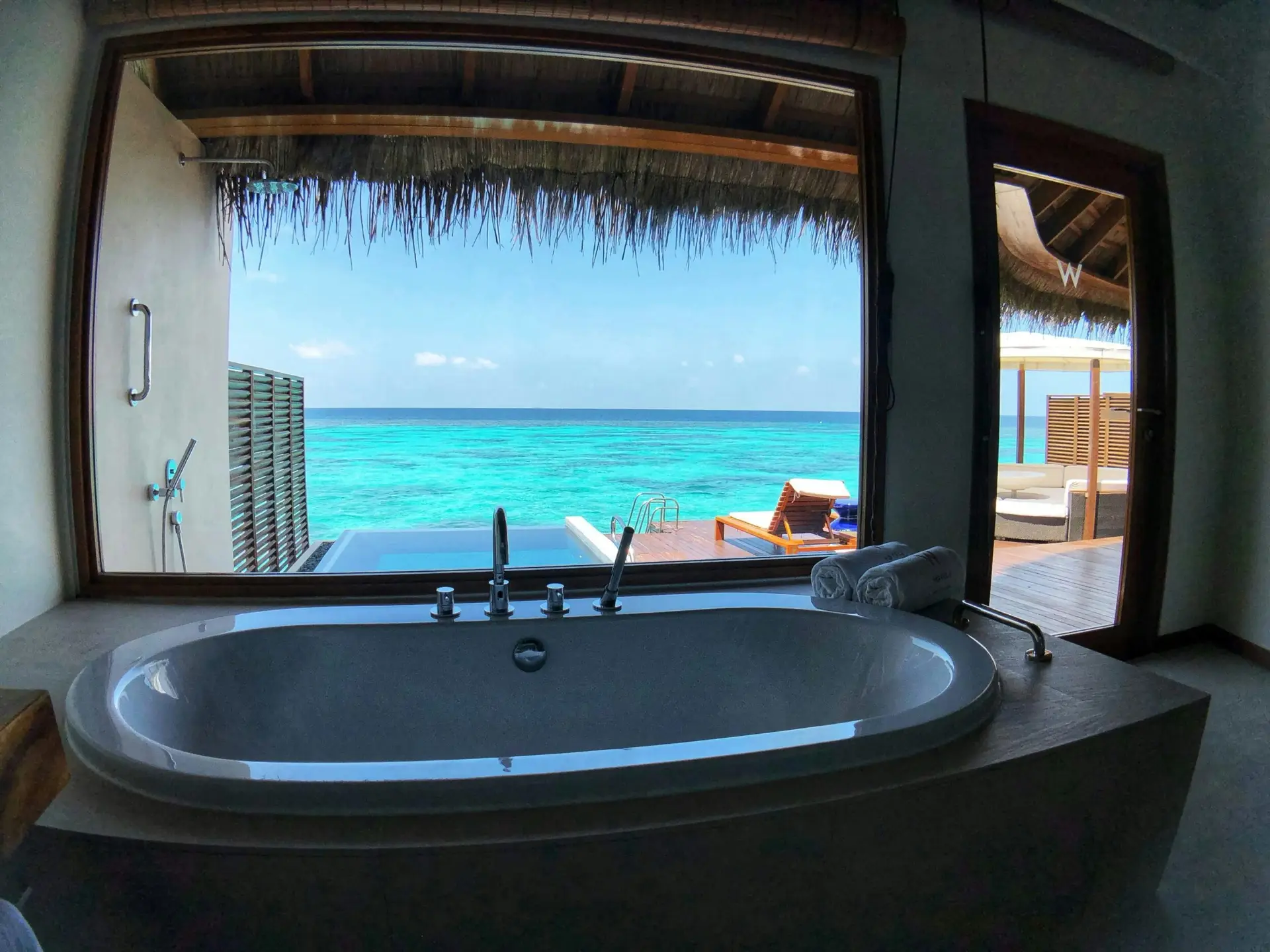 There are three layers of cost in the Maldives. Most booking sites show you the first one.
Layer 1: The Room Rate
Overwater villa prices per night in 2026:
Budget starts around $275 (Rannalhi) and climbs to $500. Mid-range runs $500 to $1,000 (Velassaru, Lily Beach, W Maldives). Luxury sits between $1,000 and $3,000 (Soneva Jani, One&Only, Conrad). Ultra-luxury starts at $3,000 per night and goes past $7,700 (Soneva Secret, Kudadoo, Velaa Private Island).
A beach villa at the same resort typically costs 40 to 50 percent less than overwater. At Sun Siyam Iru Fushi, a water villa with pool runs around $1,429 per night. The pool beach villa: $759. That’s almost double.
Layer 2: The Taxes
Here’s the surprise. The Maldives adds significant tax on top of whatever room rate you see, and it’s rarely included in the number shown.
Rates as of April 2026: from 1 July 2025, tourism GST rose to 17 percent (source: MIRA, the Maldives Inland Revenue Authority). On top of that, there’s a 10 percent service charge. And since 1 January 2025, the Green Tax is $12 per person per day at resorts ($6 at guesthouses).
What that means in practice: a $1,000-per-night room actually costs $1,270 with taxes and service charge, plus $24 per day in Green Tax for two people. Over seven nights, that’s nearly $2,060 in charges you might not have known about when you booked.
Always check: is the listed price tax-inclusive or exclusive?
Layer 3: Food, Drink, and Activities
The Maldives is an Islamic republic. Alcohol is only legal on licensed resort islands. That means the resort has a complete monopoly, and the prices reflect exactly that. A glass of wine costs $20 to $30. Cocktails start at $25. Imported bottles carry a two to three times markup over retail. One TripAdvisor reviewer reported $53 for an evening of drinks. At JW Marriott, a private dinner for two ran $650: $250 for the food and $400 for a bottle of champagne.
Meal plans vary wildly between resorts. Breakfast-only is the most straightforward. Half board (breakfast plus dinner) adds predictability. Full board covers meals but rarely drinks. All-inclusive ranges from “house wine and buffet” all the way to “premium spirits, a la carte across all restaurants, minibar, water sports, and excursions included.” The gap between the cheapest and most comprehensive all-inclusive options is enormous.
Some resorts, Emerald Maldives and Ozen Reserve Bolifushi among them, include premium alcohol, fully stocked minibars, and champagne. Others cap you at house brands. Some add surcharges for certain menu items even within all-inclusive packages. Water bottles can cost $10 to $15 each at resorts that don’t filter their own.
The Real Total: What a Couple Actually Pays for a Week
Here’s what most guides skip. A concrete example for two people, seven nights, mid-range resort with seaplane:
Overwater villa at $700 per night for seven nights: $4,900. Taxes and service charge (27 percent): $1,323. Green Tax ($12 x two people x seven nights): $168. Seaplane transfer ($500 per person return): $1,000. All-inclusive upgrade ($150 per person per day): $2,100. Two excursions (whale shark snorkelling and dolphin cruise, $175 per person): $700. Total: around $10,191.
And that’s mid-range. Add a couple of spa treatments, a private beach dinner, and some diving, and you’re past $12,000 for the week.
With a beach villa instead of overwater, at a speedboat resort with included transfer and a simpler meal plan, the same couple can come in at $5,000 to $6,000 all-in. The difference between a good choice and a bad one is real money.
The rule of thumb: work out the full cost of the stay (room plus taxes plus transfer plus meal plan plus estimated drinks plus two or three excursions) before you compare resorts. A more expensive resort with solid all-inclusive can easily end up cheaper than a “cheaper” option where everything is priced separately.
Overwater Villa vs. Beach Villa: Romance vs. Reality
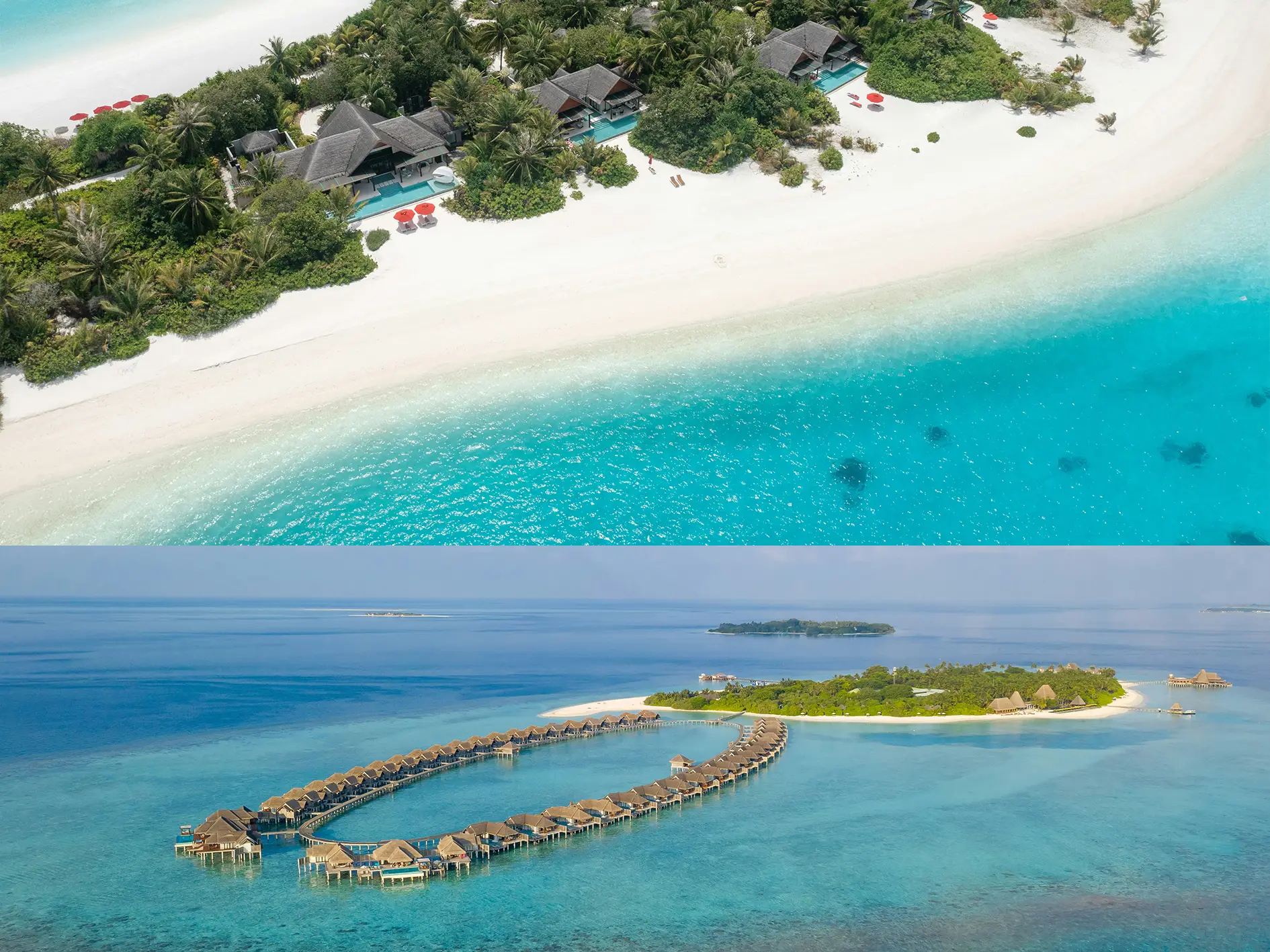 The overwater villa is the image that sells the Maldives. Glass floors with fish swimming beneath you, stepping straight into the lagoon from your deck, nothing on the horizon but ocean.
But it’s not the right choice for everyone. A lot of people stretch their budget hard to get an overwater villa and end up at a mediocre resort with a thin house reef and neighbours five metres away.
Here’s what most guides skip past:
Water depth varies. Some overwater villas sit above shallow, sandy-bottom water where you can barely swim. Others are over deeper lagoon with direct reef access. Ask the resort: is the water deep enough to swim properly from the ladder?
Sunrise or sunset. Overwater villas face either east or west. You choose between waking up to a sunrise or watching the sun set from your deck. Both are stunning. But it is a choice, and most people don’t realise they’re making one. Some resorts offer both orientations. Ask when you book.
Wind and sound. Overwater villas catch more wind than beach villas. You can hear the waves through the floor at night. Some people love that. Others find it annoying after a few nights.
Privacy. Overwater villas often sit in rows along a long jetty, with units on both sides. Depending on the design, your neighbour can see straight onto your deck. A beach villa with a private garden can actually feel more secluded.
Beach access. From an overwater villa, you walk back along the jetty to reach the beach, the restaurant, or the pool. That can be a five to ten-minute walk in direct sun. Every time.
Children. Several resorts don’t allow children in overwater villas at all. Some set the minimum age at 12; others at 8. The reason is safety: open ocean access from the deck, no barriers. Velassaru, for instance, doesn’t permit children in its water villas at all.
Beach villa advantages: more space, a private garden, direct beach access, better for families, and 40 to 50 percent cheaper.
The split-stay approach: book a few nights in an overwater villa for the experience, and spend the rest in a beach villa for comfort and value. Several resorts make this easy. You save over $1,200 on a week-long stay. The resort moves your bags between room types; you unpack once. Splitting across two different resorts is more involved. You go back to Male airport, meet the next resort’s representative, and take a new transfer. A few neighbouring resorts can arrange direct speedboat transfers between them, but that’s the exception.
The most important rule of all: a five-star beach villa always beats a three-star overwater villa. Prioritise the resort’s quality over the room type.
What You Actually Do All Day
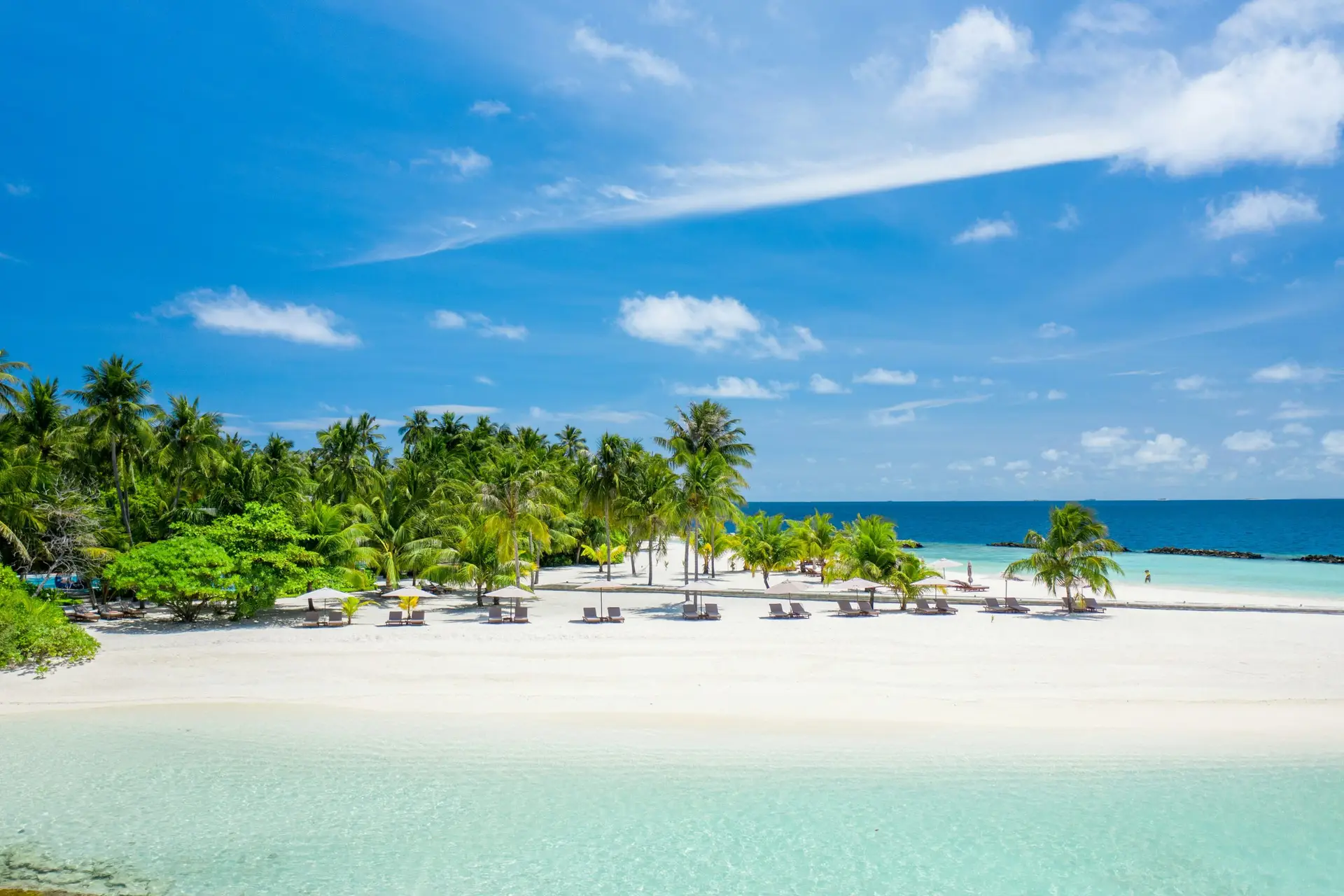 Let’s be honest about this. You are, for most practical purposes, on a small island for the duration of your stay. There are no shops to browse, no towns to wander through, no side streets to stumble down. It’s you, the sand, the sea, the restaurant, and the other guests, who you’ll probably exchange a polite nod with and not much else.
Worth knowing upfront: there are no shops on the resort island. If you forget sunscreen, a snorkel mask, or a charging cable, your only option is the resort boutique, which charges roughly double what you’d pay at home for a limited selection. Pack everything you need. Check it twice.
Surprisingly, boredom is rarely the problem.
A typical day looks something like this: you wake early because the light at sunrise is too good to sleep through. Breakfast. You snorkel the house reef right off the villa, which is probably the best snorkelling you’ve ever done. Back to the pool. Lunch. A spa session you should have booked the day before (even in low season, same-day bookings are hard). Kayak or paddleboard in the late afternoon. Sunset around 6:30pm. Drinks at the bar. Dinner. Stars. Bed.
A curious detail: some resorts run on “island time,” setting their clocks one hour ahead of Maldivian official time: GMT+6 instead of GMT+5. The idea is to give guests an extra hour of afternoon daylight for activities. It feels strange for the first day, but most people adjust quickly.
People worry they’ll get bored. Almost everyone who actually goes says the same thing: the days disappear. Snorkelling alone can fill hours. If you dive, you have enough to keep you busy for a week without repeating a single site. Resorts offer everything from jet-skis and parasailing to cooking classes, coral planting with a marine biologist, sunset fishing trips with a beach barbecue on a sandbank, and dolphin cruises.
But here’s where choosing the right island matters:
Small boutique islands (under 50 villas) are quiet, intimate, and romantic. You can walk around the whole thing in ten minutes. Maybe one bar, one restaurant. Perfect for couples wanting to switch off. Wrong choice if you need variety.
Larger islands like Kuramathi, Kuredu, Club Med Kani, and Siyam World have multiple bars, restaurants, sports facilities, entertainment, and a sense that something’s actually happening. Better for families and people who get restless.
Liveaboard is an option plenty of people overlook. Diving safari boats that move between atolls, new dive sites every single day. More adventure, less luxury.
A note on activity pricing: many excursions aren’t included in all-inclusive packages. A dive costs $80 to $150. A whale shark snorkelling trip runs $150 to $200 per person (minimum age usually 8). Kayaks and paddleboards are often free; jet-skis and parasailing cost extra. Some resorts charge for snorkel equipment hire; others include it. Check what’s included before you book, not after.
Under the Surface: The Reef, the Excursions, and the Animals You’ll Actually See
The Maldives has some of the world’s best coral reefs, and for many visitors the underwater life is the real reason to come. But there are big differences between resorts, and the time of year you travel determines what you’ll encounter.
House Reef vs. Excursion Sites
Most resorts have a house reef, a coral reef you can swim to directly from the beach or your villa. Quality varies enormously. Some house reefs are spectacular: colourful corals, sea turtles, reef sharks. Others are bleached, damaged, or frankly dull.
Ask the resort directly: how is the house reef right now? A good house reef is worth more than a fancy villa, because it gives you hours of free entertainment every single day.
Boat excursions take you to dive and snorkel sites around the atoll: pinnacles (thilas), channels (kandus), drop-offs, wrecks. Most Maldives dives are drift dives from a boat. Visibility can exceed 30 metres in the dry season.
Manta Rays
Hanifaru Bay in Baa Atoll, a UNESCO Biosphere Reserve, is the main event. From June to early October, hundreds of mantas gather here to feed on plankton. Access is by guided snorkel tour only, to protect the ecosystem.
In Ari Atoll, mantas are present year-round but follow the monsoon: western reefs in the dry season (December to May), eastern reefs in the wet season (June to November).
If you stay in Baa Atoll, at Anantara Kihavah or Four Seasons Landaa Giraavaru, you skip the long charter boat trip to Hanifaru entirely.
Whale Sharks
The South Ari Marine Protected Area is one of the very few places in the world with near-guaranteed whale shark sightings year-round. Sites like Maamigili Reef and Dhigurah have daily encounters. The sharks follow the monsoon too: west in the dry season, east in the wet. The guides know where they are.
Sea Turtles
Nesting season runs May to June (egg-laying), with hatchlings in July and August. Many resorts run conservation programmes and turtle hospitals where you can watch hatchlings making their way to the sea.
Reef Sharks, Dolphins, and Bioluminescence
Reef sharks (whitetip, blacktip, grey) are common on most reefs year-round. Alimatha Jetty and Maaya Thila are known for particularly dense populations. Dolphin cruises are available at almost every resort and rank among the most popular excursions. Bioluminescence (glowing plankton in the water at night) appears sporadically; Vaadhoo Island is the most famous spot for it.
The Rule for Underwater Life
Dry season (December to May): best visibility, 20 to 30 metres and often more, and calmest water. Ideal for underwater photography and for first-time snorkellers.
Wet season (June to November): the most marine life. Plankton blooms draw the mantas and whale sharks, but visibility drops. Best for divers and snorkellers who prioritise big animals over crystal-clear water.
One practical example: if you book a resort on the western side of Baa Atoll in August (wet season), your house reef will have reduced visibility because the “west in dry, east in wet” rule applies. The mantas congregate in Hanifaru Bay on the eastern side. A resort on the wrong side of the atoll in the wrong season means paying for a boat trip to see something that could have been right outside your door.
What Actually Happens After Dark
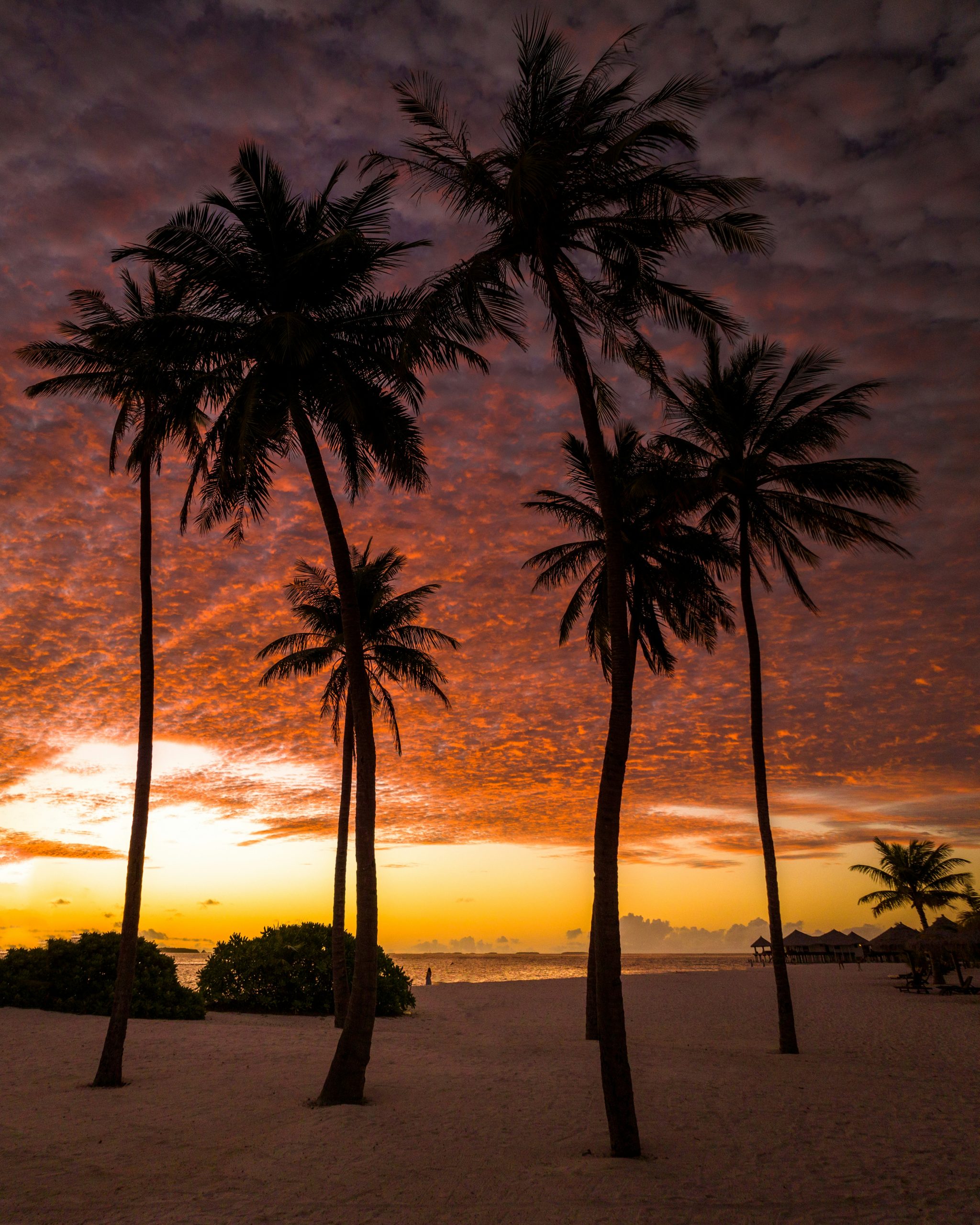 No point dressing it up: nightlife in the Maldives is minimal. If you want bars, clubs, and music past midnight, this is the wrong destination.
What does happen after dark:
Sunset is the main daily event. Most guests drift to the bar or poolside around 6:30pm, and the sky delivers. Pink, orange, purple. One of the best sunsets you’ll ever see.
Then: dinner. Resorts with multiple restaurants (five isn’t unusual at larger islands) give you genuine variety across the week. Maldivian themed evenings. Japanese teppanyaki. Private beach dinners with torches and rose petals in the sand (bookable, extra charge, ideal for anniversaries and proposals).
After dinner: not much. Some resorts have live music one or two evenings a week. Others offer beach cinema, quiz nights, or karaoke. Bodu Beru drumming (traditional Maldivian music) is common. One TripAdvisor reviewer summed it up well: a crab racing evening is about as wild as it gets.
There are exceptions. Niyama’s Subsix is an underwater nightclub six metres below the surface. W Maldives brings in DJs. Club Med Kani runs entertainment programmes most evenings. Siyam World does pool parties.
But for most people, the evening in the Maldives is this: a drink, a sky full of stars (almost zero light pollution), the sound of water, and early to bed because the morning is the best part of the day. Soneva Jani and Anantara Kihavah have actual observatories with telescopes, and the night sky near the equator is something you need to see once.
It’s not boring. It’s quiet. And that’s rather the point.
Season Guide: More Than Just “Dry” vs. “Wet”
Most guides tell you dry season (December to April) is best and the rest is monsoon to avoid. That’s a simplification that’ll cost you either money or experiences.
Best for Sun and Reliable Weather: January to March
The northeast monsoon brings blue skies, calm seas, and eight to nine hours of sun per day. February is statistically the driest month. Daytime temperatures around 31 degrees Celsius, dropping to 26 at night. Underwater visibility is at its best, over 30 metres. This is peak season with peak prices. Book four to six months ahead. For Christmas and New Year: six to nine months minimum. Many resorts impose compulsory New Year’s supplements: Conrad charges over $1,000 per adult for the gala dinner.
Best for Value: September to November
Deep wet season. September and October have the most rain, but it falls in short, intense bursts followed by sunshine. Prices can be 50 to 60 percent below peak. A villa at $1,000 per night in January might cost $400 in October. Many resorts add free half board, room upgrades, or dolphin cruise excursions during this period. Mantas remain active in the western atolls. Whale sharks in South Ari year-round.
Best for Marine Life: June to October
The southwest monsoon brings plankton, and the plankton brings the giants. Hanifaru Bay hits its manta peak from June to early October, with hundreds of rays feeding in a frenzy. Whale shark encounters in South Ari are active all year but more frequent now. Surfers head to North and South Male atolls where the breaks reach four to eight feet: Cokes, Chickens, Sultans, Jailbreaks. Sea turtles nest in May and June; hatchlings emerge July and August.
Best for a Short Trip: April and November
The shoulder months. April is still dry but cheaper than winter. November sees rain tapering off, manta activity continuing, and resorts preparing for the winter rush with good deals. Both offer 25 to 40 percent savings over peak, with better weather than the heart of the wet season.
Ramadan
In 2026, Ramadan starts in mid-February. For guests on resort islands: zero practical impact. Resorts are exempt and serve food, alcohol, and entertainment as normal. If you plan to visit a local island during Ramadan, expect restaurants and cafes to be closed during the day. Worth factoring in if a local island visit is part of your itinerary.
The Reef and the Monsoon: Where to Dive and When
“West in dry, east in wet” is the short version. During the northeast monsoon (dry season), the western sides of the atolls produce the best diving and marine life. During the southwest monsoon (wet season), the eastern sides deliver. This particularly affects the central atolls. A resort with its reef on the wrong side for the season can offer significantly worse snorkelling than you expected.
Medical Reality: The Section You’d Rather Skip but Shouldn’t
The Maldives is safe. Crime on resort islands is effectively non-existent. But the medical situation is something most travel guides quietly skip, and that’s a mistake.
Advanced medical care is only available in Male. Outside the capital, resorts have small clinics with limited capacity. For anything serious, evacuation is required, by seaplane to Male, and potentially onwards to India or Sri Lanka. Australian authorities state plainly: it can take several hours to reach a hospital from a resort island. US authorities note that first responders cannot reach remote areas quickly.
For divers, decompression chambers are a specific concern. There are a limited number in the Maldives. Kuredu Island has the only operational chamber in all of North Maldives (24-hour hotline: +960 790 75 10). From some resorts, reaching it could take hours.
Emergency seaplane evacuation can cost more than $20,000. That figure isn’t there to frighten you. It’s there to convince you to buy travel insurance.
Travel insurance is compulsory in everything but name. A standard 10-day policy costs $70 to $130. It must cover medical evacuation. Divers: the policy must specifically cover decompression treatment and dive-related injuries. DAN (Divers Alert Network) is the recommended provider. Some standard policies exclude diving. Read carefully.
The Rules You Didn’t Know Existed
The Maldives is an Islamic republic, and the rules are stricter than many visitors expect.
Alcohol
You cannot bring alcohol into the Maldives. Not a duty-free bottle of wine, not a can of beer. It all gets confiscated at customs. Alcohol is only legal on licensed resort islands and liveaboard vessels. Not in Male, not in Hulhumale, not on local islands. In May 2023, three Indian tourists were arrested for carrying 23 bottles of alcohol on a public bus. They were held in custody for several days.
E-cigarettes
Completely banned since November 2024. The fine runs 5,000 to 10,000 Maldivian rufiyaa ($325 to $650) per device. Don’t pack your vape.
Local Islands vs. Resort Islands
Resort islands operate under liberal rules. Bikinis, alcohol, pork: all fine. On local islands (Maafushi, Thulusdhoo, and others), modest dress is expected: cover shoulders and knees. Swimwear is only permitted on designated “bikini beaches.” Public displays of affection are not tolerated.
What Not to Pack
Prohibited items: alcohol, pork products, pornography, religious material “contrary to Islam” (which includes Bibles), weapons, ammunition, and narcotics. From March 2026, penalties for drug offences have been significantly increased: heavy fines, long prison sentences, and in the most extreme cases, capital punishment.
Local Islands: The Other Maldives
There’s an entirely different Maldives. No overwater villas, no infinity pools, no $30 glasses of wine. Just the Maldives as local people actually live in it.
Guesthouse rates on inhabited islands: $50 to $150 per night including breakfast. Maafushi is the most developed for tourists. Thulusdhoo is known for surfing, home of the legendary breaks Cokes and Chickens. Dhigurah puts you close to whale sharks. Fulidhoo has nurse sharks.
You eat locally for $7 to $12 a meal. Street food from $5. Try mas huni for breakfast: shredded tuna with coconut, onion, and chilli, served with roshi flatbread. Garudhiya is a clear fish broth with rice, lime, and chilli that functions as Maldivian comfort food. Hedhikaa are deep-fried snacks served at afternoon tea, and they’re dangerously addictive.
Excursions (snorkelling, diving, whale sharks) are available and often cheaper than from resorts.
But: no alcohol. No bikinis outside designated beach areas. Conservative dress codes. It’s a fundamentally different kind of holiday to the resort experience. For some people, it’s better. For others, it doesn’t fit at all. Know what you’re choosing.
For Couples and Honeymooners
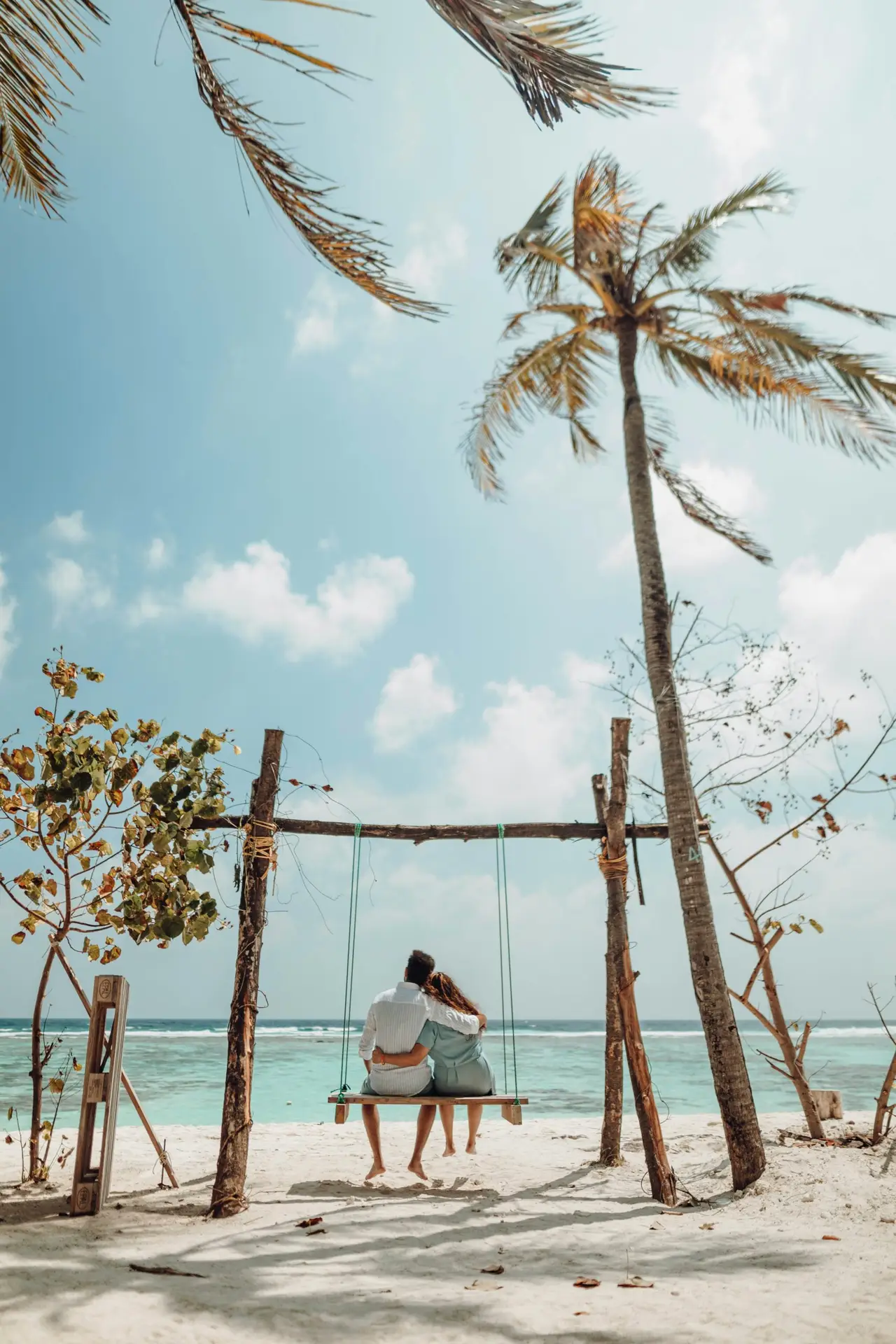 The Maldives is the world’s most popular honeymoon destination, and the reasons are obvious. Privacy, beauty, and a feeling of being completely cut off from everything else.
Most resorts offer honeymoon packages: room upgrade, private beach dinner, couples’ spa, and room decoration on arrival. Prices vary, but expect $500 to $2,000 for a proper package. Soneva Fushi, Baros, and Milaidhoo are particularly known for romantic experiences.
Planning to propose? Most resorts set up a sandbank dinner with champagne and decorations. Tell the concierge well in advance. They do this regularly and know exactly what to do.
The split-stay is the ideal honeymoon strategy: three to four nights at a boutique overwater villa resort for romance and privacy, then three to four nights at a larger resort with a better reef, more restaurants, and more to do. You get both experiences instead of compromising on one.
Choose a small island (under 50 villas) for maximum quiet and privacy. Choose an adults-only resort (Baros, Velassaru, Hurawalhi) to avoid the children’s pool soundtrack. A sunset-facing overwater villa is the romantic classic: wine on the deck as the sun drops into the ocean.
For Families
The Maldives isn’t only for couples. More resorts are investing seriously in family facilities, but it takes a bit more planning.
Important point on overwater villas: many resorts have age limits. Some don’t allow children under 12 in overwater villas; others set the bar at 8. The reason is direct ocean access from the deck with no barriers. Always ask the resort directly before booking an overwater villa with kids.
Kids’ clubs at most larger resorts take children from ages 3 to 12. Some are included; others charge separately. Club Med Kani, Siyam World, Niyama, and Kurumba are well-regarded for their children’s programmes.
Family-friendly resorts offer two-bedroom family villas, children’s pools, kids’ menus, and age-appropriate activities. Beach villa is almost always the better choice for families over overwater: more space, safer, and closer to facilities.
Age limits on activities: snorkel excursions typically require children to be confident swimmers. Whale shark snorkelling has a minimum age of around 8. Sea walking and similar ocean floor activities have a minimum age of 12. Diving starts at 10 for junior open water certification.
Transfer tip for families: choose a speedboat resort. Seaplanes with wait times, baggage restrictions, and hot cabins are genuinely stressful with young children, particularly under-fives. Speedboat gives you more flexibility on arrival and departure timing.
How to Photograph the Maldives
You don’t need professional gear here. The light, the colours, and the subjects do most of the work. But a few things make a real difference.
Best times: sunrise (around 6:00am) and the last hour before sunset (roughly 5:30 to 6:30pm) give the softest, warmest light. Midday light is harsh. Use that time for underwater photography instead, where direct sun actually helps the colours.
Underwater: a waterproof phone case (from about $20) works surprisingly well for snorkel shots. For more serious work, a GoPro or similar action camera. Use a red filter to compensate for blue colour cast underwater. Shoot towards the sun for fish and coral silhouettes. Get close to your subject. Water absorbs colour and contrast across distance.
Drones: you need permission from both the resort and Maldivian authorities (the Civil Aviation Authority). Many resorts ban drones entirely to protect guest privacy. Check with the resort before you pack the drone. Flying without a permit risks having the equipment confiscated.
If drones aren’t an option, the seaplane flight itself gives you the aerial shots you want. Ask the crew for a window seat, and photograph during approach and takeoff.
Night photography: the sky near the equator is extraordinary. Use a tripod (or rest your phone on a stable surface), long exposure, and stay away from resort lighting. The Milky Way is visible to the naked eye on many evenings.
Before You Fly: Checklist (Updated April 2026)
IMUGA Traveller Declaration: must be submitted online within 96 hours of arrival. Free. Done at imuga.immigration.gov.mv. Important: IMUGA is also required for departure, not just arrival. Set a reminder for the evening before you leave.
Passport: at least one month’s validity beyond your arrival date. Some airlines require six months. Check with your carrier.
Visa: free 30-day visa issued on arrival. Requirements: valid passport, confirmed return ticket, confirmed hotel booking. Extendable to 90 days.
Vaccinations: none mandatory for most travellers. Exception: yellow fever vaccination required if arriving from or transiting through a country with yellow fever.
Travel insurance: must include medical evacuation. Divers: must specifically cover decompression treatment. Buy before you travel.
Transfer: confirm with the resort at least 48 hours before arrival. Provide your flight details in good time. Seaplane route is confirmed the evening before.
Do not pack: alcohol, pork products, vape/e-cigarettes, pornography, religious material contrary to Islam, narcotics.
Plug sockets: UK-type three-pin (Type G). Bring an adapter.
Currency: Maldivian rufiyaa (MVR), but US dollars are accepted everywhere on resort islands. Bank of Maldives at the airport for exchange. Credit cards accepted at resorts. Cash for tips.
Time zone: GMT+5. Some resorts use “island time” at GMT+6.
What to Pack: Maldives-Specific
Reef-safe sunscreen (many resorts require it; coral protection matters). The equatorial sun is brutal. UV shirt or rashguard for snorkelling; it saves your back from burning. Underwater camera or waterproof phone case. Your own snorkel gear if you have it (saves hire costs and guarantees fit). Motion sickness tablets (for speedboat transfers). Modest clothing for any local island visits. A light layer for air-conditioned restaurants. Insect repellent (dengue risk exists). Any prescription medication you need (resort pharmacies have very limited stock). A dry bag (for boat transfers that get splashy). Cash in dollars (for tips and small purchases). Printed travel insurance documents. A Type G adapter.
Do not pack: vape/e-cigarettes. Alcohol. Pork products. Drones without prior permission.
And remember: there are no shops on the resort island beyond a small boutique. If you forget something important, that’s it.
Common Questions
Is an overwater villa actually worth it? Depends. If the budget allows it without compromising on resort quality, yes. Waking up above the ocean with a glass floor and direct lagoon access is genuinely unlike anything else. But a beach villa at a better resort gives a better holiday than an overwater villa at a mediocre one. If you’re stretching to afford overwater, do a split-stay instead: a few nights above the water, the rest on the beach.
What does transfer actually cost? Speedboat: $100 to $350 per person return. Seaplane: $290 to $720. Domestic flight plus boat: $200 to $400. Yacht or premium transfer: $960 to $3,800. Always check whether transfer is included in the package price, and add it to your total before comparing resorts.
Can I reach my resort the same day if I land late? Speedboat resorts: yes, they run 24/7. Seaplane resorts: only if you land by 3:00 to 3:30pm. After that, you’re looking at a night in Male and the resort the next morning. Some resorts offer discounted airport hotel rates in this situation.
Will I get bored after three days? Most people say no. Days fill faster than expected between snorkelling, diving, spa, water sports, and the general pace of island life. But choose the right size island: small for total peace, large for more variety. Liveaboard for adventure. And consider a split-stay between two resorts for anything over seven nights.
Is all-inclusive worth it? Almost always, especially in the Maldives where the alternative is monopoly pricing on an isolated island. Work out the full cost both ways: room plus estimated food and drink versus the all-inclusive package price. For a couple who drinks wine with dinner, all-inclusive is nearly always the better deal. But read what’s actually included. “All-inclusive” can mean anything from buffet and house wine to premium spirits and a la carte across every restaurant.
Is the house reef enough, or do I need to book excursions? Some house reefs are spectacular: Baros, Vilamendhoo, Lily Beach can keep you entertained for an entire week. Others are disappointing. Ask the resort directly about current house reef conditions before you book. Excursions to thilas, channels, and marine protected areas offer experiences no house reef can match, particularly for whale sharks and mantas. Budget $80 to $200 per excursion.
What happens if I get sick on a resort island? Resorts have clinics with basic capacity. Anything serious requires evacuation to Male, which can take hours and cost over $20,000 without insurance. For divers: decompression chambers are limited and may be hours away. Travel insurance with medical evacuation is not optional.
When is the sweet spot for good weather and better prices? April and November. April is still dry but cheaper than winter. November has tapering rain, active mantas, and prices 25 to 40 percent below peak. For the absolute lowest prices: September and October, with 50 to 60 percent savings, but more rain.
Can I visit local islands from the resort? Yes. Most resorts offer local island excursions that give a genuine window into Maldivian daily life. Remember the conservative dress code and that alcohol is not available on local islands.
What about wifi and mobile coverage? Wifi is available at all resorts, but quality varies. Some have excellent connectivity; others struggle with video calls. Mobile roaming works. Some resorts sell local SIM cards.
How long should I stay? Five nights minimum to justify the journey and transfer cost. Seven nights is ideal. Beyond ten nights on one island can start to feel confining. Consider a split-stay between two resorts, or combine a resort with local islands, for anything over a week.
Do I need a visa? No. A free visa is issued on arrival for stays up to 30 days. You need a valid passport (at least one month’s validity), a return ticket, and confirmed accommodation. Submit the IMUGA Traveller Declaration online within 96 hours of arrival, and remember it’s required for departure as well.
Can I travel during Ramadan? Yes. Ramadan has no practical effect on the resort experience. Resorts are exempt and operate normally throughout. If you’re visiting a local island during Ramadan, eating establishments will be closed during daylight hours.
All prices, tax rates, and rules are current as of April 2026 (GST at 17 percent from 1 July 2025, Green Tax at $12 per day from 1 January 2025; source: MIRA). Transfer prices and resort policies change. Always confirm directly with the resort before booking.