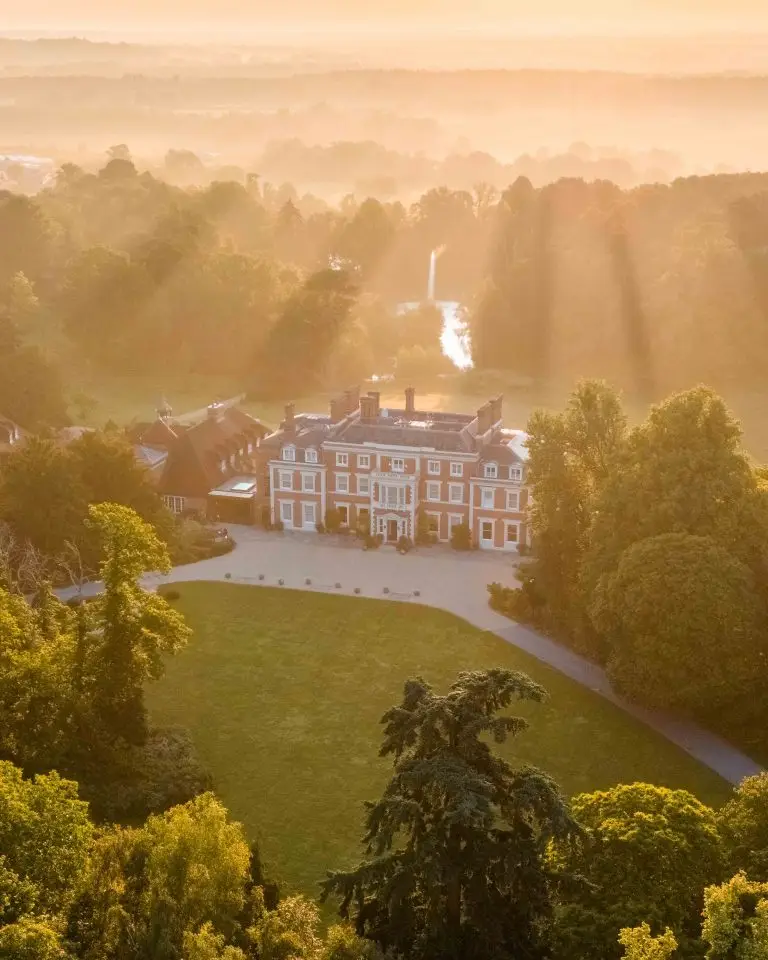
$793 a night, half the price of Four Seasons Maldives. Here’s what you get.
Four Seasons Red Sea opens on May 20, 2026, ahead of Eid al-Adha. Saudi Arabia’s most anticipated luxury resort lands on Shura Island with Foster + Partners architecture and a starting rate of SAR 2,975. Here’s what the opening actually means.
On May 20, Four Seasons Resort and Residences Red Sea at Shura Island receives its first guest. It sits on the quiet eastern tip of Shura, a dolphin-shaped island 25 minutes by electric vehicle from the new Red Sea International Airport, with 149 rooms and suites, 31 residences within the resort, and 75 private villas between the resort and Saudi Arabia’s first island golf course.
The timing is deliberate. Eid bookings open May 27. Hotelier Middle East published the starting rate earlier this week at SAR 2,975 a night, rising to roughly SAR 3,500 for shorter stays. In dollars, that’s $793-933. In kroner, roughly 8,300 to 9,800 NOK. For the brand and the format, it’s surprisingly moderate. We’ll come back to that.
The basics
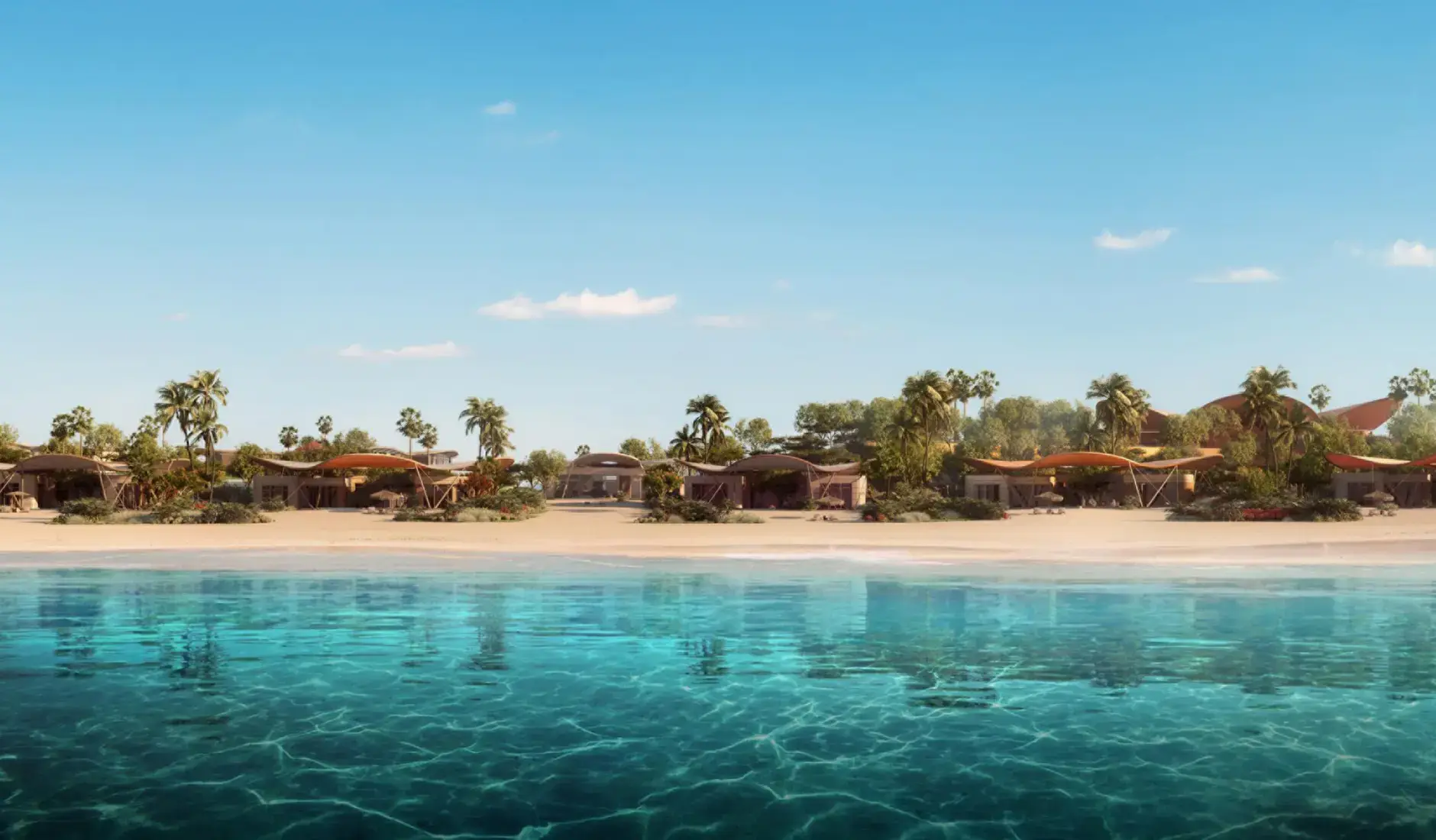
Four Seasons has taken the most remote position on Shura Island. The property occupies 4.8 hectares with sea on three sides and the longest continuous stretch of beach on the island: 1.3 kilometres of swimmable coastline, with a sandbank reaching out into the lagoon. It’s Saudi Arabia’s first Four Seasons beach resort.
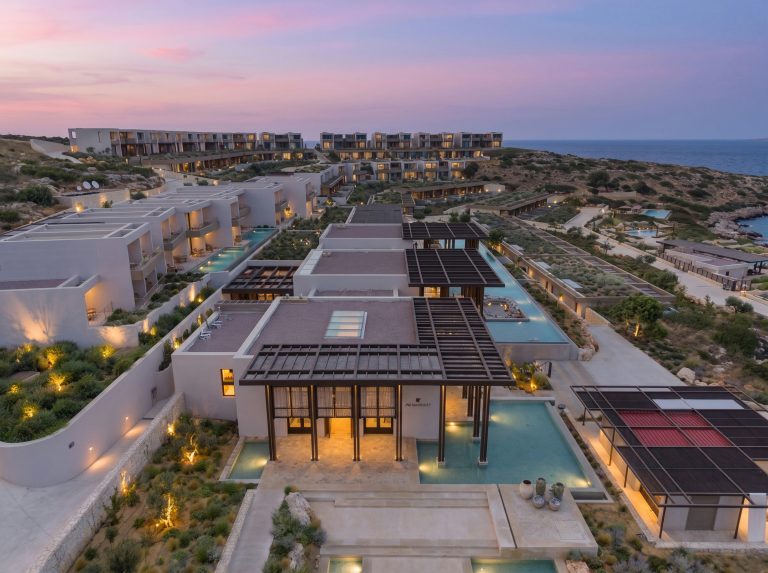
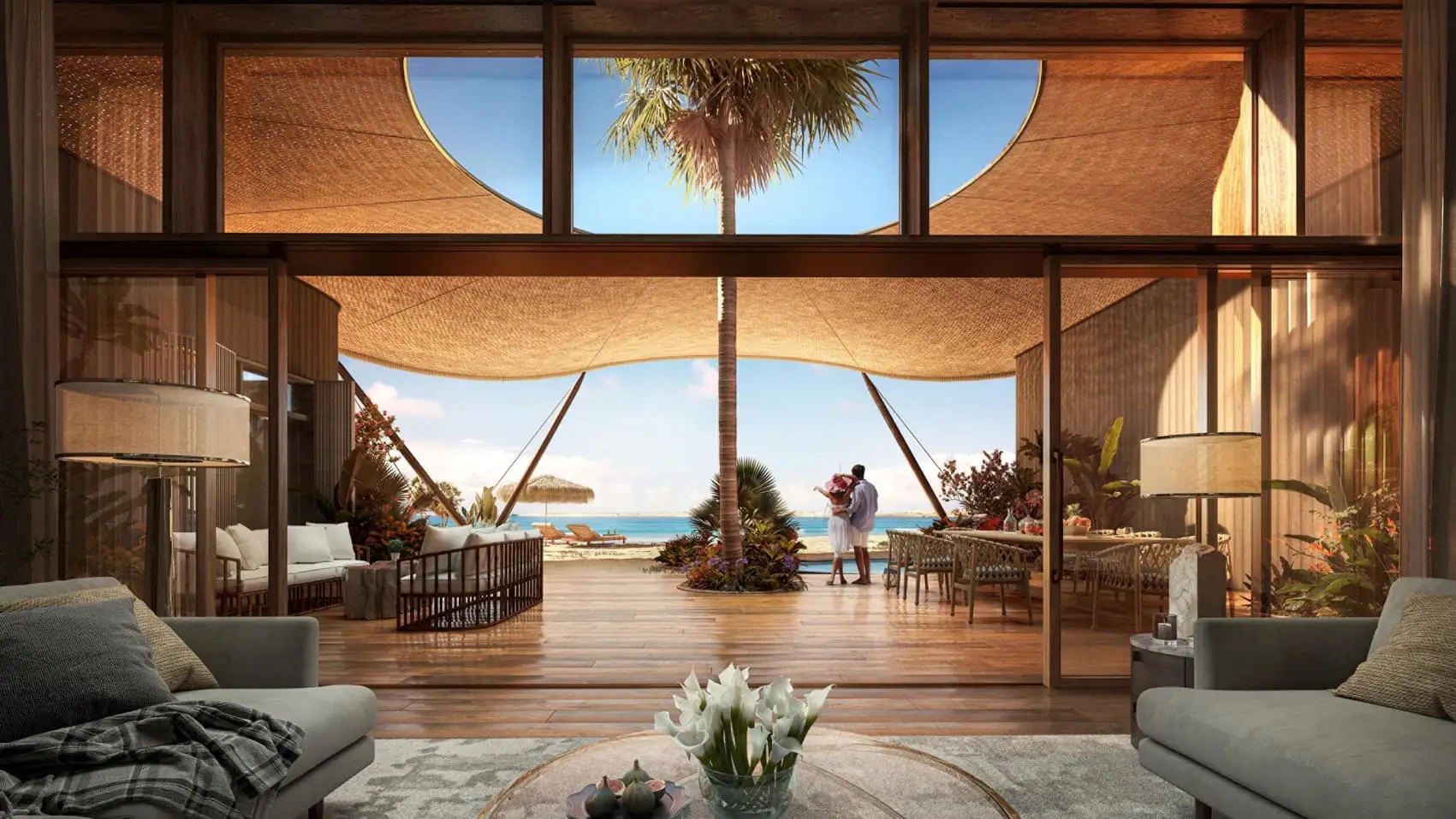
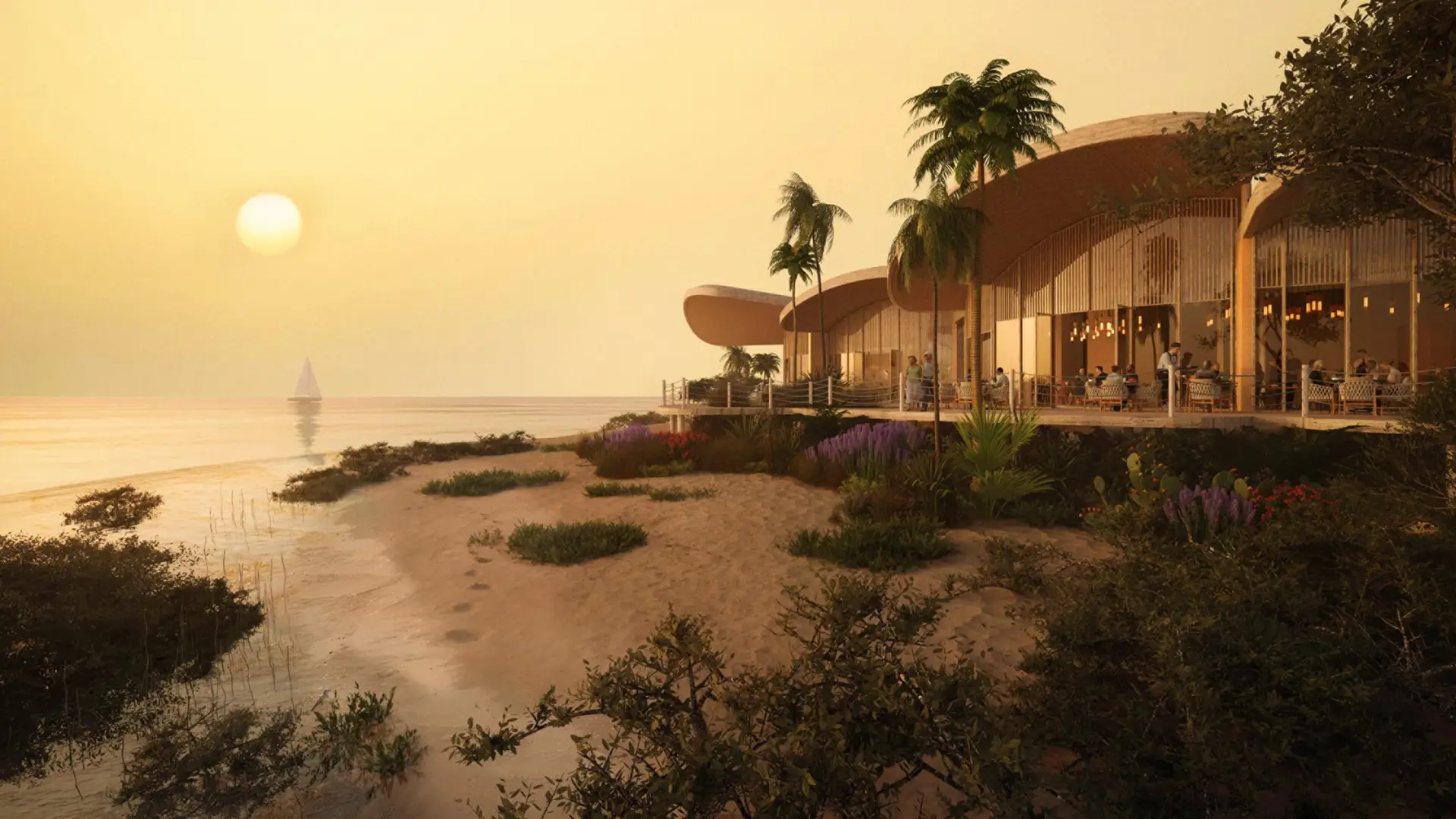
The architecture is by Foster + Partners, the lead architects behind all of Shura Island under what they call the Coral Bloom concept. At Four Seasons, this translates to clusters of single-storey buildings inspired by traditional desert caravans, with slatted timber screens and a palette that matches the sand. The buildings open outward rather than closing in. It’s a deliberate step away from the Maldives model of overwater villas on stilts.
Inside, Four Seasons has chosen Goddard Littlefair for the private residences. The three- to five-bedroom villas measure between 414 and 534 square metres, with private infinity pools and terraces. Half the residences were already sold when Red Sea Global announced them last October, according to the developer’s own figures. Starting prices sit around SAR 11.95 million (roughly $3.19 million) for a one-bedroom. Larger villas are priced individually.
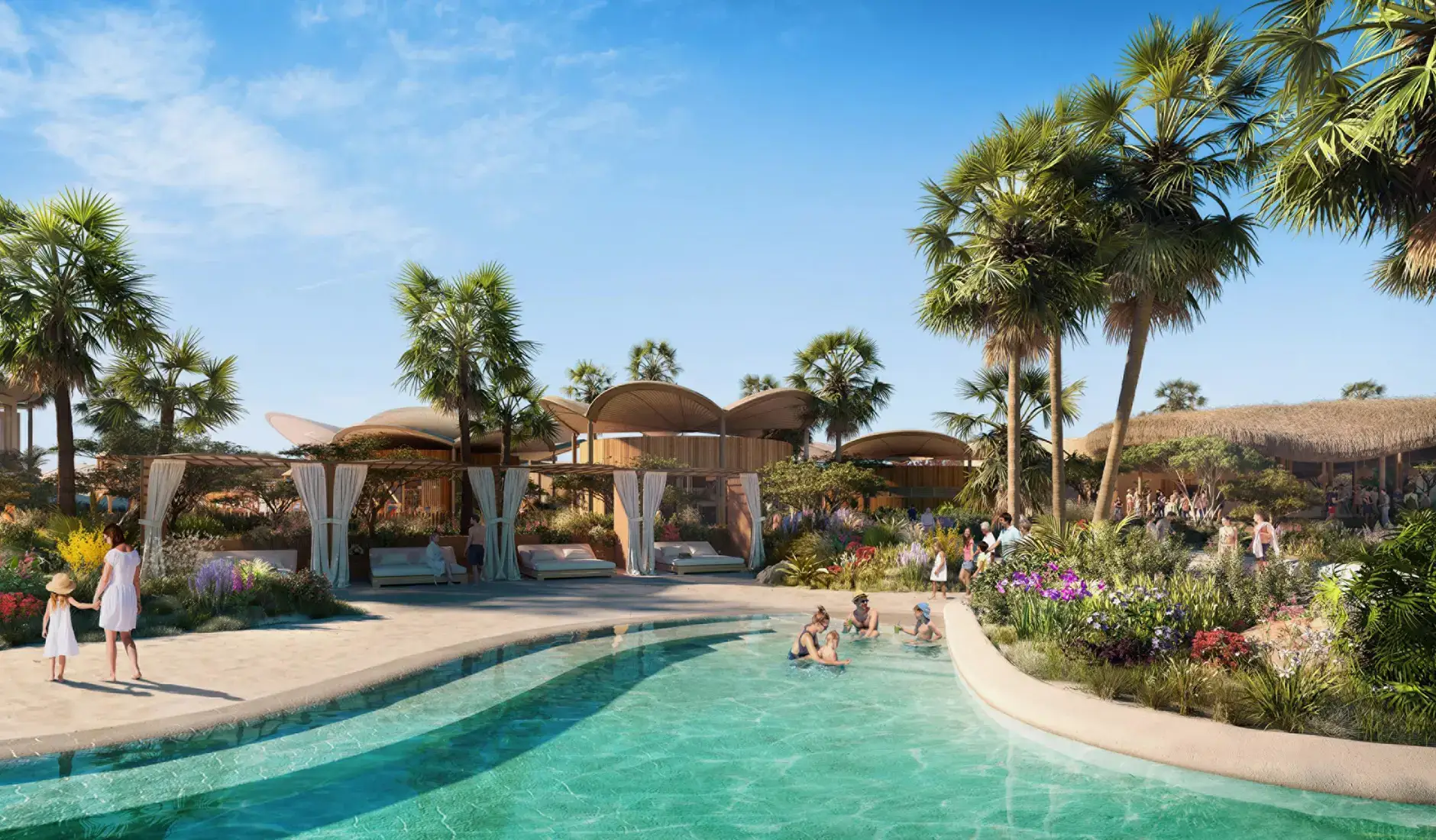
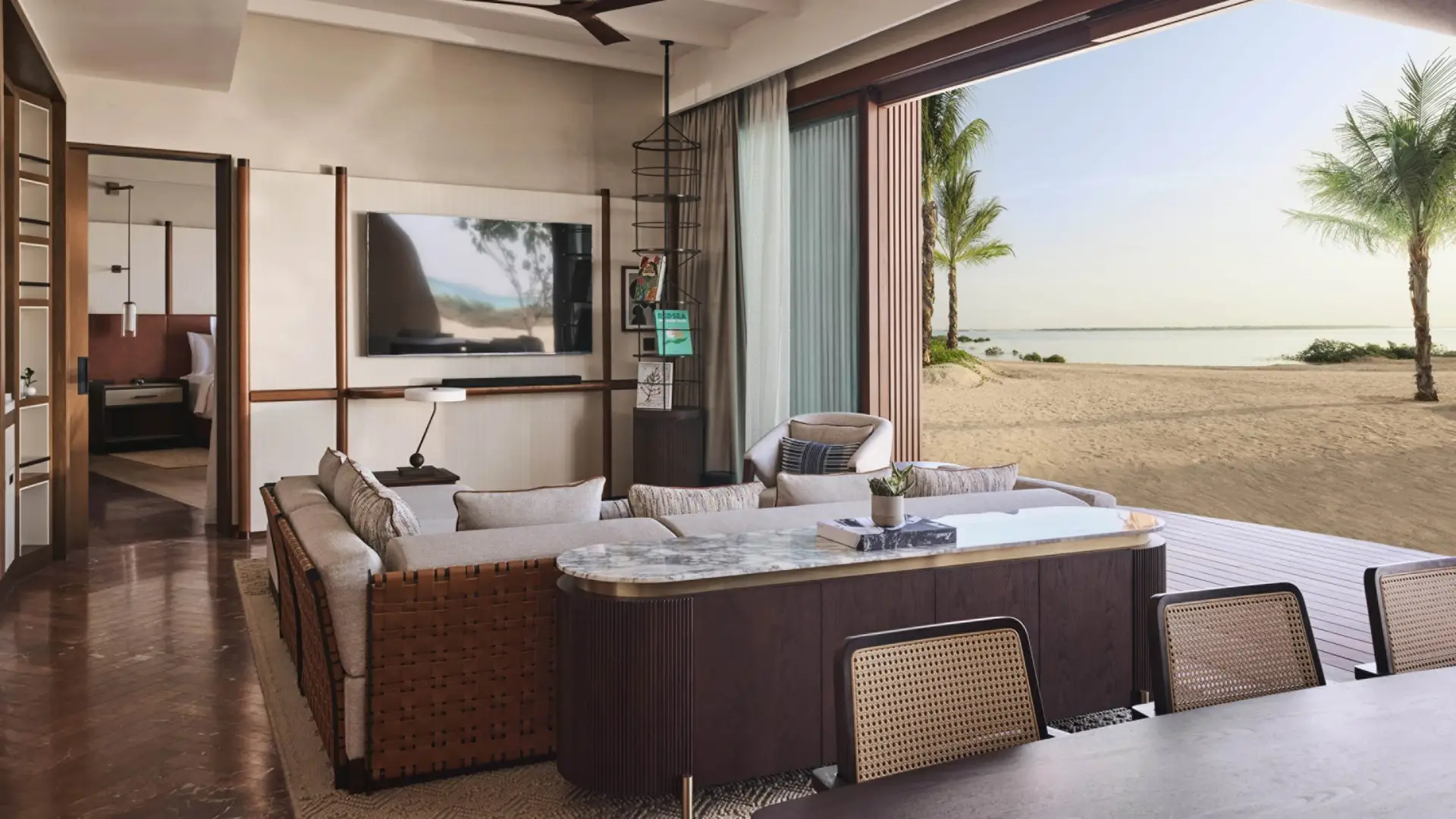
The resort has three swimming pools (one for adults, one for families, one quiet), two separate beaches (family and adult), and a spa with indoor and outdoor treatment pavilions, a couples suite and a stone-clad hammam. There are padel and tennis courts, a gym, and the Marine Discovery Centre, where guests can take part in coral and mangrove restoration work.
The restaurants
Six restaurants. Three of the six are public so far. Al Forn serves Levantine cuisine in a traditional Arabic register. Spiaggia Restaurant & Pool is al fresco dining by the pool. Sea Green focuses on plant-based food, Arabic coffee and freshly baked bread.
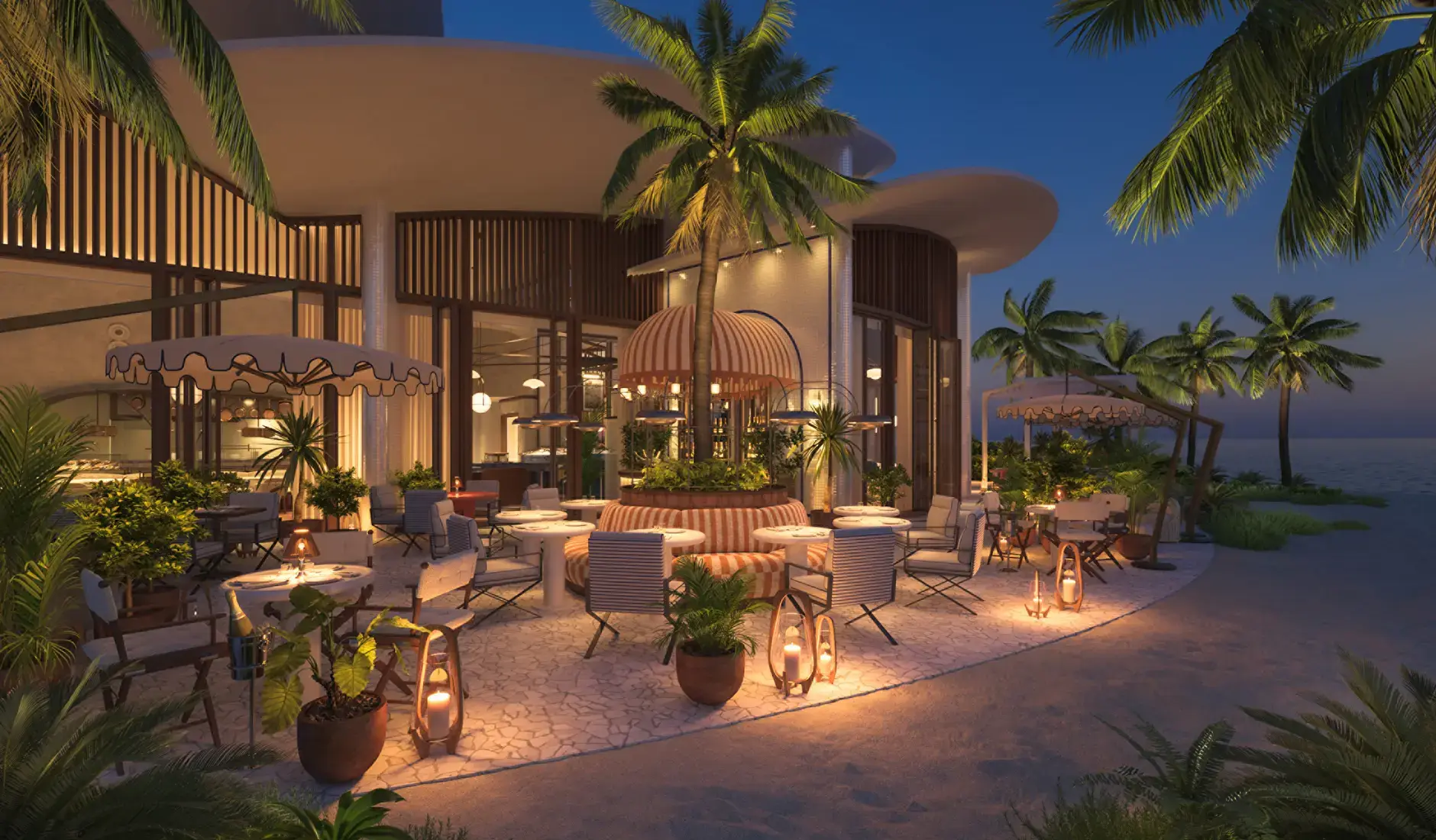
The other three haven’t been announced, but hotels at the Shura scale typically include a signature restaurant with an international chef, a specialty venue and a lounge.
Other amenities worth mentioning, since the press materials skim past them: stargazing programmes, e-quad tours through Wadi Alsalaa with the Hijaz mountains behind, and day trips to Al-Ula and Mada’in Saleh, both UNESCO World Heritage sites.
What it actually costs
From SAR 2,975 (roughly $793) a night is an interesting price.
For comparison: Four Seasons Resort Maldives at Landaa Giraavaru, which Luxury Intel ranks as the best Four Seasons in the world, starts at $1,524 a night. Four Seasons Bora Bora is higher still. At the other end, Four Seasons Hotel Abu Dhabi sits at $142, but that’s a business hotel beside a shopping mall, not a beach resort.
For a beach resort from a brand in the Four Seasons tier, $793 isn’t cheap. It also isn’t what it should have been on paper. The likely explanation: Red Sea Global is subsidising the opening rate to fill rooms in the launch window. With eight more ultra-luxury hotels opening on the same island through 2026 (Faena, Fairmont, Grand Hyatt, Jumeirah, Miraval, Raffles, Rosewood, plus the one we’ve just covered), supply will exceed demand before demand has time to find the destination. Aggressive opening prices are the rational response.
Rates are expected to climb from 2027 onward, possibly by 30-50 percent for the most sought-after weeks, as Shura Island earns its international reputation.
The setting: Shura Island in context
Shura is the central hub of Red Sea Global, a 28,000 square kilometre development with 200 kilometres of coastline and 90 islands along Saudi Arabia’s western coast. When complete around 2030, the destination will have 50 hotels, 8,000 rooms and over 1,000 residences. Visitor numbers are capped at one million a year, a small fraction of what the Maldives receives (roughly 1.9 million in 2024).
The project is funded by the Public Investment Fund, Saudi Arabia’s sovereign wealth fund. The Four Seasons development itself was backed via a SAR 2 billion ($522 million) financing deal with Riyad Bank.
The entire island runs on renewable energy from a dedicated solar farm, supported by what Red Sea Global claims is one of the world’s largest off-grid battery storage systems. All hotels are pursuing LEED Platinum certification. Forbes Travel recognised the Red Sea Project earlier in 2026 as “the world’s first destination to achieve a portfolio-wide luxury rating.”
Shura Links, the island’s 18-hole championship course, opened with the first resorts last September. It was designed by Brian Curley and is operated by Golf Saudi. The clubhouse is a LEED Platinum-certified Foster + Partners design, and only 20 percent of the 140 hectares is maintained grass; the rest is native landscape. Four Seasons guests get exclusive tee times.
Three resorts have already opened on Shura: SLS The Red Sea, InterContinental The Red Sea (both December 2025), and The Red Sea EDITION (November 2025). Four Seasons is the fourth. The remaining seven (Faena, Fairmont, Grand Hyatt, Jumeirah, Miraval, Raffles, Rosewood) arrive through 2026.
How it compares to the Maldives
For the European luxury traveller who’s traditionally chosen the Maldives, Four Seasons Red Sea is worth reconsidering.
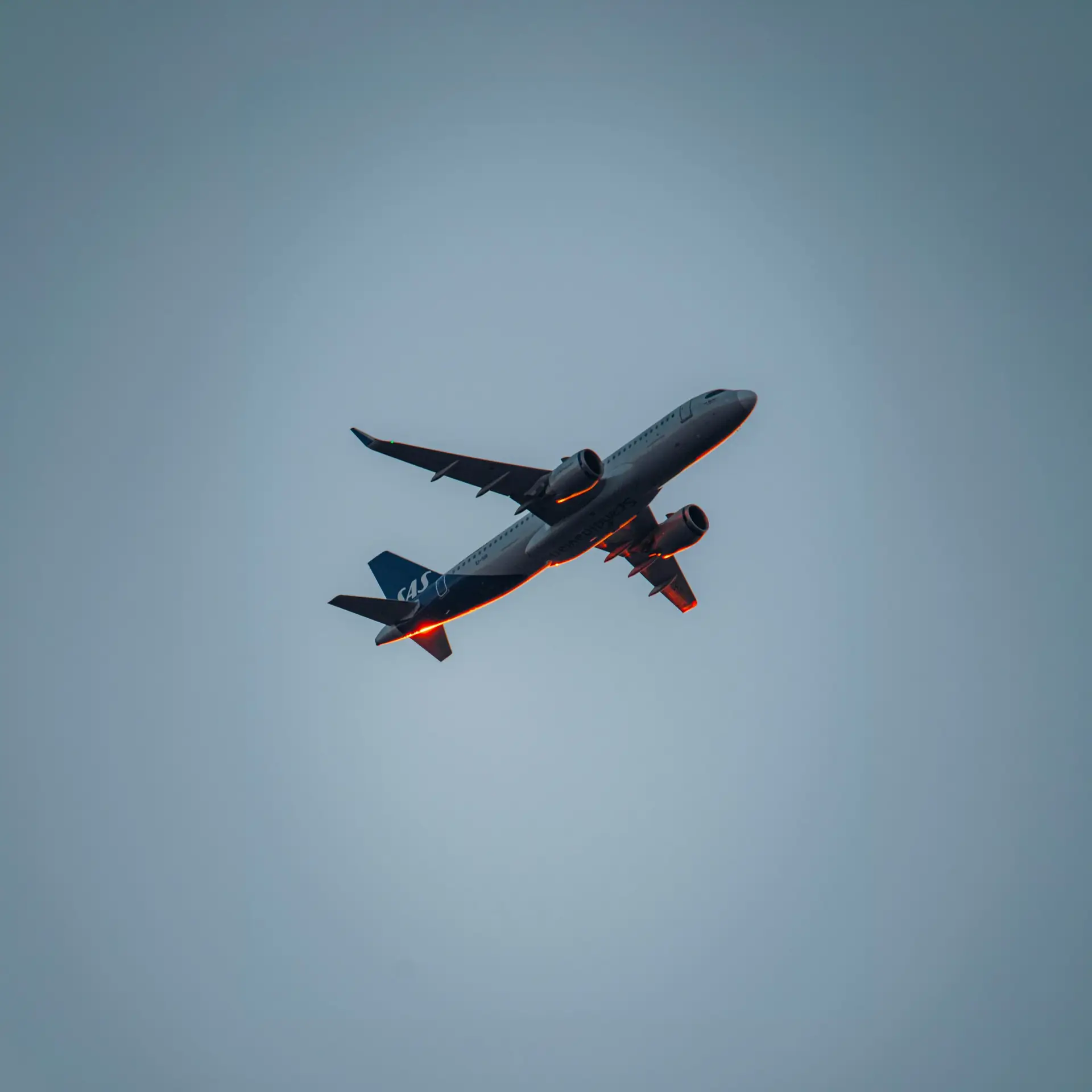
Travel time from the Nordics: Oslo to the Maldives is typically 12-15 hours via Dubai or Doha. To Red Sea International, it’s 6-7 hours via Dubai. When SAS launches its new direct Copenhagen-Dubai route on October 25, 2026, the trip becomes easier still for Scandinavian travellers.
Price: Four Seasons Maldives starts around $1,524 a night for its top property, Landaa Giraavaru. Four Seasons Red Sea, from $793. Across seven nights, the difference is roughly $5,100 (over 53,000 NOK).
Marine life: the Maldives is known for manta rays and whale sharks. Saudi Arabia’s stretch of the Red Sea has 79 identified coral species, more than 1,200 fish species (10 percent endemic), whale sharks, tiger sharks, manta rays, sea turtles and dugongs. Jacques Cousteau called the area the wildest reef complex in the entire Red Sea in his 1953 book The Living Sea.
What the Maldives still has: an established dive infrastructure, a strain of pure resort luxury without cultural complexity, alcohol service at most resorts.
What the Red Sea has: access to UNESCO World Heritage sites, a desert culture, and an architecture done by Foster + Partners rather than the Maldives default of prefabricated overwater villas.
For Scandinavian travellers
The Nordic route changes this year. SAS launches Copenhagen-Dubai daily from October 25, the first Saudi-relevant route from Scandinavia in over a decade. Phuket from December 9. Krabi from December 8. Reaching Red Sea International via Dubai gets meaningfully easier from winter 2026/27 onwards.
From the Nordics, expect roughly 6-7 hours of flight time to Dubai, a short connection, and around 2 hours onward to RSI. Total travel time typically lands under 12 hours, well below the Maldives trip.
Pricing for Scandinavian travellers: in Norwegian kroner, a standard night at Four Seasons Red Sea runs roughly 8,300 to 9,800, depending on season. SAS Business Oslo-New York, for context, costs 18,000-28,000 NOK one way alone. Two nights at Four Seasons Red Sea costs what one leg in SAS Business does, a useful yardstick to keep in mind.
How to book, what to know
Bookings are made directly via fourseasons.com/redseashuraisland, or through Four Seasons Preferred Partner advisors, who typically add benefits such as $100 hotel credit, breakfast for two and a room upgrade.
Best time to go: October to May. Temperatures are comfortable (20-30°C), the sea is at its clearest, and diving conditions are at their best.
What’s included in the starting rate: the room itself, basic property amenities and beach access. Most other things are extra.
What’s extra: spa treatments, restaurants, diving, golf at Shura Links, e-quad tours, and excursions to Al-Ula.
Practical: Saudi Arabia offers e-visas for most Western countries, valid for one year. Western dress is acceptable on Shura Island.
Should you book?
There are two separate questions here, and the answers diverge.
Is the hotel good? We don’t yet know. We haven’t seen it. No one has seen it open. The first real assessment will come in June or July, once the first guests have checked in and the critic visits begin. What we do know: Four Seasons delivers consistent service at its level, Foster + Partners doesn’t produce weak architecture, and the starting price is moderate for the category.
Is the destination ready? Here the answer gets more nuanced. The Red Sea Project is still under construction. Only nine of 50 planned hotels are open. Three of eleven on Shura Island. The surrounding infrastructure (retail, dining outside the hotels, day-trip options) is still being built. Opening early is a deliberate choice, but it’s a choice with consequences.
Our verdict: for Nordic travellers who’ve weighed up the Maldives and want something new, Four Seasons Red Sea is worth booking, particularly if you value Foster + Partners architecture, the desert setting and the opening-year pricing. For anyone expecting the polished, fully built-out Maldives format with twenty years of maturity, come back in 2028. We’re planning a full hands-on review after the opening this summer.
Quick facts
- Opening date: May 20, 2026 (Eid al-Adha bookings from May 27)
- Rooms and residences: 149 rooms and suites, 31 resort residences, 75 separate Private Residences (43 Dune Villas + 32 Waterside Villas)
- Starting rate: SAR 2,975 per night (~$793 / ~8,300 NOK)
- Architect: Foster + Partners
- Interiors (residences): Goddard Littlefair
- General Manager: Kai Dieckmann
- Restaurants: 6, all alcohol-free (Al Forn, Spiaggia, Sea Green, plus 3 unannounced)
- Spa: indoor and outdoor pavilions, couples suite, stone-clad hammam
- Pools: 3 (adults and family)
- Location: eastern tip of Shura Island, 25 min EV from Red Sea International Airport
- Coastline: 1.3 km swimmable
- Private residence starting price: SAR 11.95 million (~$3.19M)
- Powered by: 100% renewable energy
- Coral reef: world’s 4th largest barrier reef, 79 coral species, 1,200+ fish species
- Direct flights to RSI: Riyadh, Jeddah, Dubai, Doha, Dammam
- Best time to visit: October-May
- Website: www.fourseasons.com/redseashuraisland/