Fifteen cities every architecture lover should visit, from Barcelona’s completed Sagrada Família to Chandigarh’s brutalist masterplan.
Architecture tells you more about a city than anything else ever could. It’s history poured into stone, ambition cast in steel, culture carved into facades that have stood for centuries while everything around them shifted and crumbled and started over. Traveling to look at buildings might sound narrow if you haven’t done it. But ask someone who’s stood in front of the Pantheon’s flawless concrete dome at six in the morning, or watched the sun hit those 33,000 titanium panels on Guggenheim Bilbao right as the fog lifted off the river. Something happens. It’s hard to explain.
This guide isn’t for people who are happy snapping a photo of the opera house from the ferry. It’s for the ones who want to understand why a city was built the way it was, who built it, and what it cost, in money, in politics, and in human lives. The cities below made the list because they offer something genuinely singular in architectural terms, and because they deliver experiences you can’t get from reading about them beforehand.
We’ve included the obvious picks. But we’ve also got a few that rarely show up in lists like this, and honestly, those might be the ones that stick with you longest.
1. Barcelona: The World’s Architecture Capital (Right Now)
Something special is happening in Barcelona in 2026. The city holds UNESCO’s World Capital of Architecture designation this year, and it coincides with two anniversaries that give any visit extra weight: it’s been a hundred years since Antoni Gaudí died, and a hundred and fifty since Ildefons Cerdà’s city plan laid the groundwork for Eixample, that distinctive grid pattern with chamfered corners that makes Barcelona’s blocks look like honeycomb cells from the air.
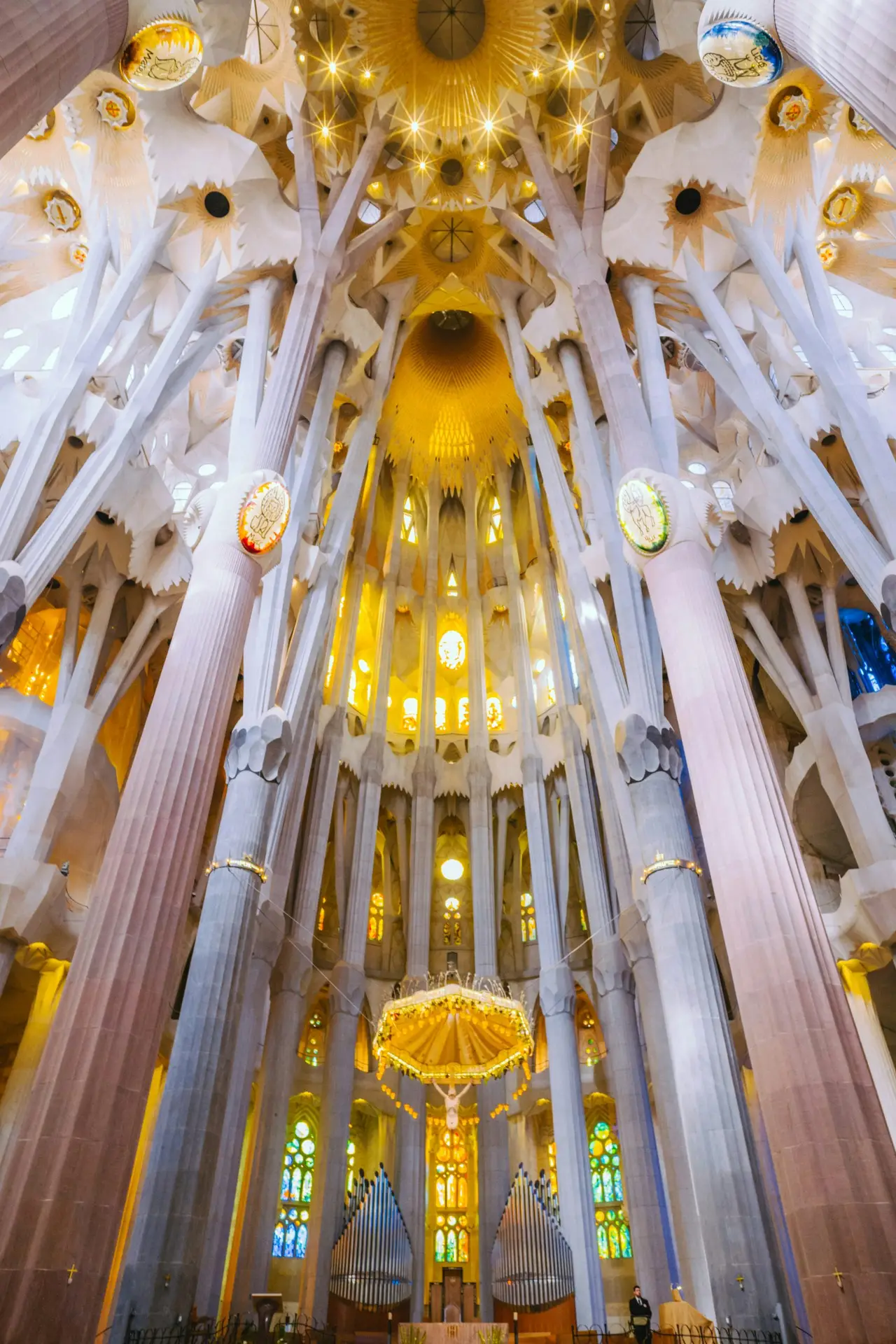
Sagrada Família reached its current completed form in June 2026. After 144 years, the central tower hit its final height of 172.5 meters, making it the tallest church building in the world, surpassing the Ulm Minster in Germany. Seeing the interior is still the closest you’ll get to religiously ecstatic architecture in our time. The columns branch out like treetops toward the ceiling, light filters through glass mosaics in hundreds of colors, and the whole space breathes like something alive. Gaudí started the work in 1883. No other architectural project in history has had a continuous construction period stretching past a century.
But Barcelona isn’t just Gaudí. The Gothic Quarter, Barri Gòtic, has streets that were Roman as far back as the first century AD. Domènech i Montaner’s Palau de la Música Catalana might be the most beautiful concert hall in Europe, an explosion of art nouveau stained glass, ceramic roses, and sculpted columns. And Jean Nouvel’s Torre Glòries, that blue, elongated tower in the Glòries district, looks different every hour of the day as light bounces off the ceramic tiles on its facade.
Where to start: Book Sagrada Família far in advance, two to three months out, ideally. Arrive at 9:00 AM to dodge the worst crowds. If you get the chance, also step into Palau Güell in the old town, Gaudí’s first major private commission, where you can watch him finding his own architectural language in real time.
Styles you’ll find here: Catalan modernisme, Gothic, Roman ruins, contemporary architecture.
2. Chicago: Where the Skyscraper Was Born
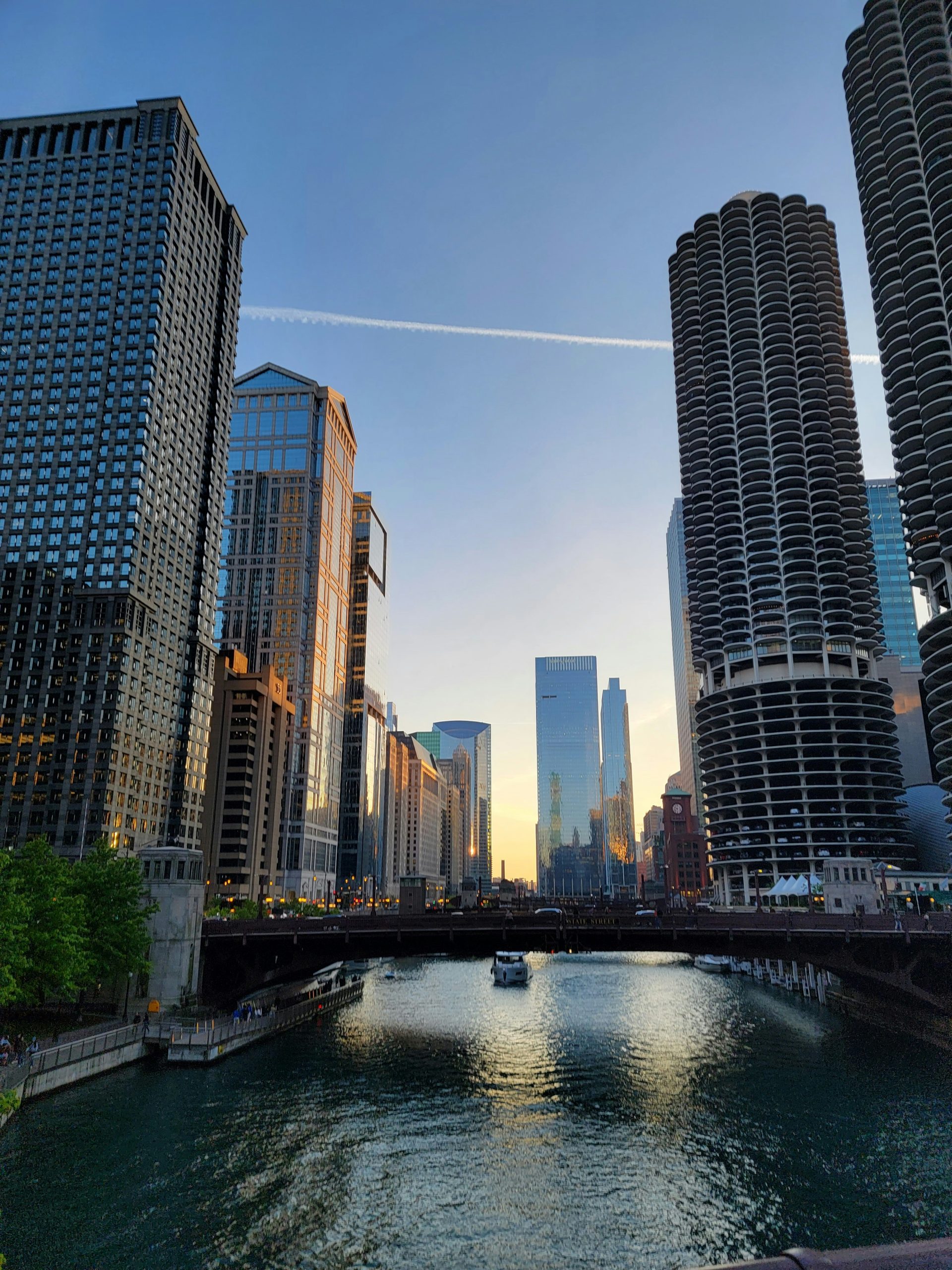 No city in the world has a more cohesive and narrative-driven architectural history. It started with catastrophe. In 1871, large swaths of Chicago burned to the ground in a fire that raged for two days and turned 8.5 square kilometers to ash. What followed was one of the most creatively explosive architectural accelerations in history: in under twenty years, engineers here built the world’s first skyscraper, the Home Insurance Building, 1885, ten stories, steel frame. Buildings grew upward because they no longer needed thick masonry walls to hold their own weight.
Today Chicago is a living textbook in modern architecture. You can walk from Louis Sullivan’s Auditorium Theatre (1889), where the ornamental richness inspired an entire generation, to Mies van der Rohe’s spare, elegant Lake Shore Drive Apartments from 1951, where “less is more” became synonymous with the entire twentieth century’s architectural philosophy. Then on to Jeanne Gang’s Aqua Tower (2010), where balconies jut out at varying lengths and shapes to form a facade that actually resembles layered sandstone from a distance.
The best way to experience all of this is from the river. The Chicago Architecture Center runs a ninety-minute river cruise where local experts walk you through fifty building facades with the kind of precision storytelling you won’t find in guidebooks. It’s not a tourist attraction, it’s practically a lecture you don’t want to end. Book through architecture.org.
Going deeper: Take the train to Oak Park outside the city center and see Frank Lloyd Wright’s own home and studio from 1889. This is where he developed the Prairie Style that would turn all of North American residential architecture on its head.
Timing matters: The river cruise is best in the morning when the light sits low and the facades reflect off the water. Avoid weekends during peak season (June through August) and book tickets early.
Styles you’ll find here: Chicago School, art deco, modernism, brutalism, contemporary architecture.
3. Athens: The Cradle of Architecture, and Then Some
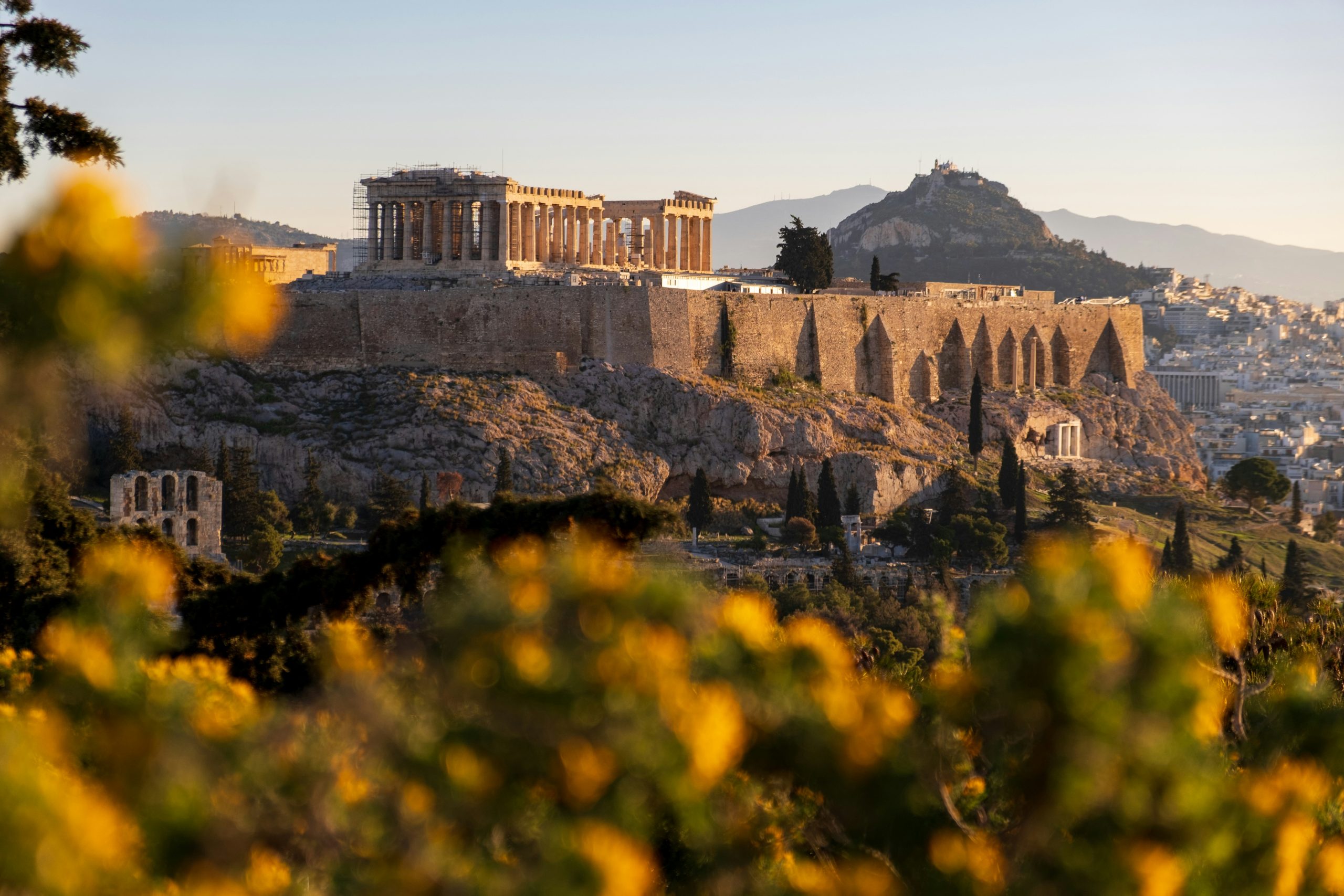 People think they know Athens. They know about the Acropolis. They know about the Parthenon. And sure, standing up there at sunrise with the Greek light breaking across Athens’ basin of white and ochre buildings is every bit as overwhelming as everyone’s told you. But that’s not the only reason to come here if you care about architecture.
Athens is one of the rarest places in the world because it lets you see fifteen hundred years of architectural history in a single glance. A wall from a Roman bath props up a Byzantine church from the ninth century, which is now embedded in a neoclassical apartment building from 1880, which has a cafe from 2019 on the ground floor. History doesn’t get stripped away here. It’s exposed and unapologetic and bravely present.
The Acropolis Museum, designed by Bernard Tschumi and opened in 2009, is among the finest pieces of contemporary architecture in Europe. The building is laid out so you can look up at the Parthenon through the skylight windows the entire time you’re moving through the collections, and the top floor is oriented at the exact same angle as the temple above. This is architecture that talks to its context instead of pretending it doesn’t exist.
Walk through the Monastiraki market and up to Anafiotika, that small almost-island neighborhood clinging to the side of the Acropolis, where houses are built on cliffs with no discernible plan and streets are narrow enough that two people can’t walk side by side. None of this was staged for tourists. It’s just a place where people have always lived.
Worth noting: The Acropolis Museum is free the first Sunday of every month. The Acropolis hill itself is least crowded early morning; after ten o’clock it’s nearly impossible to move freely. Bring water and solid shoes.
Styles you’ll find here: Classical Greek, Roman, Byzantine, neoclassical, contemporary architecture.
4. Tokyo: Two Thousand Years in One Cityscape
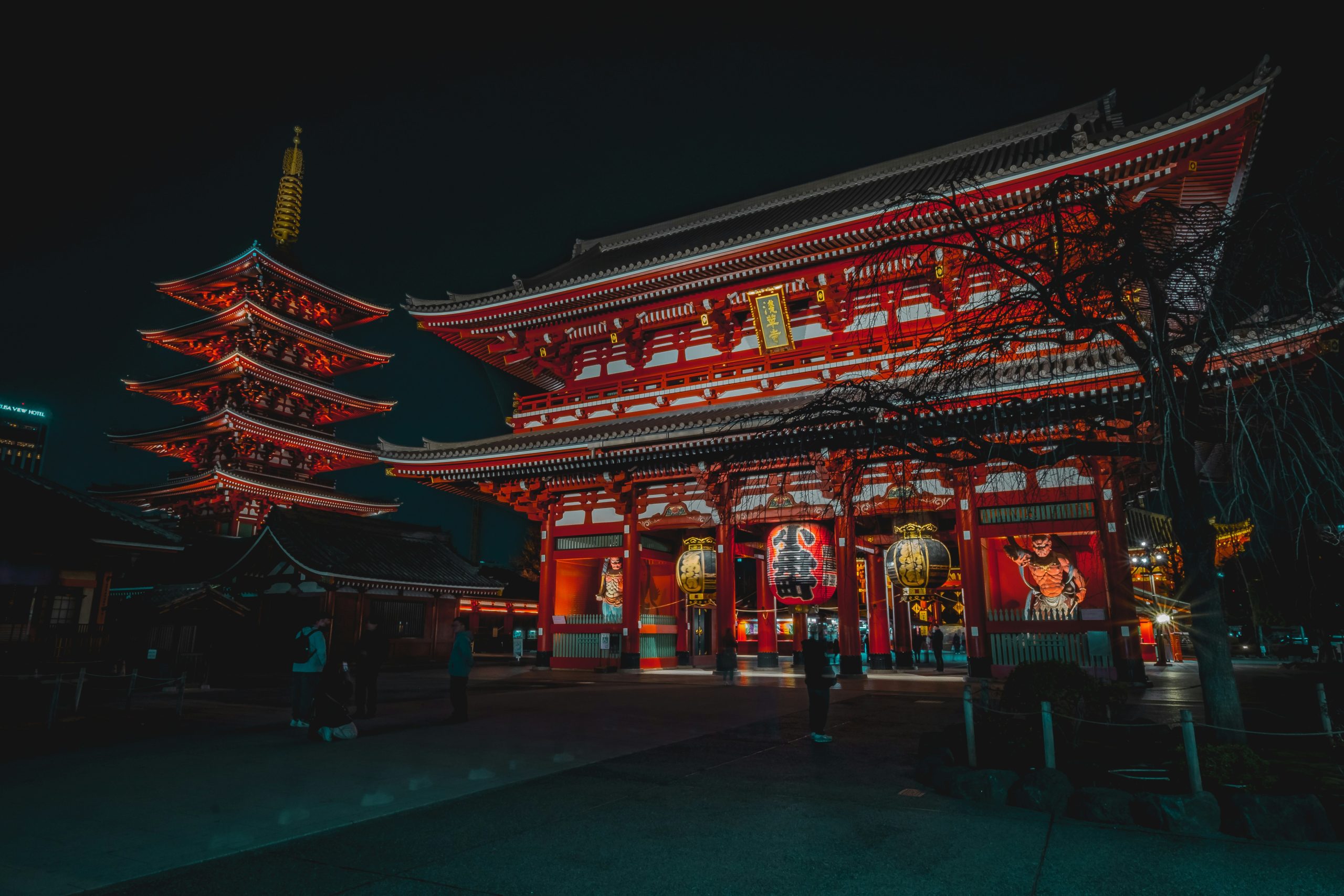 No other city in the world lives with its architecture the way Tokyo does. It’s not a museum. It’s not a city that’s afraid to tear things down and build something new. And it’s not a city that lets go of the past either. It’s all of these at once, stacked so tightly that two steps can shift you half a millennium.
Start in Asakusa, where the Senso-ji temple from 645 AD is still the religious center of the district, and the ring of street food stalls and shops around it has been there for hundreds of years. Then walk ten minutes to Philippe Starck’s Asahi Beer Hall from 1989, where a golden sculpture sits on the roof looking like a flaming droplet from one angle and something else entirely from another, and suddenly you’re standing in the late twentieth century’s playful postmodernism.
For contemporary architecture, the Roppongi district is almost absurdly dense. Toyo Ito, Zaha Hadid, Herzog & de Meuron, Renzo Piano. All have signature buildings here within a few hundred meters of each other. The National Art Center from 2007, designed by Kisho Kurokawa, has a facade of undulating glass that mirrors the sky and the surrounding buildings in a way that makes it look different every single day depending on the weather.
And then there are the quiet things, the things not built to impress: thousands of small residential blocks in the Yanaka district where Meiji-era houses and 1950s Japanese functionalism sit side by side, where nakagawa, private canals between houses, still haven’t been piped underground, and where you can walk for hours without seeing a single tourist sign.
Hidden gem: Yanaka is best on weekday mornings. The whole area feels like stepping into a Tokyo that most visitors never see.
Styles you’ll find here: Buddhist temple architecture, Meiji-era neoclassicism, postwar Japanese modernism, high-tech contemporary architecture.
5. Bilbao: The City That Saved Itself with a Building
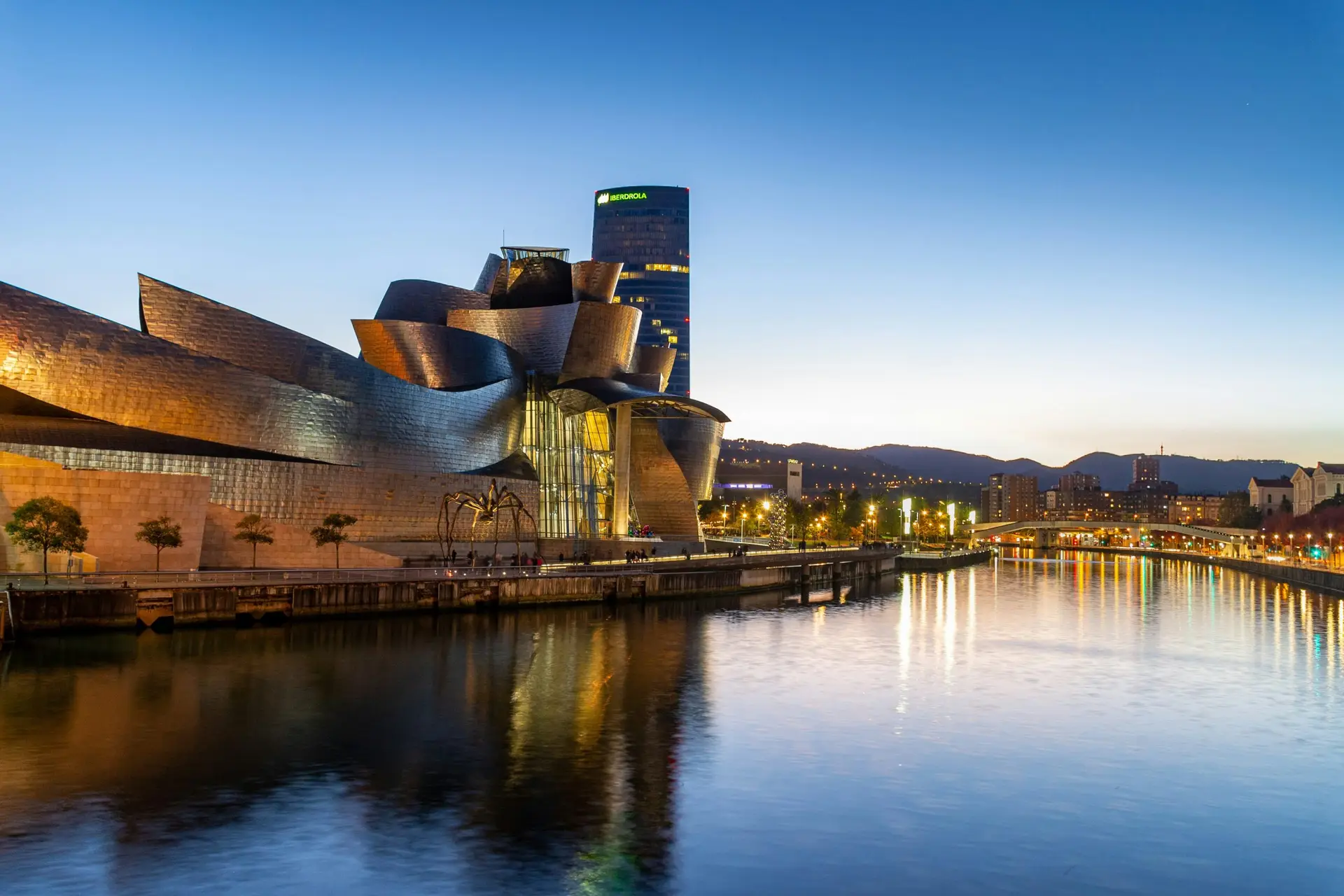 In 1990, Bilbao was one of Europe’s most deflated industrial cities. Shipyards were going bankrupt. Unemployment topped 25 percent. The Basque city had no reason for tourists to show up.
Then the Basque government did something radical: they contacted the Guggenheim Foundation and offered to pay for an entirely new museum, on the condition that the Guggenheim name and collection came with it. They held an invited competition. A relatively unknown Canadian-American architect named Frank Gehry won. And in October 1997, Guggenheim Bilbao opened, a building made of roughly 33,000 individual titanium panels, each 0.38 millimeters thick, shaped into organic curves along the Nervión River.
The first year brought 1.3 million visitors, more than three times what anyone had predicted. The term “Bilbao Effect” entered urban planning vocabulary worldwide to describe how a single signature building can turn a whole city around. Frank Gehry passed away in December 2025 at the age of 96, and his final major project, Guggenheim Abu Dhabi, was completed shortly after his death.
But Guggenheim isn’t the only reason Bilbao is worth the trip. The Zubizuri bridge, designed by Santiago Calatrava and opened in 1997 the same year as the museum, is a pedestrian bridge of glass and steel where the steps follow a subtle arc that makes you feel like you’re floating over the river. The Azkuna Zentroa cultural center (formerly Alhóndiga), reimagined by Philippe Starck in 2010, is housed in an old wine warehouse and has a swimming pool on the sixth floor with a translucent glass bottom. The full story of this city from 1990 to today is one of the most compelling arguments for what architecture can actually accomplish.
Plan ahead: Guggenheim Bilbao is closed Mondays. Visit early morning or late afternoon for the best light conditions on the titanium facade. Pair it with an evening at the pintxos bars in the old town.
Styles you’ll find here: Deconstructivism, contemporary architecture, Spanish industrial architecture, structural engineering.
6. Chandigarh: Le Corbusier’s Laboratory City
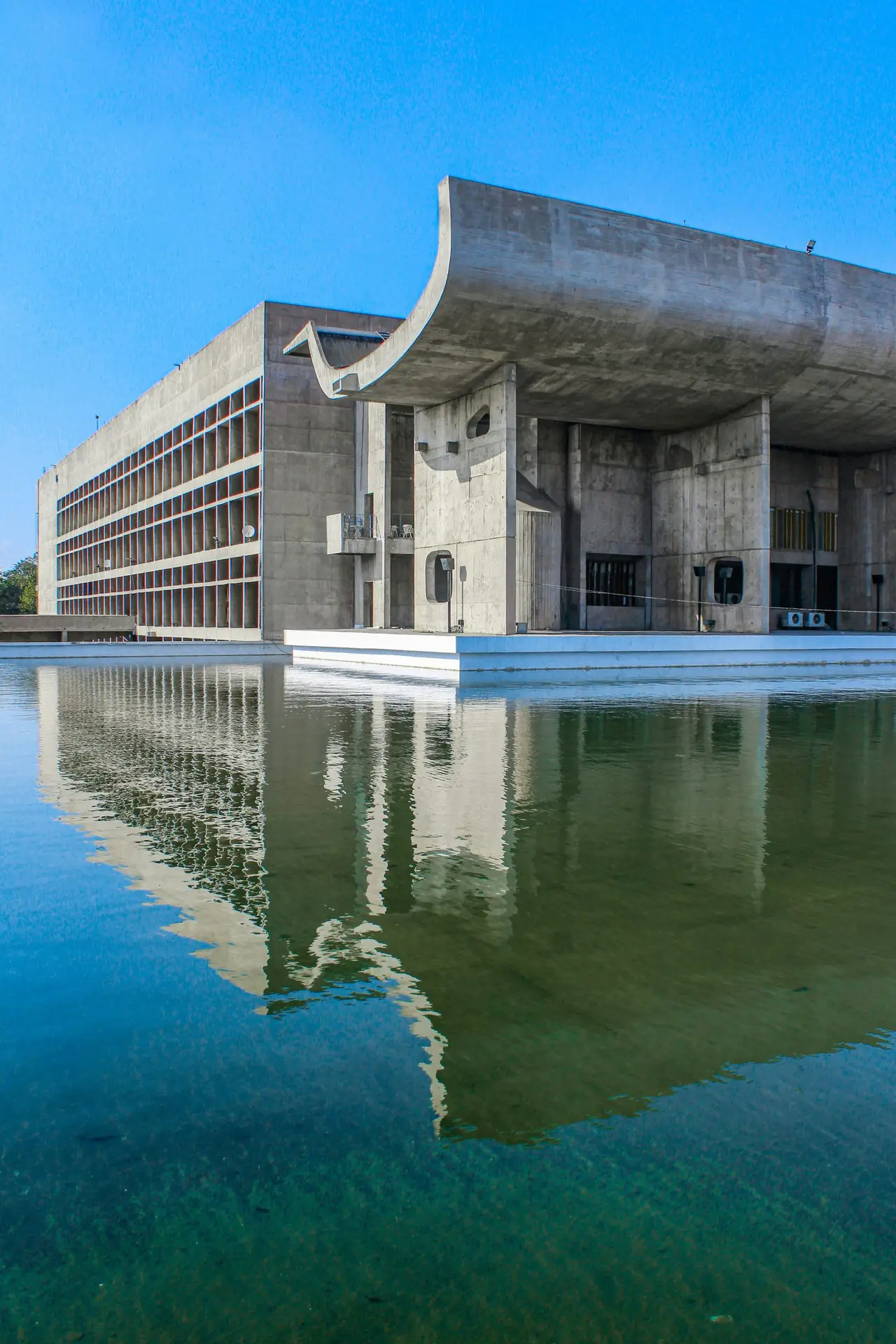 Most travelers heading to India aren’t thinking about Chandigarh. They’re thinking Delhi, Mumbai, Jaipur, Varanasi. Chandigarh doesn’t appear on those lists, and that’s precisely what makes it a unique destination for anyone serious about architecture.
After India gained independence in 1947 and the partition with Pakistan took effect, Punjab needed a new capital. Lahore, the natural candidate, was now on the Pakistani side of the border. Prime Minister Jawaharlal Nehru believed that a brand-new, planned city would symbolize a new India’s break from colonial urban structures. He hired Le Corbusier. The Swiss-French architectural genius, then in his late sixties, was given free rein to design something he’d dreamed about his entire life: an entire city, from the ground up.
The result is one of the strangest and most beautiful places you can visit. The Capitol Complex, now a UNESCO World Heritage Site, consists of three monumental concrete buildings (the Secretariat, the High Court, and the Legislative Assembly), each unique in design but sharing a visual vocabulary of exposed concrete, deep sun-shading grooves, and brutal horizontal lines against the bright Punjab sky. The Open Hand, a ten-meter-tall metal sculpture that rotates with the wind, is the city’s official symbol.
There’s something unyieldingly honest about Chandigarh. It’s not perfect. It’s not picturesque. But it’s one of very few places in the world where you can see an entire architectural vision realized at city scale, and grasp what one man actually meant when he said that “a house is a machine for living in.”
Access note: The Capitol Complex is only available through guided tours booked via the Chandigarh Tourist Office. Book at least two days ahead. Much of the surrounding planned district is still largely intact and can be explored by bicycle.
Styles you’ll find here: Brutalism, modernism, Le Corbusier’s planning philosophy.
7. Marrakech: Ornament as Architectural Principle
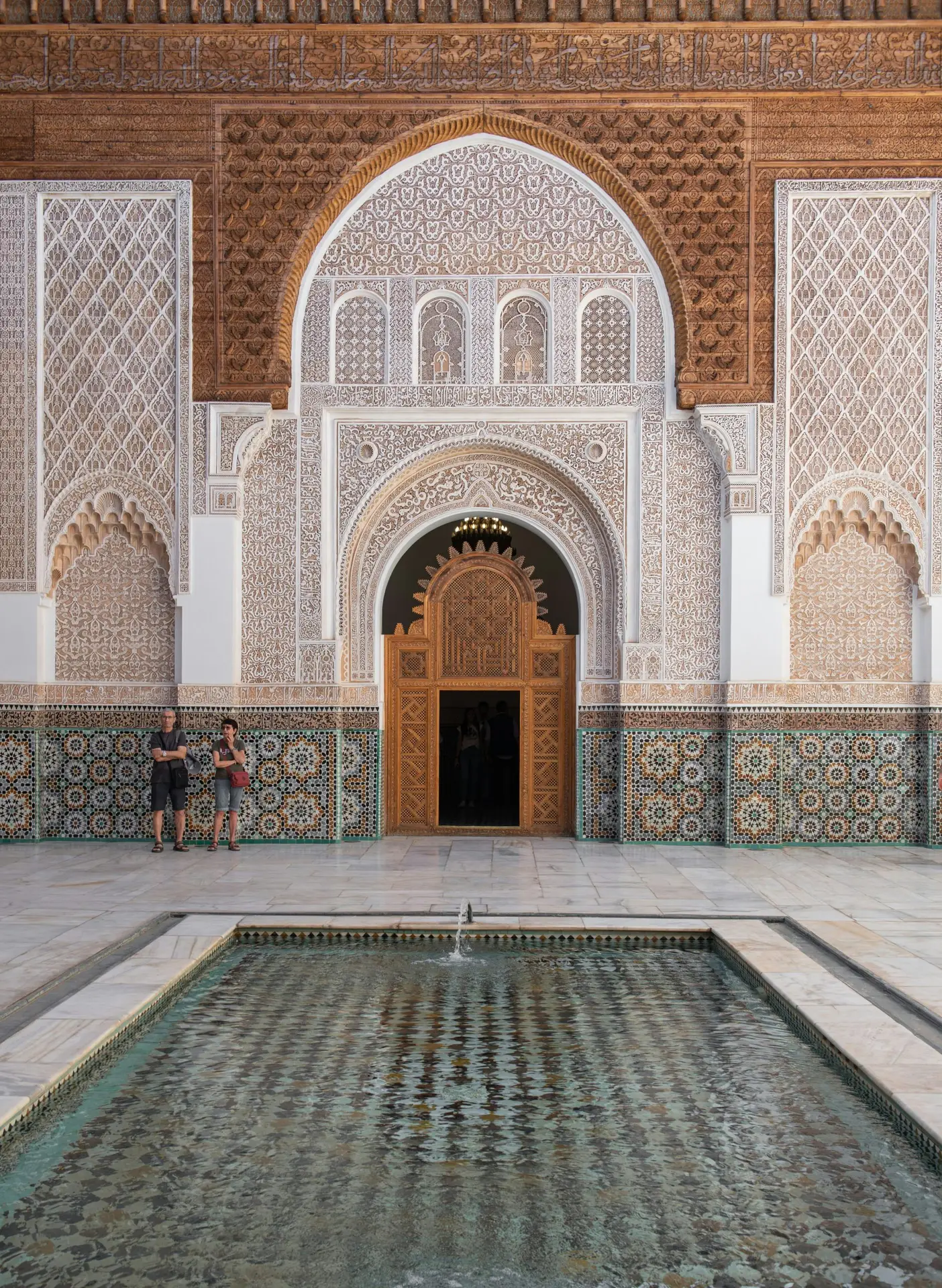 There’s a type of architecture that the Western tradition has largely forgotten, and Marrakech remains a living example of it: architecture where ornament isn’t decoration but structure, where the hand-painted tile pattern, the plastered stucco ceiling, and the carved cedarwood screen aren’t things added after the building is finished, but are the very reason the building exists.
The Medina of Marrakech is a UNESCO World Heritage Site. Ben Youssef Madrasa, a Quranic school complex from the 1500s, is one of the best-preserved examples of Saadian architecture in the world, an inner courtyard wrapped in mosaic and stucco from floor to cornice, with a reflecting pool in the center that throws light against those intricate walls. The Bahia Palace was built piecemeal throughout the 1800s by noblemen trying to outdo each other in ornamental excess, and it has floor upon floor of halls that nobody ever agreed to plan as a coherent whole.
But Marrakech isn’t all old. The Jardin Majorelle, that famous garden with the iconic cobalt-blue villa, was created by French painter Jacques Majorelle in the 1920s and stands as a persuasive example of the colonial encounter with North African architecture. Yves Saint Laurent bought it in 1980 and restored it, and the curated Musée Yves Saint Laurent next door (designed by Studio KO, opened in 2017) is one of the finer new builds Morocco has seen in recent decades.
Morning ritual: Start your day in the medina at seven in the morning, before the tourist crowds arrive and the streets still belong to porters, artisans, and locals having their first coffee. Hire a guide for Ben Youssef Madrasa, because without one, you’ll miss details that take years to learn to read.
Styles you’ll find here: Saadian and Alaouite Moroccan architecture, Andalusian influence, 1920s French colonial style, contemporary architecture.
8. Istanbul: Where Civilizations Overlap
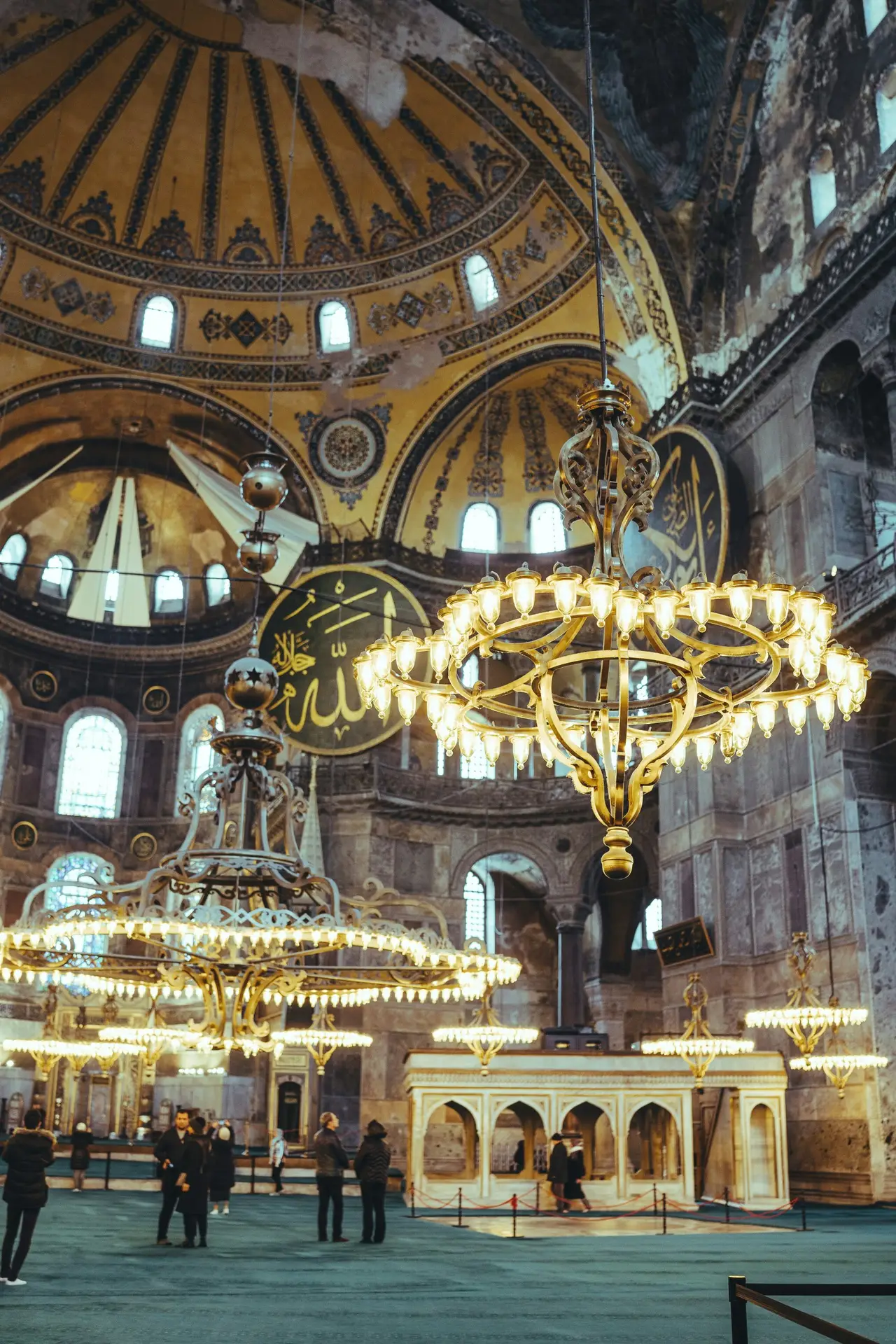 Istanbul has been in continuous use as a major city longer than almost anywhere else on earth. It was founded as Byzantion by Greek colonists around 660 BC. It became Constantinople and the heart of the Eastern Roman Empire. It became the seat of the Ottoman Empire. And every one of these eras layered its buildings on top of the others across those seven hills above the Bosporus, resulting in what we have today, a city where you can see Rome’s last days, Byzantine imperial power, and Ottoman imperial grandeur in a single afternoon.
Hagia Sophia is the obvious starting point, but it’s nearly impossible to say anything new about it. What deserves more attention is the transformation it has undergone: originally a Christian church from 537 AD, converted to a mosque in 1453, a museum from 1934, and since 2020 an active mosque again. Watching a building that has changed function, religion, and political meaning six times and still stands intact. That’s an archaeological miracle in every sense.
The Süleymaniye Mosque from 1557, designed by the imperial master architect Sinan, is more geometrically sophisticated than most Western cathedrals and hardly overrun with visitors. Baklava after prayer time at the cafe by the entrance is one of Istanbul’s quiet pleasures.
For contemporary work: the Sancaklar Mosque from 2013, designed by Emre Arolat Architecture outside the city center, is an underground temple of concrete and natural stone that deliberately strips away all ornament and controlled light to create silence. It’s one of the most original religious buildings built anywhere in the last few decades.
Practical note: Hagia Sophia now requires an entrance ticket (introduced after its reopening as a mosque). Come early in the morning right after the dawn prayer to avoid the worst crowds. Sancaklar Mosque requires about a 45-minute drive from the center, but it’s worth every minute.
Styles you’ll find here: Byzantine, Ottoman classical architecture, Ottoman baroque, Turkish contemporary architecture.
9. Miami Beach: Art Deco on the Edge of Caricature
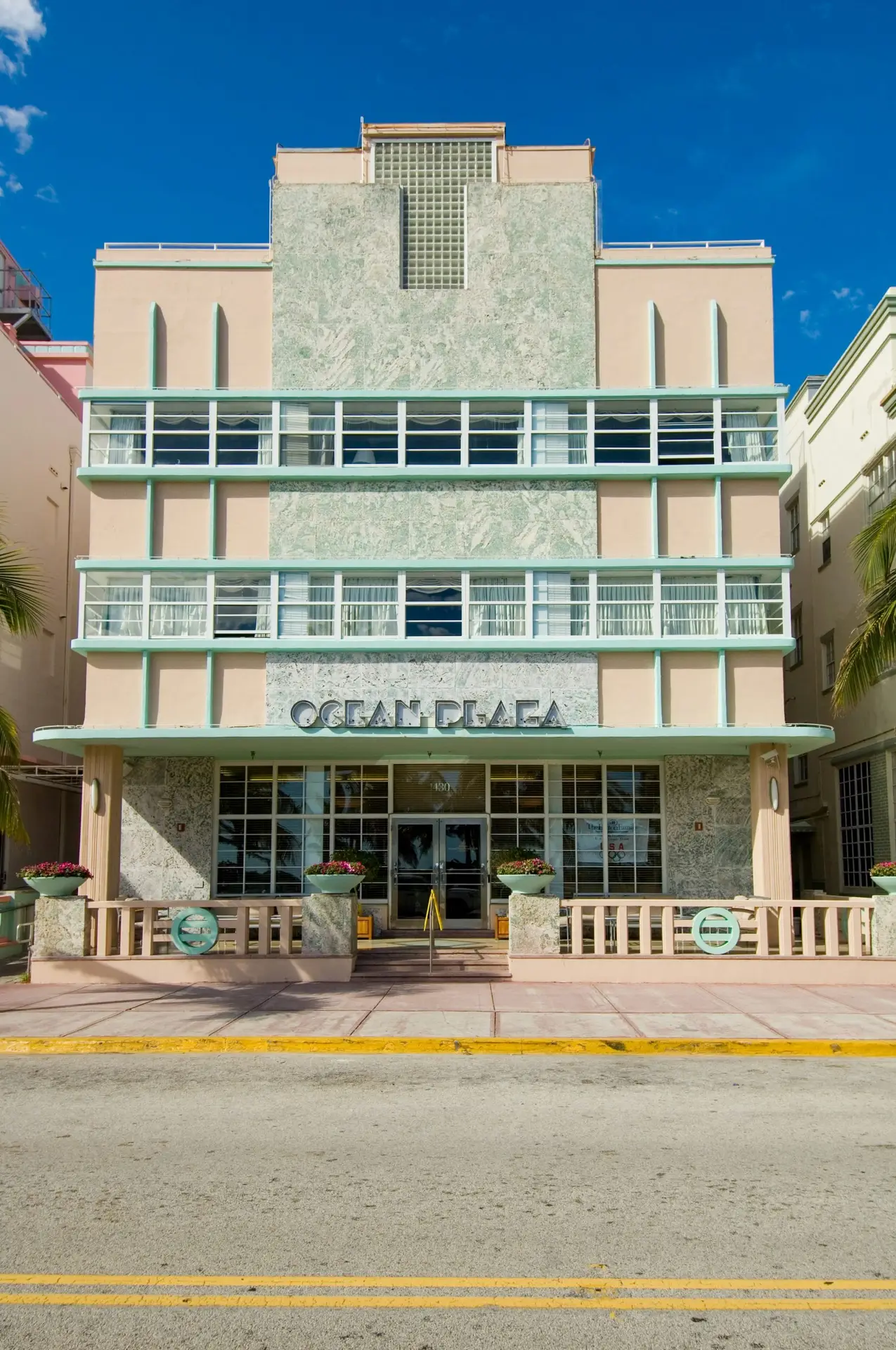 There is one place in the world where art deco architecture is so dense and so well preserved that you can walk for an hour and never leave that stylistic world: Ocean Drive and Collins Avenue on Miami Beach. Built during an explosive period between 1930 and 1940, after the Florida real estate bubble had deflated and local architects like L. Murray Dixon and Henry Hohauser were given free rein to build affordable, cheerfully desperate hotels for the working-class tourist stream coming down from the north, these buildings are one of the purest aesthetic expressions of a period you’ll find anywhere.
Art deco is interesting because it’s a style that tried to hold two essentially incompatible things at once: industrial machine aesthetics and handcraft detail. The results in Miami Beach are colorful facades with neon trim, horizontal “streamline” windows that look borrowed from ocean liner portholes, and decorative concrete work that imitates both gemstones and flowers. It was a style that believed completely in the future and was ecstatically optimistic during a decade when much of the world around it was dark.
Visit the Art Deco Welcome Center on Ocean Drive. They run daily walking tours through the district where they explain not just what everything is, but what the architects were thinking when they built it. The Carlyle, The Cardozo, Hotel Victor. Each one is a little story about a particular moment in the architectural imagination.
Best time to go: Come in the evening, when the neon signs switch on and the facades glow in pastel against the South Florida sky.
Tour info: The Art Deco Walking Tour departs at 10:30 AM on Saturdays from the Welcome Center and runs about ninety minutes. Tickets are $40 and worth every cent. Combine it with a visit to the Bass Museum of Art right nearby.
Styles you’ll find here: Art deco, Streamline Moderne, early Modern.
10. Singapore: Architecture as Nation-Building
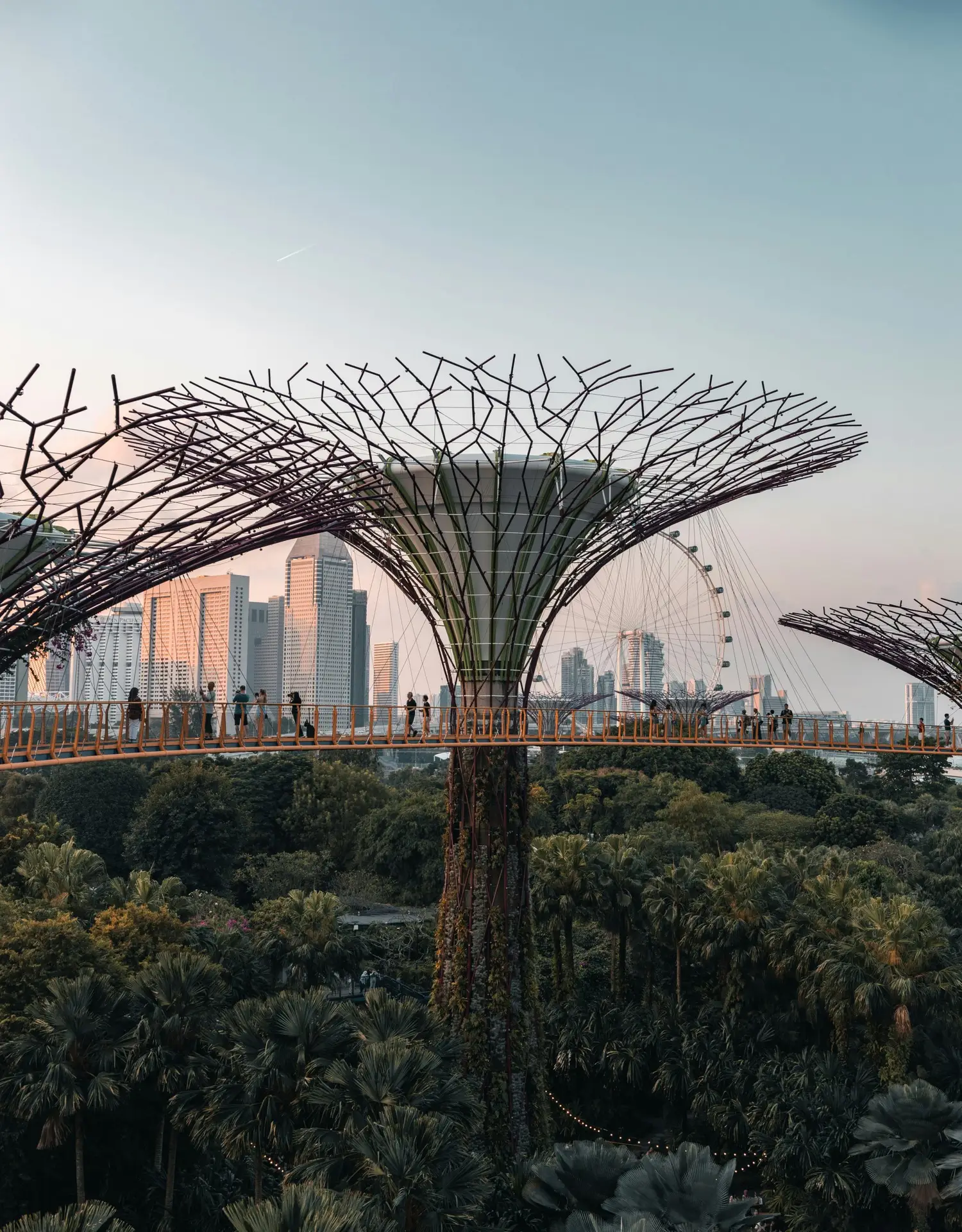 Singapore is 63 years old as an independent state. That doesn’t give you much time to build a tradition. But Singapore has in many ways pulled off something more interesting than tradition: it’s turned architecture itself into a nation-building force, a deliberate attempt to create an identity where none existed before.
Gardens by the Bay, which opened in 2012, is the most visible example. Those twenty-one metal trees, some rising to fifty meters and cloaked in tropical plants, aren’t an imitation of nature but nature as metaphor: a garden built from an engineer’s dream of what a garden could become. Supertree Grove has become one of the most photographed spots in the world, an icon of a city that takes seriously the idea that the artificial and the natural can coexist.
Marina Bay Sands, with its famous “surfboard platform” resting across the tops of three towers, was designed by Moshe Safdie and is the closest thing our era has produced to a pyramid, a monument to its time, built in a country that couldn’t afford symbolic architecture half a century ago. Take the elevator to the SkyPark deck at 6:00 PM and watch the city light up beneath you.
But the truly interesting thing about Singapore isn’t the iconic new builds. It’s Kampong Glam and Little India and Chinatown, where colonial-era shophouse architecture from the nineteenth and early twentieth centuries’ Chinese, Indian, and Malay immigrant communities has been preserved and adapted into something that works today without losing its character. This is where Singapore tells its real architectural story, not in the glittering towers, but in the narrow, colorful passages between buildings from a time when nobody planned any of this as a tourist attraction.
Free and paid: Gardens by the Bay is free to walk around on the outside; the large conservatories charge admission. Kampong Glam is best in the evenings when street food stalls and small cafes open up along Haji Lane.
Styles you’ll find here: Colonial shophouse architecture, British colonial style, brutalism (Void Decks), contemporary architecture.
11. Kyoto: Three Thousand Temple Mandates in One City
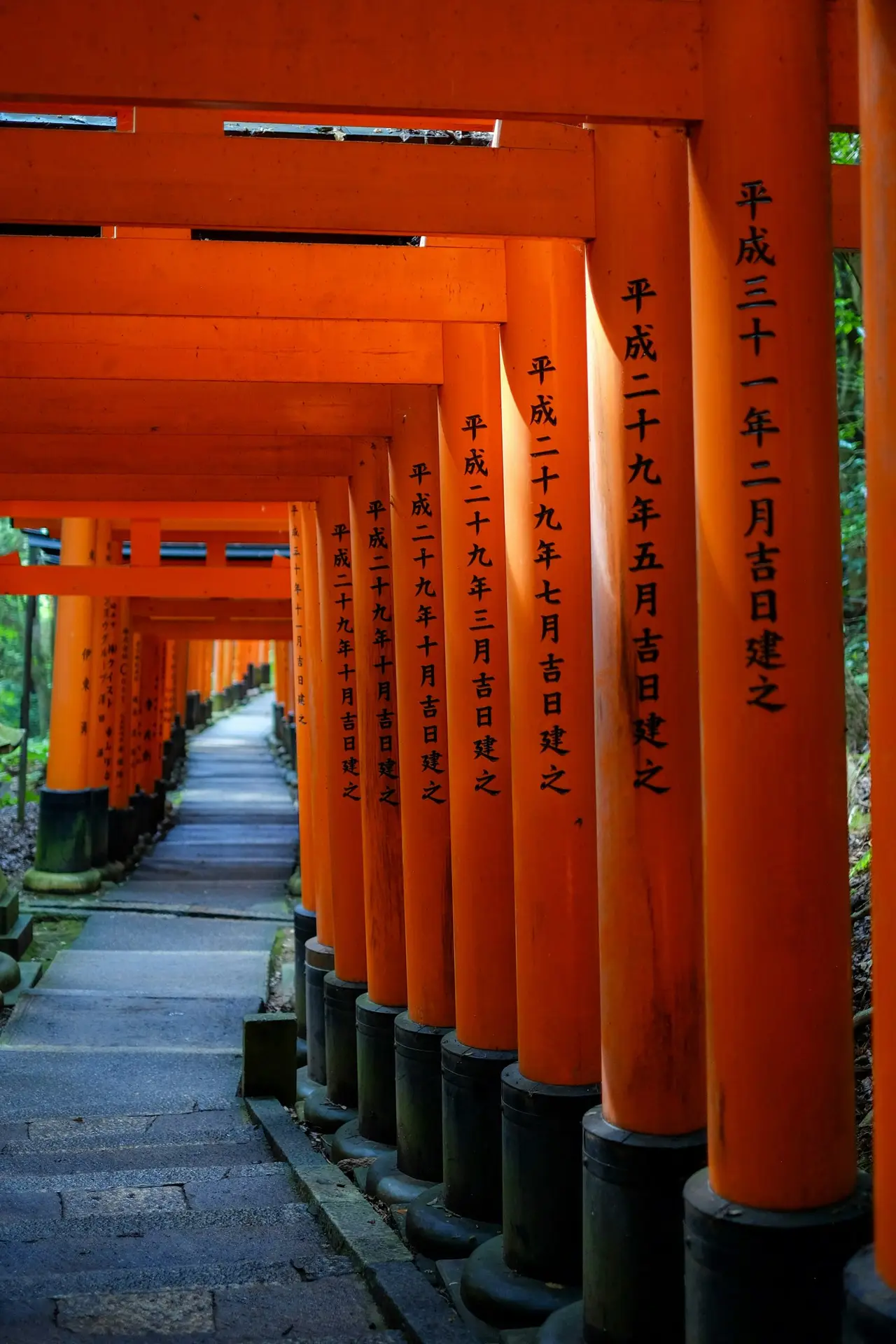 There’s a line about Kyoto that every Japan enthusiast knows: it’s the only major Japanese city the Americans refused to bomb during World War II because the cultural heritage was too valuable. Whether that story holds up to full scrutiny is still debated, but the premise works well enough. Kyoto contains more of Japan’s cultural heritage than any other single place in the country.
Over two thousand religious sites, including more than a thousand Buddhist temples and over four hundred Shinto shrines, are scattered across Kyoto’s basin between the hills. Kinkaku-ji, the Golden Pavilion, is the most photographed, and for good reason, but it’s not the most interesting. Ryoan-ji, just a few minutes away, has a Zen Buddhist rock garden from the fifteenth century that is one of the most studied spaces in architectural history: fifteen stones arranged in a sand garden in a way that ensures you can never see more than fourteen of them from any single point. This is architecture that sets limits on what you’re allowed to see, and uses that restriction as a philosophical tool.
For contemporary architecture in Kyoto: Tadao Ando’s work is scattered throughout the region. His Times complex along the Takase River from 1984 to 1992 is an example of his concrete style in full maturity, spaces where the material is never disguised, and where light and shadow function as structural elements on equal terms with walls and floors.
Timing is everything: Fushimi Inari, the temple with thousands of orange torii gates climbing up the hillside, is best at sunrise or after eight in the evening. Between those times, the crowds are so thick that the architectural experience disappears entirely.
Styles you’ll find here: Heian-period temple architecture, Zen garden design, traditional Japanese timber architecture, Japanese modernism.
12. Vienna: The Austrian Empire in Stone
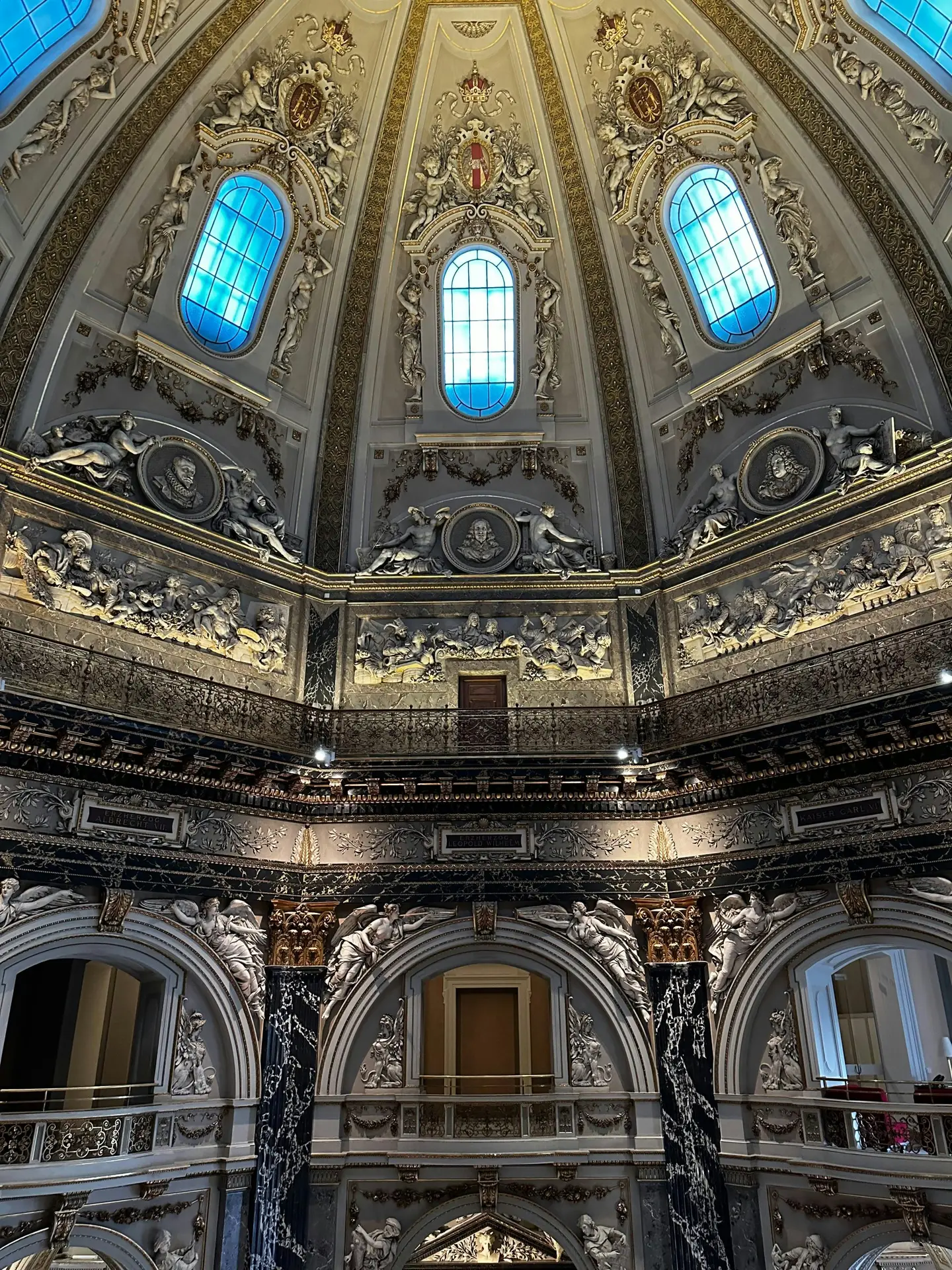 Vienna is a city that still hasn’t quite accepted that the empire it was built for no longer exists. The signature Ringstrasse architecture, where Vienna after 1857 tore down its medieval fortifications and built a seven-kilometer-long boulevard of monumental buildings in neoclassical, neo-Gothic, and neo-Renaissance styles, represents the most deliberate and thoroughly considered cityscape of nineteenth-century continental Europe.
The State Opera, the Kunsthistorisches Museum, the Burgtheater. All built in the same period, with historical styles deliberately chosen to signal each institution’s values and function. It reads like an archaeological survey of European architectural history, compressed into a single street.
But what happened next is the really fascinating part. Toward the end of the 1800s, a group of architects grew furious with all this historicism, copying styles from the past instead of creating something new. Otto Wagner, Adolf Loos, Josef Hoffmann, and the Secession movement didn’t just break with the style, they broke with the idea that architecture owes history anything. The result was some of the most radical buildings in European architectural history. Adolf Loos House on Michaelerplatz (1910), placed directly opposite the imperial Hofburg Palace with a completely ornament-free facade, was nicknamed “the house without eyebrows” by critics and is said to have so offended Emperor Franz Joseph I that he refused to look out the windows facing it.
Museum tip: The Wien Museum, which reopened in renovated form in 2023, has a permanent exhibition on the city’s architectural history that ranks among the better city museums in Europe. Seeing the Loos House from outside costs nothing; the interior now houses a bank branch but is open for visits on certain days.
Styles you’ll find here: Neoclassicism, neo-Gothic, neo-Renaissance, Jugendstil, early modernism.
13. Dubai: The Future’s Architecture, Already Built
 Dubai is a difficult city for architecture lovers to take seriously. Too young, too wealthy, too willing to let capital replace time and context. But it’s possible to hold both of those thoughts at once and still find Dubai genuinely fascinating, because here you see what happens when a city operates without constraints.
Burj Khalifa, at 828 meters, is the most obvious starting point. It remains the world’s tallest building and will hold that title for the foreseeable future (the only challenger is Saudi Arabia’s Jeddah Tower, also under construction). Designed by Adrian Smith, then at SOM, its Y-shaped cross-section was inspired by the hymenocallis, a local desert flower. Standing on the observation deck on the 124th floor and looking out over the surrounding landscape is one of those fundamental scale experiences available to an ordinary person.
But it’s the Museum of the Future from 2022 that’s the most interesting building here. A torus form, a ring of steel and glass, adorned with Arabic calligraphic quotes laser-cut directly into the facade, designed by Killa Design with the work of over a thousand artisans. It’s one of the most significant buildings erected anywhere in the last ten years, a bold statement that Arabic architectural identity is not incompatible with modernity.
Tickets required: Museum of the Future needs advance-booked tickets; there’s no walk-up sales. Burj Khalifa charges for observation deck access, and the ticket line without a reservation is chaos. The Al Fahidi district (the historic old town) stands in sharp contrast to everything else and is worth a few hours.
Styles you’ll find here: High-tech contemporary architecture, supertall construction, Arabic modernism.
14. Venice: A City Built on Water as an Architectural Impossibility
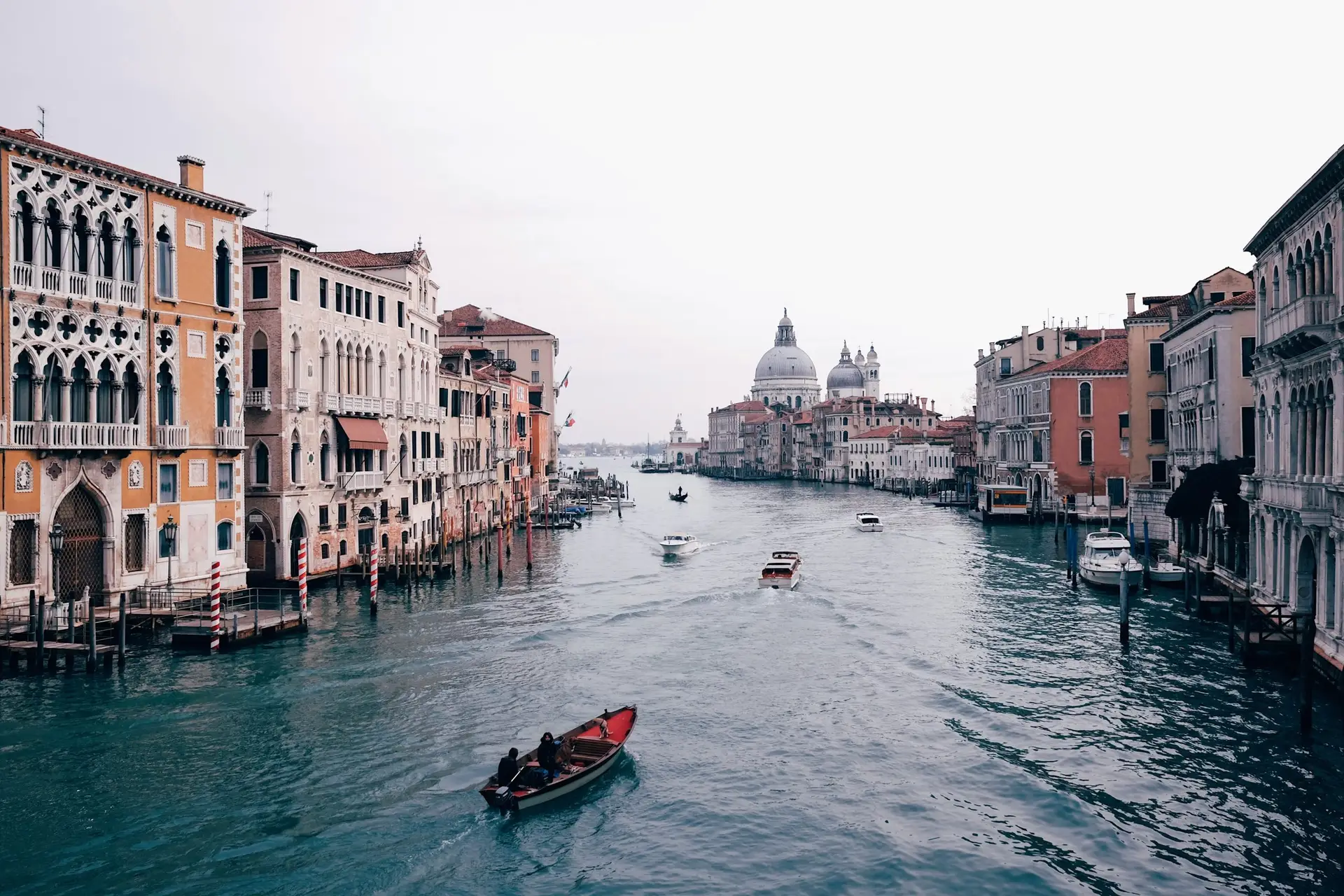 There’s a reason Venice is always the first or last city on any architecture list, and it’s not because it’s the easiest to talk about. It’s because nothing there can be taken for granted. Just the fact that a city of this size and density, with Gothic palaces stacked tight above canals, connected by paths of brick and marble, still exists after more than a thousand years on top of millions of wooden piles and clay is an architectural miracle that’s hard to shake off.
The Doge’s Palace is obvious. Piazza San Marco is obvious. What isn’t obvious is walking into Campo Santa Margherita on a Monday morning in April, when there are no tourists and the market has been operating since the 1400s, and understanding what Venetian everyday architecture actually means. Houses with open gables and terraces where laundry hangs. Wells from the 1600s, sealed now but still looking like they could be opened. Neighborhoods where nothing was built to impress and everything was built to last.
The Venice Architecture Biennale, held every even-numbered year, is the most important architecture exhibition in the world, giving you a singular opportunity to see what’s happening in global contemporary architecture. Countries from around the world exhibit in the historic Arsenale pavilions and Giardini gardens.
Getting around: Vaporetto lines 1 and 2 offer a slow ride through the Grand Canal and make for a perfect introduction to the city’s scale. Access fees now apply to the most visited parts of the old town; check current information about entry restrictions before your visit.
Styles you’ll find here: Byzantine, Venetian Gothic, Renaissance, Baroque.
15. Bonus: Tadao Ando’s Naoshima
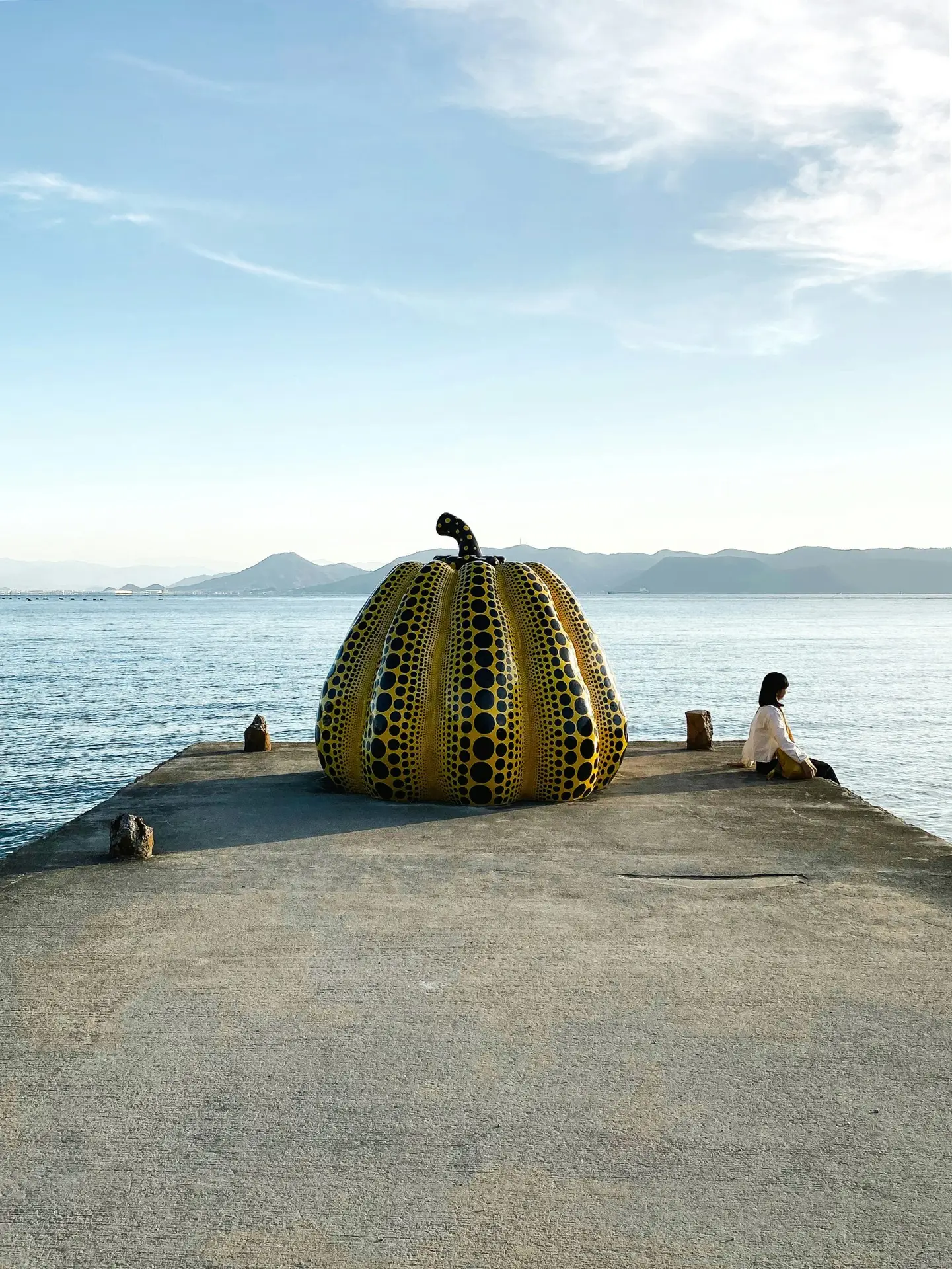 Naoshima Island, two hours by ferry from Okayama on Japan’s Honshu, is one of the most intentional and consistent architectural propositions of recent times. Starting in the early 1990s, the art patron Benesse Corporation commissioned Tadao Ando to design a series of museums and art installations that now cover large parts of the island.
Ando’s concrete architecture, always minimalist, always using light as the true structural element, appears here in three of his finest buildings: Chichu Art Museum, where none of the artworks (three by Monet, one by James Turrell, one by Walter de Maria) ever receives artificial lighting but is designed to be experienced in natural daylight at all hours; Lee Ufan Museum; and Benesse House. It’s not easy to describe what these spaces do to you. It’s simpler to say that people who visit often find themselves sitting in quiet for a long time afterward.
A Final Word on How to Travel for Architecture
Architecture isn’t experienced well from a bus. It’s experienced best on foot, slowly, ideally in rain or flat overcast light that strips away the harsh shadows and lets the materiality of a facade reveal itself. It’s better on weekdays than weekends. It’s best in morning or evening light, when the sun hangs low and throws dramatic shadows across details you might otherwise walk straight past.
Bring a small notebook. Write down what you see before you read what it is. That act of looking at marks and not knowing who placed them there. That’s maybe the closest an ordinary traveler gets to what architecture actually means.
And remember: the most beautiful building you’ll see is often not the one you planned to see.
All data and visiting hours in this article are based on information available as of April 2026. Opening times and ticket prices are updated regularly by the respective attractions.
www.travelermag.com